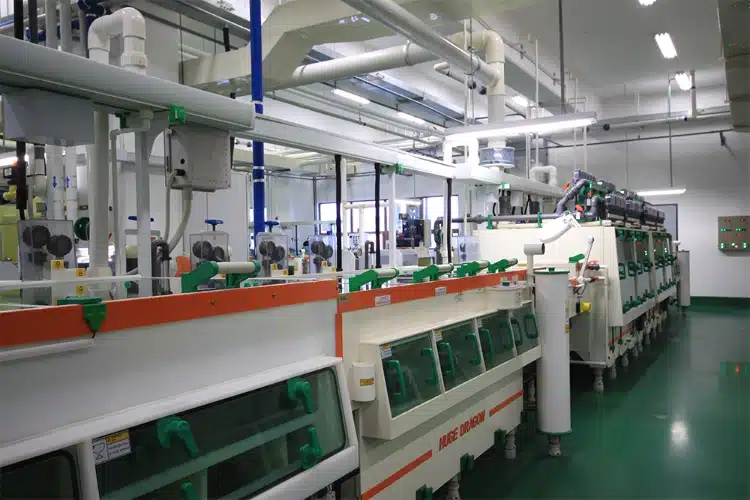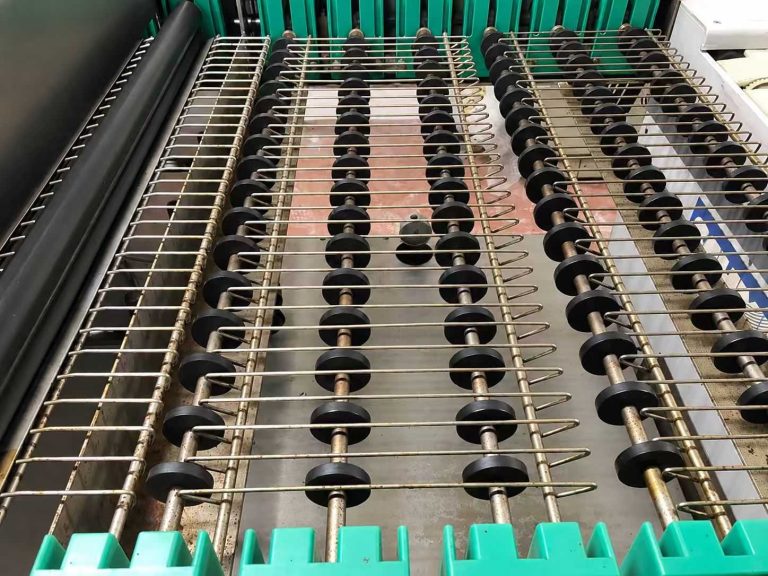
Which PCB format will be used to evaluate the proposed air knife drying system? Before comparing equipment quotations, define the board sizes, component layouts, and drying requirements the system must accommodate. A flat, unobstructed PCB may be relatively easy to dry, but densely populated boards, narrow gaps, and areas around raised components can retain moisture or disrupt airflow. A practical retrofit specification should therefore cover both routine and challenging PCB configurations, with drying performance, air consumption, and changeover requirements verified under representative production conditions.
Define the required dry condition before choosing the hardware
“Dry” must refer to an agreed inspection point and acceptance criterion. Is the concern visible droplets on a board surface, moisture trapped in holes, or liquid carried into the next process module? Mark recurrent wet areas on actual production boards and record the result at the downstream inspection point. This gives the supplier a measurable target rather than a general request for stronger airflow.
Follow the panel beyond the air knife. Liquid retained in holes or around board features may emerge during transport, while droplets displaced by the air stream may settle elsewhere. The drying evaluation should therefore include both upper and lower surfaces where applicable and the conditions at the next operation. A photograph immediately beneath the knife alone is not proof of acceptable drying.
Provide representative board samples or drawings, board width and thickness, conveyor type, line speed, board spacing, incoming liquid condition, and available drying length. Include the wet-process chemistry and permitted contamination controls. A trial on a stationary clean coupon cannot substitute for one with production boards moving through the actual drying section.
Compare air sources at the actual operating point
An existing air connection should not dictate the selection. Blower-fed air knives and compressed-air arrangements have different pressure, flow, and installation requirements. For a PCB wet-process line, confirm available space, air cleanliness requirements, continuous duty, and the coverage needed across the panel width before selecting the supply method.
A continuous air sheet across the full panel width can justify assessing a blower-fed arrangement. Energy comparisons should consider the principles in U.S. Department of Energy’s compressed-air guidance. However, continuous duty alone does not settle the design: a narrow or intermittent task, limited space, or defined air-quality constraints may favor a different arrangement. Verify performance under the intended operating conditions.
Trace air demand back to electrical input instead of treating line pressure as a measure of energy use. For a blower arrangement, include motor input and associated controls. For a shared compressor, document how the drying load is allocated and whether compressor controls respond to reduced demand. Compare alternatives under the same board format, incoming moisture, conveyor speed, and acceptable drying result.
When reviewing Qixingyuan’s air knife range, identify the required air source, working width, and installation envelope first. Then confirm the proposed product’s inlet details and operating requirements against the actual supply on the PCB line.
Locate persistent wet zones before finalizing the layout
Inspect board edges, through-holes, recessed features, and areas shadowed by conveyor supports or guides. A repeatable wet pattern is more useful than a request for higher pressure everywhere: it identifies whether the issue is coverage, angle, working distance, panel presentation, or insufficient time under the air stream.
Plan where displaced liquid will travel. Drainage and splash management should prevent removed solution from reaching neighboring boards, equipment surfaces, or a later process module. Confirm whether both sides of a board need coverage and test the arrangement across approved widths and thicknesses. Changes in panel position can alter the effective distance to the outlet even when the air knife remains fixed.
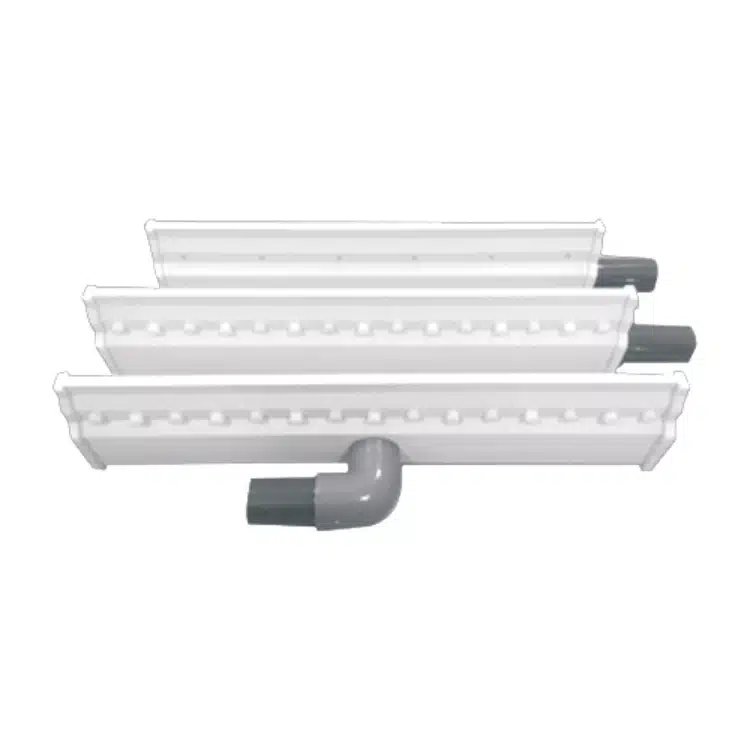
Qixingyuan A-A aluminum alloy air knife may be considered where the drying module has limited installation space. Compare its body dimensions, air inlet, mounting arrangement, and required coverage against the machine drawing. Chemical exposure and available air supply must be checked before treating the part as a confirmed fit.
Design repeatable adjustments into the drying section
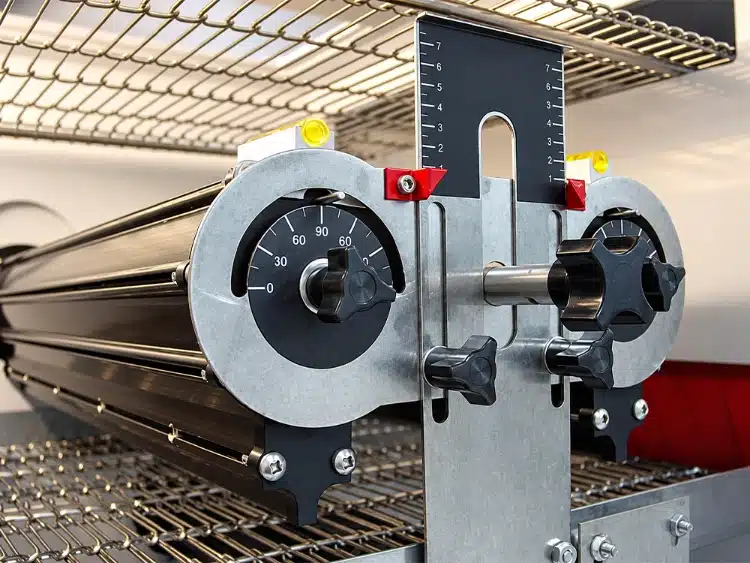
Once a trial establishes acceptable drying, technicians should be able to restore the setup after maintenance or a product change. Record outlet height, angle, working distance, air-source settings, conveyor speed, and the approved board range. Position references and accessible adjustment points reduce trial-and-error during a change in board width or thickness. Hose routing and mounting clearance should be included when they affect the setting.
Review the actual wet-process environment when selecting materials. Identify the liquids, concentrations, temperature, cleaning procedure, and potential chemical exposure around the drying module. Chemical compatibility depends on the supplied construction, seals, and operating conditions—not on a material name alone. Verify those details with the manufacturer before specifying a knife for a particular process bath.
Describe customization in terms of documented installation requirements. For Qixingyuan’s PVC and aluminum alloy air knives, discuss required length, inlet configuration, supports, and available space, subject to the constraints of the specific product profile. Stainless steel or titanium alloy designs may be reviewed against drawings where offered. Any proposed shape or dimension should be confirmed against the actual manufacturing options rather than assumed from the material.
Measure drying quality and energy in the same PCB trial
Agree on trial conditions before comparing PCB drying air knife configurations. Both arrangements should process comparable panels with the same upstream wet condition, conveyor speed, inspection criteria, and production constraints. Include startup, stable operation, a stop and restart, and one representative setup adjustment. A lower measured power input has little value if downstream defects or rejected boards increase.
| Trial item | Record | Decision it supports |
| Drying result | Residual water locations and downstream acceptance result | Whether the target surfaces meet the process requirement |
| Energy | Measured or appropriately allocated drying kWh during the trial | Whether the complete arrangement reduces energy use |
| Output | Accepted PCB panels over the same trial period | Whether energy savings survive at useful production output |
| Changeover | Adjustment time and first accepted PCB after setup | Whether the setting can be restored consistently |
For an output-based comparison, divide the drying system’s measured or appropriately allocated kWh by the number of accepted boards processed during the same period, then multiply by 1,000. The result is drying energy per 1,000 accepted PCBs. Use the same equipment boundary for each option and document any allocation from a shared compressor.
Record board dimensions, chemistry, incoming wetness, air settings, and conveyor conditions alongside the result. Without those details, a claimed saving from one line may not predict performance in another installation.
Prepare a retrofit inquiry around the actual PCB line
For a technical inquiry, provide board drawings or representative samples, the drying-section layout, conveyor geometry, guards, and photographs of recurrent wet zones. Add current air knife or blower details, available air supply, process liquid and temperature, operating speed, mounting dimensions, and the proposed acceptance test. Include the hardest-to-dry approved board while changes to the layout are still practical.
Separate the retrofit scope into the air knife, air supply where required, piping, drainage, guarding, controls, and installation. Send the drawings and operating conditions through Qixingyuan’s technical inquiry so that material, working length, inlet configuration, and mounting can be reviewed. This helps purchasing compare complete proposals rather than discovering missing items during installation.
Conclusión
A successful PCB drying air knife retrofit depends on coverage at the required board surfaces, compatibility with the wet-process environment, and repeatable settings across approved products. Evaluate energy use only alongside downstream drying quality and accepted output. Those measurements provide a stronger purchase basis than nominal knife length or an unqualified energy-saving percentage.
Frequently asked questions
Can a blower replace compressed air in every PCB drying section?
No. Continuous full-width drying may justify a blower-fed arrangement, while specific localized duties may call for compressed air. Required pressure and flow, available space, air cleanliness, and the actual board-drying result all affect the decision. Verify compatibility with the selected air knife and process conditions.
Why can a PCB remain wet after passing an air knife?
Inspect holes, board edges, shadowed regions, and possible droplet redeposition. Check whether liquid carried from upstream stages exceeds the configured airflow and drainage capacity. Evaluate the board at the next process stage to distinguish inadequate coverage from later carryover.
What should a PCB drying retrofit acceptance test include?
Specify the board range, incoming moisture condition, conveyor speed, air settings, inspection point, and acceptance criteria. Record energy over the same period as accepted output and include a representative setup adjustment. Any performance commitment should be tied to these recorded conditions.