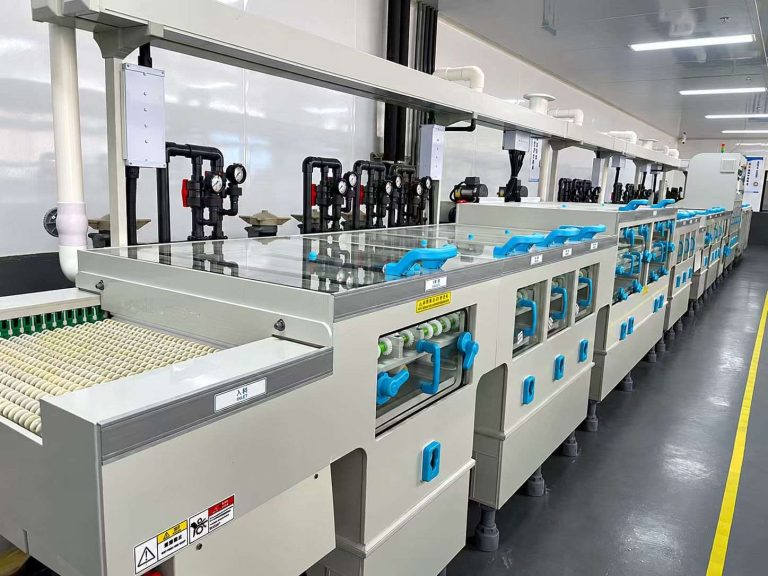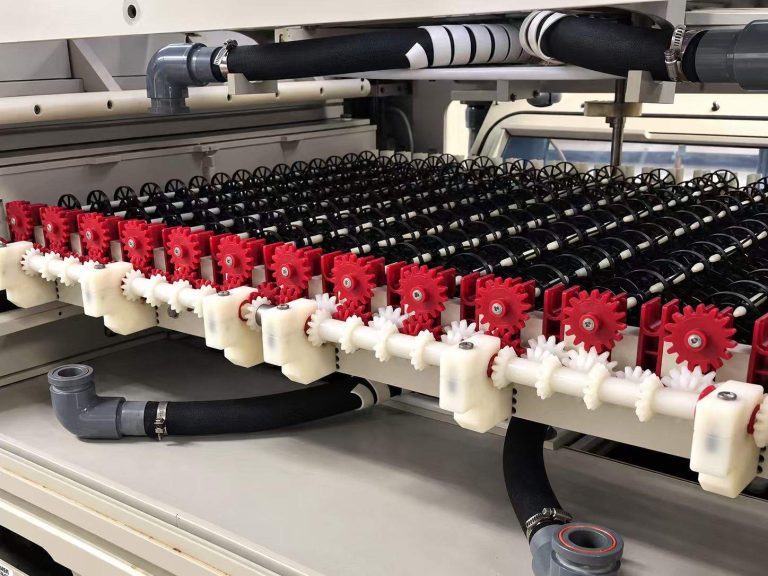
In a PCB wet process line, the sponge roller removes liquid before the board enters the next stage. This small component affects water spots, chemical carryover, dryer load, panel handling and line stability. Good results do not come from pressing the roller as hard as possible. They come from matching sponge roller compression, absorption behavior, material, dimensions and operating conditions.
How Sponge Roller Compression Controls Water Removal
Compression creates the contact area that breaks the water film on the PCB surface. Too little contact leaves wet tracks. Too much contact closes the pores, slows compression recovery and raises wear.
Compression Ratio and Nip Contact
The basic calculation is:
Compression ratio (%) = sponge deflection ÷ original sponge thickness × 100
The formula is useful for recording settings, but it is not a universal target. A soft PVA sponge roller, a firmer PU sponge roller and an EPDM sponge roller react differently under the same nip pressure. Wet diameter, roller density, board thickness, line speed and roller spacing also change the result.
A sound setting gives full-width contact while the roller regains its round shape after the panel passes. For example, a setting that works at 2 m/min may leave residual water at 8 m/min because the pores have less time to absorb and release liquid.
Qixingyuan supplies custom PCB sponge rollers for water-removal and wiping positions. Buyers can provide roller diameter, working length, shaft arrangement, spacing and line speed so the replacement is matched to the machine rather than selected by appearance alone.
What Changes Sponge Roller Absorption on a Running Line
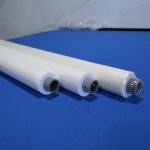
ge roller absorption is a cycle, not one capacity figure. The roller contacts the liquid film, draws water into open pores, releases part of it under pressure, then recovers before the next contact point. Water pickup, retention and release must stay balanced.
Common Symptoms and Likely Causes
| Line symptom | Causa probable | First check |
| Water streaks across the board | Low or uneven contact pressure | Alignment, wet diameter and nip gap |
| Wet edges but dry center | Roller deflection or worn ends | Shaft support and outer diameter |
| Rising dryer load | Lower absorption or faster line speed | Roller condition and conveyor speed |
| Marks on thin panels | Excessive compression or hard surface | Nip pressure and material condition |
| Liquid entering the next tank | Poor release or saturated roller | Drainage, squeezing action and contamination |
Acid, alkali, solvent, temperature and suspended particles can change pore condition, elasticity and service life. A roller may look clean while fine residue inside the sponge restricts water flow. Regular rinsing and a stable nip setting are often more useful than extra pressure.
Qixingyuan offers PVA, imported PVA, PU, PVC, PP and EPDM sponge rollers for different wet-process duties. Procurement teams can compare absorption, softness, chemical exposure, wear resistance and temperature needs through one supplier inquiry.
When Should a PCB Sponge Roller Be Replaced?
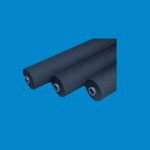
Replacement should be based on performance and physical condition, not only calendar time. First clean the roller, check alignment and return the nip to its recorded baseline. If the problem remains, inspect for permanent compression set.
Typical replacement signs include:
- Flat areas that remain after pressure is removed
- Sponge roller hardening, cracking or surface shedding
- Uneven outer diameter or damaged roller ends
- More water spots after cleaning and adjustment
- Slow compression recovery at the normal line speed
- Core, bore, keyway or shaft damage
- Chemical residue that cannot be removed safely
Before ordering a replacement sponge roller, record the dry and wet outer diameter where relevant, working length, bore or shaft details, keyway dimensions, material, operating temperature, process liquid and quantity. A drawing or old sample gives better control of fit than a photo alone.
Qixingyuan supports replacement rollers made from drawings, samples and machine dimensions. Complete operating data helps its team review mechanical fit and the intended water-removal position before quotation.
Choosing a Sponge Roller Material for PCB Wet Process Lines
Material selection should begin with the station, not a general claim that one sponge is “best.” Final-rinse dewatering, chemical drag-out control and wiping before hot-air drying place different demands on a water absorption roller.
| Material | Main selection reason | Point to confirm |
| PVA | High water absorption and soft contact | Wet expansion and pre-soaking |
| Imported PVA | Stable pickup and recovery | Density, wet size and surface needs |
| PODRÍA | Elasticity, toughness and wear resistance | Temperature and chemical exposure |
| CLORURO DE POLIVINILO | Durability in selected chemical environments | Liquid compatibility |
| PÁGINAS | Acid, alkali and wear resistance | Required absorption level |
| EPDM | Resilient controlled wiping contact | Chemical, temperature and density match |
Material alone does not settle the purchase. Roller roundness, working length, core bonding, shaft accuracy and wet-state diameter can be just as important. A clear inquiry should describe the process position and the fault being solved, such as water streaks, liquid carryover, short service life or board marking.
Qixingyuan’s sponge roller range covers these material choices and can be produced for PCB horizontal wet processing equipment. Buyers can send the existing drawing, roller photos, process liquid and operating conditions for technical review.
About Shenzhen Qixingyuan Equipment Parts Co., Ltd.
Shenzhen Qixingyuan Equipment Parts Co., Ltd. is a supplier of spares and parts for PCB horizontal line wet processing equipment. Established in 2011, the company combines design, production and sales, serving maintenance, equipment-building and purchasing teams that need compatible replacement components. Its product scope includes sponge rollers, air knives, water-retaining rollers, conveyor rollers and wheel discs, gears, screws, spray and cleaning parts, transmission components, bushings, consumables, and measurement and control products.
For sponge roller projects, Qixingyuan can review drawings, samples, photographs and operating data. This is useful when an original part number is missing, equipment has been modified, or a plant wants to compare materials for a chemical section. Its application coverage includes PCB wet process lines, conveyor systems, blowing and drying sections, LCD equipment.
Qixingyuan invites buyers to send dimensions, quantities and process details for a practical replacement assessment and quotation.
Conclusión
Stable residual water removal depends on sponge roller compression, pore recovery, line speed, material and mechanical fit. Pressing harder may hide a worn roller briefly, but it can increase board marking and shorten service life. Record baseline settings, inspect wet-state dimensions and replace the roller when adjustment no longer restores performance. Qixingyuan can assist with material review and custom replacement based on drawings, samples or line data.
Preguntas frecuentes
How Much Should a PCB Sponge Roller Compress?
There is no single percentage for every PCB sponge roller. The correct compression depends on sponge thickness, material, density, wet diameter, board thickness and line speed. Set enough nip contact to remove the full water film, then check that the roller recovers quickly and does not mark thin panels. Record the successful gap as a maintenance baseline rather than copying a value from another line.
Is PVA or PU Better for Residual Water Removal?
PVA is often chosen when high water absorption and soft surface contact are the main needs. PU may suit stations that place more weight on toughness, elasticity, wear resistance or higher operating temperature. The better choice depends on process liquid, line speed, compression recovery and board sensitivity. Buyers should compare wet-state performance, not only dry samples or catalog descriptions.
What Information Should a Buyer Send for a Custom Sponge Roller?
Send material if known, dry and wet outer diameter, inner diameter, working length, total length, shaft or bore structure, keyway details, roller spacing, line speed, process liquid, temperature and quantity. Add clear photographs and a drawing or old sample when available. This information reduces the risk of receiving a roller that fits the shaft but performs poorly in the wet-process station.
Can Maintenance Extend Sponge Roller Service Life?
Yes. Keep rollers clean, follow the correct pre-soaking practice, avoid running a hardened PVA sponge roller against boards, and check alignment before increasing nip pressure. Rinse out particles and chemical residue with a method suitable for the material. Qixingyuan can review recurring wear patterns and supply a matched replacement sponge roller when cleaning or adjustment no longer restores absorption.