Air knife systems play a key role in many industrial setups. They help with drying, cleaning, and cooling tasks across different fields. If you’re in manufacturing or looking to improve your production line, knowing how these systems function can make a big difference. Companies like Shenzhen Qixingyuan Machinery Equipment Co., Ltd. (hereinafter referred to as Qixingyuan) offer reliable energy-efficient air knives that fit various needs, from basic drying to complex cleaning jobs. This article breaks down the basics, step by step.
What Is an Air Knife System?
An air knife system uses a stream of high-speed air to remove liquids, dust, or debris from surfaces. It creates a thin curtain of air that acts like a blade. Unlike traditional methods that rely on heat or wipes, this approach is contact-free. That means less wear on products and fewer chances for damage.
Think of it as a powerful blower focused into a narrow slot. The air comes out fast and even, covering wide areas quickly. In factories, these systems keep things moving without stopping the line. Qixingyuan, for instance, makes air knives in materials like stainless steel or aluminum alloy. These hold up well in tough spots, such as wet or corrosive environments.
Air knives aren’t new, but they’ve gotten better with time. Modern versions handle more tasks efficiently. They cut down on energy use compared to old drying ovens. If your operation involves bottles, circuit boards, or metal parts, an air knife could streamline things.
Key Components of the System
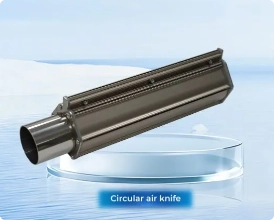
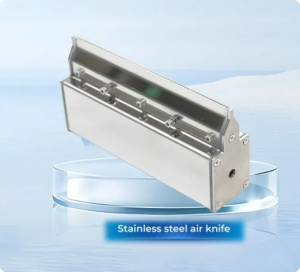
Every air knife system has a few main parts. The blower or compressor supplies the air. It pushes air through tubes to the knife itself—a long, slotted device. Inside, the design shapes the air into a uniform flow.
Nozzles or slots direct the air. Some are straight for flat surfaces; others curve for rounded items. The material matters too. Qixingyuan’s options include durable choices that resist rust and heat. This keeps the system running longer without breakdowns.
Controls let you adjust speed and pressure. Simple setups use manual dials, while advanced ones tie into automated lines. Add filters to keep the air clean, and you’ve got a solid setup. These elements work together to deliver consistent results, day after day.
The Basic Working Principle
At its core, an air knife works by accelerating air to high speeds. Air enters the system under pressure. It then squeezes through a narrow gap, picking up velocity. This creates a laminar flow—a smooth, steady sheet of air.
The fast-moving air hits the surface and shears away unwanted materials. Water droplets fly off; dust gets blown aside. It’s physics in action: high velocity overcomes adhesion. No chemicals or extra tools needed.
In practice, the system mounts above or beside a conveyor. As items pass, the air curtain does its job. Qixingyuan designs their energy-efficient air knives to produce even airflow customizable lengths and air gap widths, avoiding spots where coverage might miss. This leads to drier, cleaner outputs with less waste.
Air knives also save on costs. They use compressed air, which is often already available in plants. Compared to heating methods, they run cooler and cheaper. For businesses aiming to cut expenses, this makes sense.
How Air Flow and Pressure Affect Performance
Air flow determines coverage. Higher flow covers bigger areas but needs more power. Pressure controls the force—too low, and it won’t remove stubborn grime; too high, and it might scatter items.
Balance is key. In food processing, gentle pressure avoids bruising fruits. In electronics, stronger blasts clear tiny particles from boards. Qixingyuan’s air knives allow tweaks to match these needs. Their customizable lengths ensure a good fit for any line.
Temperature plays a part too. Warm air dries faster in some cases. But most systems work at room temp, keeping things simple. Test runs help find the right settings for your setup.
Common Applications in Industry
Air knives show up in diverse fields. In beverage lines, they dry bottles before labeling. No more wet spots ruining stickers. In automotive shops, they blow off paint overspray or cool parts after welding.
Electronics benefit greatly. PCB manufacturing uses them to remove moisture after rinsing. This prevents shorts and improves quality. Qixingyuan supplies air knives tailored for such wet processes, integrating smoothly with horizontal lines.
Textiles rely on them for dust control. Fabrics stay clean without brushes that might snag threads. Even in pharma, air knives maintain sterile conditions by isolating areas with air curtains.
These uses highlight versatility. Whether drying, cleaning, or cooling, the system adapts. Companies like Qixingyuan provide options for straight or ring-shaped knives, handling everything from flat sheets to curved objects.
Benefits for Specific Sectors
In food and drink, air knives cut drying time. Bottles emerge ready for packing, boosting throughput. Less water means fewer mold issues too.
For electronics, precision counts. Qixingyuan’s corrosion-resistant models suit chemical-heavy environments. They help maintain board integrity during wet etching or developing.
Automotive parts get a clean finish. Blown-off debris leads to better coatings. In all cases, reduced energy use lowers bills. Plus, fewer moving parts mean less maintenance.
Installation and Maintenance Tips
Setting up an air knife is straightforward. Mount it securely above the target area. Connect to a blower or compressor. Ensure even spacing for full coverage.
Position matters. Angle it slightly against the flow for better removal. Qixingyuan offers guides on their site to help with this. Their products come ready for quick install, often with brackets included.
Maintenance keeps things running. Clean slots regularly to avoid clogs. Check filters and replace as needed. Inspect for leaks in hoses. Simple steps like these extend life.
Lubricate moving parts if any. In humid spots, dry components after use. Qixingyuan’s durable builds reduce these chores, but routine checks pay off.
Troubleshooting Common Issues
Uneven high-speed airflow? Check for blockages in the slot. Low pressure might stem from a weak compressor. Adjust as needed.
Noise too high? Dampen vibrations with mounts. If drying falls short, boost air speed. Qixingyuan’s designs minimize such problems, but knowing fixes helps.
Power surges can trip systems. Use stable supplies. With care, issues stay rare.
Advantages Over Traditional Methods
Air knives beat out old ways like wiping or heating. No contact means no scratches. They work faster, handling high-speed lines.
Energy savings stand out. Heaters guzzle power; air knives sip it. In green operations, this cuts carbon footprints.
Versatility shines. Switch tasks by changing settings. Qixingyuan’s range covers basic to custom needs, making upgrades easy.
Downsides? Initial cost, but payback comes quick through efficiency. Noise in some setups, though quieter models exist.
Overall, the pros win. Industries shift to them for good reason.
Environmental and Cost Impacts
Less waste from efficient drying. Recycled air in closed systems. Qixingyuan focuses on sustainable materials, aiding eco-goals.
Costs drop with lower energy and maintenance. Faster lines mean more output. For small firms, this levels the field.
Future Trends in Air Knife Technology
Tech advances bring smarter systems. Sensors auto-adjust flow. Integration with IoT monitors performance remotely.
Materials get tougher, lasting longer in harsh conditions. Qixingyuan stays ahead, offering updates that fit evolving needs.
Energy efficiency improves. Variable speed drives cut use further. In smart factories, air knives sync with other machines.
Customization grows. Tailored shapes for unique products. This keeps the tech relevant.
Innovation promises more. Watch for quieter, greener versions soon.
About Shenzhen Qixingyuan Machinery Equipment Co., Ltd.
Shenzhen Qixingyuan Machinery Equipment Co., Ltd. stands out as a trusted supplier of spares and parts for PCB horizontal line wet processing equipment. Founded in 2011, the company started in Shenzhen’s bustling electronics hub, focusing on circuit board accessories. By 2015, they shifted to making their own products, like air knives, boosting their edge in the market.
Today, Qixingyuan handles research, production, and global sales. Their PCB wet process spare parts include brushes, sponges, rollers, gears, nozzles, filters, and more—all built for etching, developing, and cleaning machines. Quality drives everything; materials resist corrosion and wear, fitting tough factory settings.
The team emphasizes custom work. They are customizable in interface type (G1/4, G1/2), length, and air gap width. This helps clients in electronics, food, and autos keep lines running smooth. Exports reach worldwide, backed by solid networks.
Beyond parts, Qixingyuan offers full support. From design tweaks to after-sales help, they build lasting ties. Their site, qxymachinery.com, shows cases in PCB industrial drying and cleaning. Contact them for quotes or advice—they’re ready to assist.
In a field where downtime costs big, Qixingyuan provides reliable solutions. Their growth from a small shop to an international player shows commitment to innovation and service. For anyone in wet processing, they’re a go-to partner.
Conclusion
Air knife systems offer a smart way to handle drying, cleaning, and cooling in industry. They work simply yet effectively, using high-speed air to get jobs done without fuss. From basic principles to real-world uses, these systems boost efficiency and cut costs. As tech evolves, they’ll play an even bigger role. If you’re eyeing improvements, consider how an air knife fits your setup. It could change your operations for the better.