A replacement gear can match the bore and outside diameter yet still be wrong for the drive. In a PCB wet line, tooth form changes how load enters the mesh, how the bearings are loaded, and what the maintenance team must inspect. That is why a spur gear vs helical gear decision should start with the conveyor duty, not a quick visual match. This guide gives equipment engineers and B2B buyers a practical way to compare the two, check nearby interfaces, and prepare an RFQ that a supplier can act on.
Define the Buying Priority Before Comparing Tooth Forms
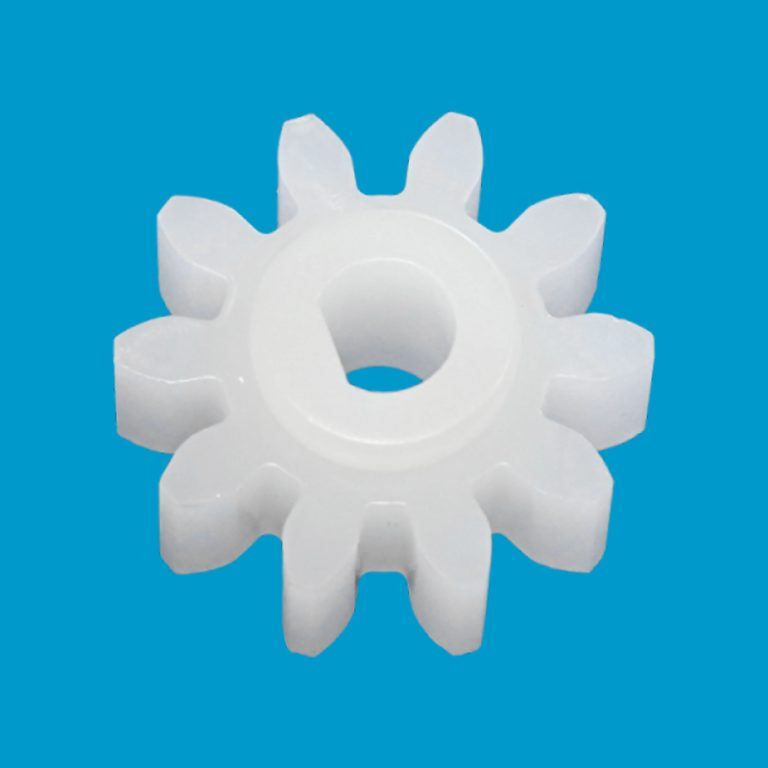
The two gear types can transmit motion between parallel shafts, but they do it differently. A spur gear has teeth parallel to the shaft axis. The full tooth width comes into contact more directly. A helical gear has angled teeth, so contact starts at one end and moves across the face. That gradual entry often gives smoother motion, while the angle also creates an axial force that the surrounding assembly must carry.
What changes when teeth engage gradually?
The key change is not simply noise. Progressive engagement spreads the contact event over time. That can make a helical gear attractive where a conveyor runs continuously or where vibration near thin panels must be kept under control. The trade-off is extra sliding at the tooth surface and thrust along the shaft. The bearing arrangement, shoulders, retainers, and housing stiffness therefore become part of the choice.
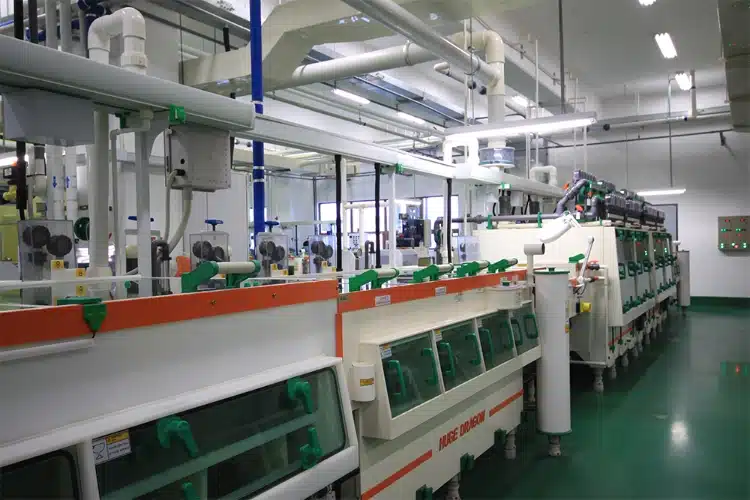
Why wet-line duty changes the decision
Before choosing, record the line section, shaft speed, driven roller count, start-stop frequency, expected load, chemical contact, washdown method, and the current failure symptom. Buyers reviewing transmission gears with Qixingyuan can use this operating picture to discuss the gear together with its shaft and support parts.
Compare Spur and Helical Tooth Forms
| Buyer criterion | Spur gear | Helical gear | Procurement implication |
| Tooth engagement | More direct | Progressive across the face | Review speed, vibration, and contact quality |
| Axial force from mesh | Normally minimal | Present because of helix angle | Confirm thrust support and retention |
| Inspection | Straight tooth geometry is easier to check | Helix hand and angle must also be captured | Send clear side and face views |
| Assembly sensitivity | Strongly affected by center distance and alignment | Also sensitive to axial restraint and helix pairing | Review the full shaft-bearing path |
| Replacement risk | Wrong module or tooth count prevents proper mesh | Wrong hand or angle can make the part unusable | Do not order from diameter alone |
When a spur gear is the practical choice
A spur gear often fits a straightforward parallel-shaft drive where moderate speed, simple bearing support, and easy replacement matter more than the last reduction in mesh noise. It can also be the safer repeat order when the installed system was designed around straight teeth and the factory has a reliable drawing.
When a helical gear earns its extra complexity
A helical gear may suit a continuously running conveyor where smoother engagement is a real operating priority and the assembly already has a defined path for axial force. It is not a drop-in upgrade for a spur drive. The helix hand, angle, mating direction, bearing arrangement, shaft retention, and available side clearance must all be reviewed.
Qixingyuan-PCB-Gear-Product-2.png
Define Requirements Beyond the Gear Itself
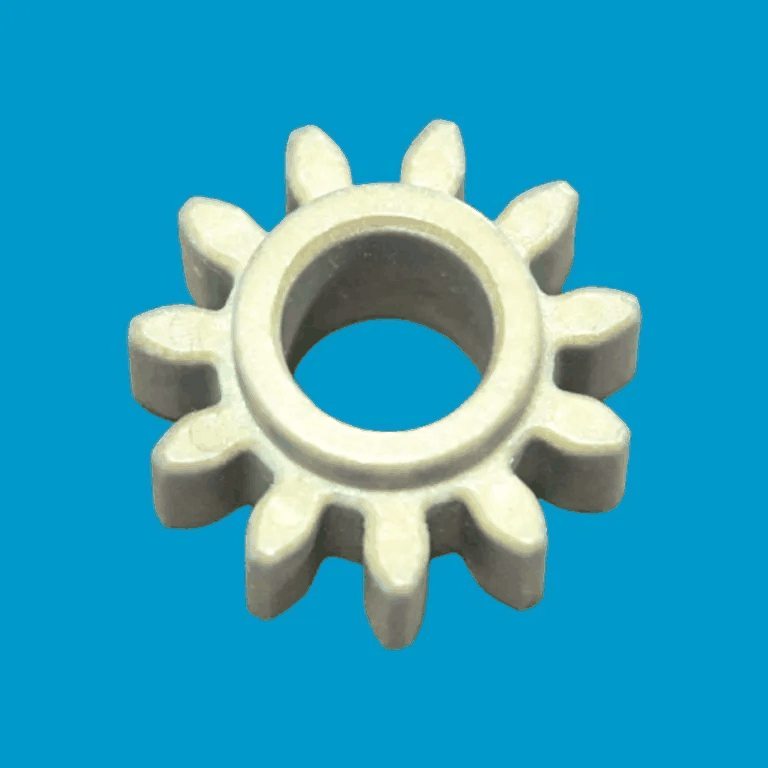
The chosen tooth form works only when the surrounding interfaces support its loads and geometry.
Shaft, bearing, housing, and axial restraint
Check whether the gear runs on a round bore, keyed bore, flat, spline, threaded section, or press fit. Record the working diameter at several positions, not only at the least worn point. Note shoulders, spacers, clips, nuts, and the direction in which the gear can move.
For a helical drive, ask where thrust goes when torque reverses or the conveyor starts. A bearing may locate the shaft in one direction but float in the other. A plastic housing can also flex under a load that was absent with the original spur gear. These are assembly questions, not details to leave until installation.
Module, pressure angle, helix hand, and center distance
Tooth count and outside diameter are not enough to define a gear. The RFQ should identify module or pitch, pressure angle where known, face width, center distance, and mating tooth count. For helical gears, add helix angle, left- or right-hand direction, and the mating arrangement.
Qixingyuan-PCB-Gear-Product-2.png
Supplier Questions That Close the Quote
A complete quote package connects measured geometry with line duty and the buyer’s release plan.
Measurements and operating data buyers should send
Include the following items in one RFQ file:
Gear type, tooth count, module or pitch, face width, and hub geometry
Bore diameter, keyway or flat, shaft drawing, and retaining features
Mating gear details, center distance, rotation direction, and line speed
Material of the current part and the actual chemical and temperature exposure
Failure photos showing tooth wear, bore looseness, cracking, or residue
Required quantity, sample approval plan, and drawing revision
Do not copy a damaged dimension without context. If the bore is oval or the teeth are thinned, the worn sample is evidence of failure, not an automatic master.
Sample-to-drawing and incoming inspection
Convert the chosen geometry into a drawing before batch production. Mark datums, dimensions, material family, tooth definition, and inspection method. A first article can then be checked for free rotation, tooth contact, axial movement, and fit with the mating shaft before the remaining quantity is released.
Qixingyuan supports custom sizes and engineering-plastic gear options, giving purchasing teams a route from sample evidence to a controlled repeat order.
About Shenzhen Qixingyuan Equipment Parts Co.,
Shenzhen Qixingyuan Equipment Parts Co., supplies spare parts and custom replacement components for PCB horizontal wet-process and related equipment. Its gear range includes spur, bevel, helical, pin, and combined forms. Customer materials list steel, alloy, and engineering-plastic options, including PP, UPE, PVDF, and PEEK, with sizes available for custom requirements. The broader product range covers rollers, wheel discs, transmission parts, bushings, spray components, filters, air knives, screws, and measurement or control parts. For equipment builders, maintenance contractors, and PCB factories, Qixingyuan can review a drawing or physical sample together with the application details needed for an RFQ. Final material choice, fit, and acceptance limits should remain tied to the buyer’s actual machine and operating conditions. Its technical discussion can also cover sample condition, mating parts, drawing revision, and first-article checks.
Qixingyuan’s value in this topic is the ability to review the gear as one part of a wet-line transmission assembly, rather than treating tooth form as an isolated catalog choice. Buyers can also discuss mating parts, sample condition, and drawing controls in the same technical inquiry.
Conclusion
The spur gear vs helical gear decision comes down to the existing load path. Spur gears offer a simpler arrangement; helical gears can provide more gradual engagement but bring axial force and more interface checks. Neither should be selected from outside diameter alone. Record the tooth form, mating geometry, shaft fit, bearings, retention, duty, exposure, and release method before ordering.
For a new or replacement PCB conveyor gear, Qixingyuan can review the drawing, sample evidence, and operating details and help buyers prepare a technically clear quotation request.
FAQ
These questions cover the points most likely to affect fit, commissioning, and repeat orders.
Does angled tooth form always mean smoother PCB conveyance?
Angled teeth engage progressively, which can support smoother motion, but the result depends on the complete assembly. Wrong helix pairing, weak axial restraint, shaft movement, poor center distance, residue, or a worn mating gear can cancel the expected benefit. Buyers should compare the current symptom with the bearing and housing arrangement before changing tooth form. A controlled first-article trial is more reliable than assuming every helical gear will improve the line.
Does switching tooth form affect neighboring components?
Yes. Replacing a spur gear with a helical gear can add axial force and may change the required face width, side clearance, bearing location, and retention. The mating gear must have the correct helix relationship, and the shaft or housing must carry thrust in both working directions. A tooth-form change is therefore a small redesign, not a routine spare-parts swap, even when bore and outside diameter look similar.
Which operating details help a buyer choose between the two?
Provide shaft speed, driven load, start-stop pattern, direction changes, noise or vibration symptoms, chemical exposure, washdown practice, and the condition of the mating gear and supports. Add the original drawing, clear photos, and center distance. These details connect the spur gear vs helical gear choice to real duty. Without them, a supplier can copy geometry but cannot judge whether the assembly itself caused the failure.
Can a worn sample still support a repeat order?
It can, provided the sample is treated as evidence rather than a perfect master. Measure several unworn regions, inspect the mating gear, compare any older spare, and reconstruct the functional dimensions in a drawing. Mark uncertain values for first-article confirmation. Keep the approved sample and drawing revision after testing. This process reduces the risk of reproducing bore looseness, tooth thinning, or damage that developed during service.
Qixingyuan can support this evidence-led RFQ process with relevant gear and transmission parts, while the buyer’s drawing and incoming inspection plan remain the final technical control.