Choosing between filter bags and string-wound filter cartridges for PCB wet processing requires more than comparing micron ratings or purchase prices. The two filtration formats differ in media construction, housing compatibility, particle retention, and maintenance requirements.
For PCB cleaning, developing, etching, and rinsing circuits, selection should be based on the actual process liquid, contaminant load, required filtration efficiency, operating flow, and approved changeout criteria. This guide explains the key differences and the checks required before selecting or replacing either filtration format.
Filter Bags vs String Wound Cartridges: Key Selection Differences
| facteur de sélection | Filter bags | String-wound cartridges |
| Filtration path | Mesh bags mainly retain solids at the surface; felt bags can also provide depth filtration. | Wound yarn provides a depth-filtration path through the cartridge wall. |
| Fit to verify | Bag size, ring, seal, basket support, and housing geometry. | Length, outside diameter, core, end configuration, seal, and housing fit. |
| Loading evidence | Check retained solids, bag condition, flow, and differential-pressure trend. | Check loading through the wound depth, cartridge condition, flow, and differential-pressure trend. |
| Changeout work | Allow for lifting, draining, de-watering, containment, and disposal of the wet bag. | Allow for housing access, removal of one or more wet cartridges, containment, and disposal. |
| Specification focus | State media construction, rating basis, dimensions, seal or ring details, compatibility, and quantity. | State yarn and core construction, rating basis, dimensions, end or seal details, compatibility, and quantity. |
| Final decision | Select only after confirming retention, fit, pressure drop, replacement cycle, and total process cost on the wet line. | Select only after confirming retention, fit, pressure drop, replacement cycle, and total process cost on the wet line. |
Identify the Target Media
There are many parameters that can influence the optimal media, including but not limited to: particle size(s), distribution, concentration, pH, thermal regime and end-use water demand. There is no single ‘micron rating’ that can adequately characterize the full requirement. The Qixingyuan filter products provides an official or authoritative reference for this part of the decision.
Therefore, for your particular requirement, establish a fixed set of criteria. Set the initial state, desired final state, applicable limits and nominated approver. Where a parameter has not been defined, state this and validate it prior to progressing the project. Doing so ensures all functions (commercial, design, production, vendor) have the same starting point and aren’t left assuming values.
Assess the Media Geometry
As noted, Mesh filter bags primarily retain particles at the media surface, while felt filter bags and string-wound cartridges can provide depth filtration. Actual retention efficiency and dirt-holding capacity depend on the media construction, micron-rating basis, flow conditions, and contaminant characteristics. Of course, this will again depend on product detail and the process being applied. The EPA industrial water resources provides an official or authoritative reference for this part of the decision.
Applying this to your requirement
Fix all other variables (process, geometry, weather, acceptance etc) and challenge the products to fulfill your need. Once satisfied of the minimum necessary, remove any further options that can be considered desirable, additional or beneficial. You’ll likely find that some increased specification will simply lead to unnecessary expenditure and associated issues (e.g. training, handling…). Ensure the selected product revision is retained for subsequent orders.
Review the Fitting
Ensure the appropriate ring(s), core, seal(s), length(s) and diameter(s) and basket are available for the in-situ fitting. If the chosen media is able to weep past the seal, there is little benefit to its inclusion. The OSHA chemical safety provides an official or authoritative reference for this part of the decision.
Also take note of the upstream and downstream effects of the selection. Changes to the preceding circuit may affect the ingress to the product, and the following components and end-users may mask deficiencies in the chosen product for a period. Map out the relevant loop, identify transfer stages and consider what data can be collected along the way. This will frequently highlight any gaps in your knowledge and assumptions.
Monitor Differential Pressure
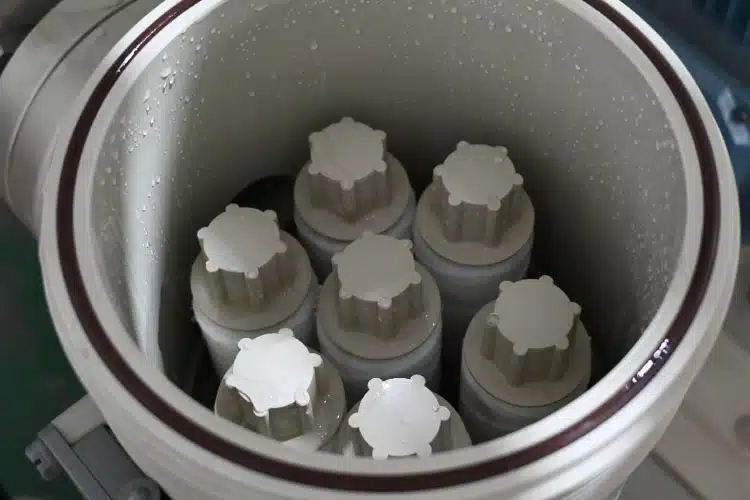
Establish baseline and running DP at similar flow rate(s) and fluid properties. An increase in DP is obviously an indicator of increasing media loading, but care should be taken to rule out any other cause (pump, isolation, pipework, end-use). The Qixingyuan products provides an official or authoritative reference for this part of the decision.
Applying this to your requirement
Again, base this assessment on more than a single “best-case” instance. Consider a range of reduced, typical and elevated cases and extend the duration of monitoring to establish the reliability of the finding. Take consistent images and notes of key characteristics during the test. While you don’t need to simulate all potential events going forward, ensure that your evaluation sufficiently demonstrates the robustness of the product for your target application and identifies the exceptions.
Evaluate the Replacement Cycle
Consider the time and quantity of fluid required to empty, remove, de-water, dispose of, expose the operator to and re-commission the circuit. In some cases, this may outweigh any difference in media cost. The Qixingyuan technical contact provides an official or authoritative reference for this part of the decision.
As above, capture the details of the decision within the commercial record (media, description, construction, length, dia., rev, qty, pack, attachments, etc). Refrain from using terms such as ‘to commercial standard’ or ‘adequate’ unless specifically warranted. On receipt of any subsequent quote, check the offer against the original terms and conditions. You may well find that the reduced price is attributable to an omissions or revised premise.
Determine the Overall Process Cost
Naturally, the total spend will include the media and any related manhours, lost production, chemicals, board rejections and waste disposal. As such, the media cost alone will not differentiate the most effective solution.
Applying this to your requirement
Rather than seek a single “service life”, consider how you will track the degradation of the product. Establish the level of visibility afforded to the user, what readings can be used as a proxy, what remedial actions can be undertaken by which party and what level of escalation will be triggered. Not only will this facilitate ongoing operation, but also provide a better basis for the next product selection.
Trial the Product on the Wet Line
Hold the circuit constant with respect to water, flow, product(s) and any checks. Ensure you record the full details of the media to enable re-ordering if the trial is successful.
Identify a sign-off and approver(s)
Depending on the organization, the responsibility for the design, QA, fit-for-purpose and purchase of the product may be allocated across different departments. Once identified, the relevant parties will be in a position to reach a decision on a timely basis. In doing so, you will have addressed the key question posed at the outset and provided a clear path forward for the procurement function.
FAQ
What data should I gather prior to enquiring about filter bags and string-wound cartridges?
The required task, working limits, any pertinent site and customer parameters, adjacent equipment, key limitations, desired goal and the metric(s) by which it will be assessed. Include imagery, CAD, physical examples or period data if helpful to convey the context.
Will the product with the greatest specification always be the best?
No. There will often be diminishing returns beyond a certain level, resulting in additional spend and potential complications. Following the guidance above should allow you to identify the critical parameter(s) for the project.
Can I undertake any steps to minimize exposure prior to committing to a significant run or product selection?
Yes, consider the use of a scaled-down product, sample, extended trial and/or modeling. Ensure the product revision and key premises are captured, and that the relevant functions (fit, run, strip, commercialize, maintain…) are consulted. Proceed with the product(s) that your findings warrant.
Summary
By starting with the process and applying the methodology outlined in this article, you can arrive at a defensible conclusion regarding the filter media to be used in your wet loop. By fixing the working conditions, considering the wider loop, conducting a suitable validation and retaining the relevant product revision, you can avoid significant overspend while preventing this topic from consuming disproportionate attention. The following will therefore serve as a good basis for engaging with Qixingyuan and flag the remaining items requiring engineering sign-off.