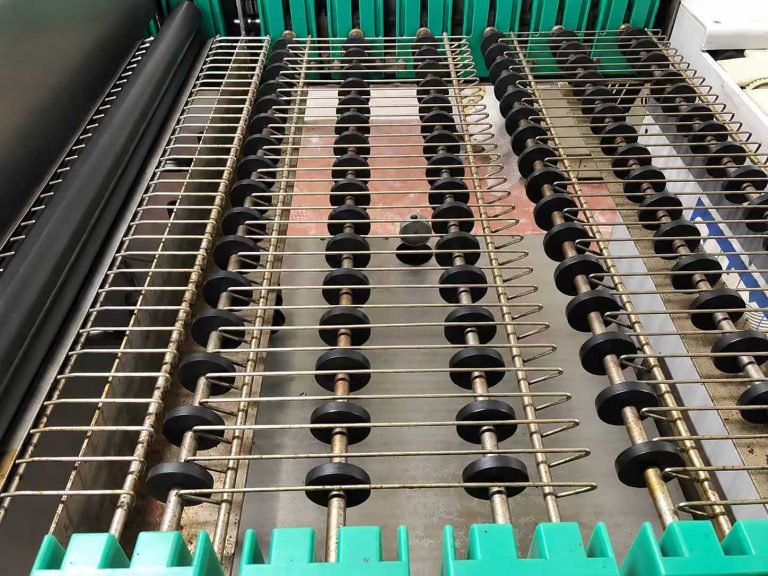
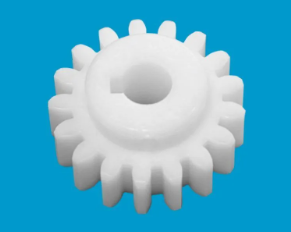
Gear wear in PCB etching machines often starts as a small maintenance issue. A little noise. A slight delay in board movement. Some vibration near the conveyor drive side. After a few weeks, the problem becomes more expensive: unstable PCB transport, uneven etching, more downtime, and repeated spare part replacement.
In a PCB wet process line, gears work in a difficult place. They face water, chemical mist, heat, friction, and long production hours. Standard gears may run well in dry equipment, but they may fail quickly in developing, etching, rinsing, cleaning, or drying sections. For PCB factories, the question is not only how to replace worn gears. The better question is how to choose the right gear material, check the transmission system early, and build a maintenance routine that keeps the etching line stable.
Why Do Gears Wear Out in PCB Etching Machines?
Gear wear in PCB etching machines is rarely caused by one single factor. In many factories, wear comes from a mix of chemical attack, poor material match, shaft deviation, high-speed operation, and delayed maintenance. When these factors appear together, even a small plastic gear can become a weak point in the full conveyor transmission system.
Chemical Exposure Weakens the Wrong Gear Material
PCB etching machines work around etching solution, cleaning liquid, acidic mist, alkaline residue, and constant humidity. If the gear material has poor chemical resistance, the tooth surface may become rough, swollen, brittle, or slightly deformed. At first, this change is hard to see. Later, the gear starts to mesh badly with the matching gear, and tooth wear becomes faster.
Plastic gears used in PCB equipment need more than simple strength. They need chemical resistance, low water absorption, stable size, and smooth tooth contact. In etching and developing sections, the wrong material can lose accuracy long before the gear is physically broken.
Continuous Conveyor Motion Adds Tooth Fatigue
A PCB conveyor may run for long shifts with little rest. Each gear tooth carries repeated contact load thousands of times per hour. If the board width changes often, or if the line handles thin panels and heavier panels in the same shift, the transmission load can also change. Over time, the tooth profile becomes thinner, backlash grows, and board movement becomes less stable.
Les signes courants incluent :
- light clicking near the drive side
- small vibration at low speed
- uneven board spacing
- gear powder or plastic dust
- tooth edge rounding
- repeated replacement at the same machine position
Alignment Problems Make Wear Much Faster
Material is important, but gear alignment is just as important. A good gear can still wear early if the conveyor shaft is bent, the bushing is loose, or the transmission holder is not fixed in the right position. Misalignment causes partial tooth contact. Instead of sharing load across the full tooth width, the gear carries force on one side. This creates edge wear, heat, and noise.
Qixingyuan supplies PCB machine gears, screws, conveyor rollers, wheel discs, transmission shaft holders, bushings, spacer sleeves, and related spare parts for horizontal wet processing equipment. For buyers dealing with repeated gear wear, checking these connected parts together often gives a clearer answer than replacing only the worn gear.
Which Gear Material Works Best in PCB Wet Process Lines?
No single material is best for every PCB etching machine. A gear used near strong chemical spray needs different performance from a gear used in a lighter transfer area. Material selection should consider chemical exposure, temperature, load, speed, cleaning method, and how often the line runs.
PP Gears for Cost-Sensitive Chemical Resistance
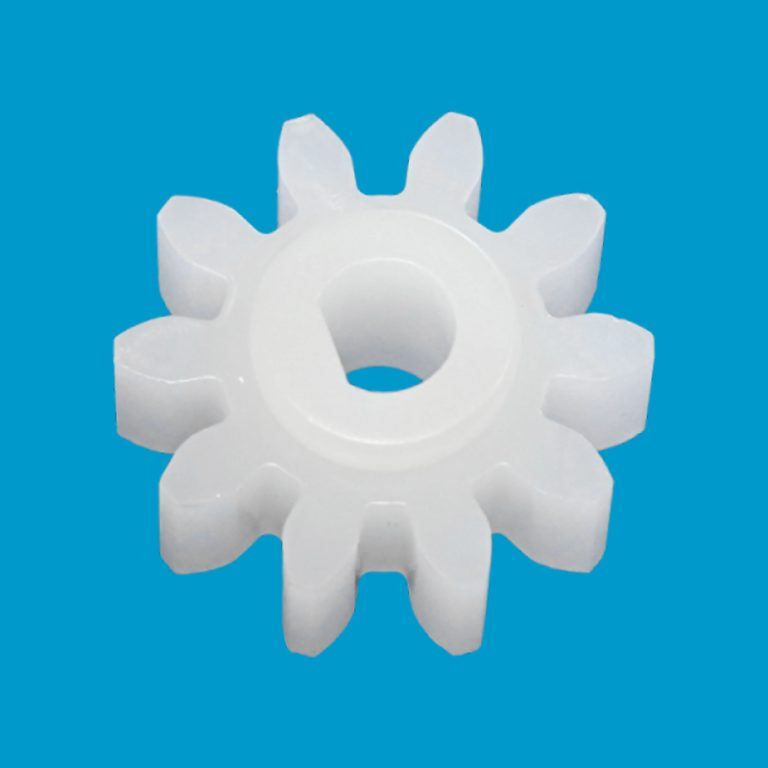
PP gears are widely used in PCB wet process equipment because they offer useful chemical resistance at a reasonable cost. They are often suitable for light to medium load positions where the gear needs to resist water, acid, alkali, and general wet line conditions.
PP gears are a practical choice when the machine position does not face heavy torque or high temperature. For factories with many similar conveyor points, PP can also help control spare part cost while keeping enough durability for daily operation.
PVDF Gears for Stronger Chemical Conditions
PVDF gears are often chosen for harsher chemical environments. Compared with many standard plastics, PVDF offers stronger chemical resistance, better heat resistance, and good long-term stability in wet conditions. In PCB etching machines, PVDF spur gears can be a better fit for sections exposed to more aggressive chemical mist or higher process temperature.
When a factory keeps replacing the same PP gear too often, PVDF may be worth testing. The purchase price can be higher, but fewer shutdowns and longer service life may reduce the total cost.
POM Gears for Smooth Motion and Low Friction
POM gears are known for low friction, good wear resistance, and stable machining performance. They can work well in transmission positions that need smooth movement and accurate tooth contact. However, POM should not be treated as a universal answer for every chemical area. Its use should be checked against the actual solution, temperature, and contact time.
For dry or lighter wet positions, POM gears can help reduce noise and friction. For stronger chemical zones, PP or PVDF may be safer choices.
SUS and Titanium Gears for Special Strength Needs
Some PCB equipment positions may need metal gears because of strength, structure, or load requirements. SUS gears and titanium gears can be used in special applications where plastic gears cannot meet mechanical needs. Still, metal gears in chemical environments need careful review, because chemical compatibility matters as much as strength.
| Matériel | Best Fit in PCB Equipment | Main Advantage | Buyer Should Check |
| PP | General wet process conveyor positions | Cost-effective chemical resistance | Load, temperature, tooth wear |
| PVDF | Etching, developing, stronger chemical areas | Better chemical and heat resistance | Budget, delivery time, exact size |
| POM | Smooth drive and lower friction positions | Good wear resistance | Chemical contact level |
| SUS | Higher strength mechanical positions | Strong structure | Corrosion risk |
| Titane | Special chemical and strength positions | Light, strong, corrosion resistant | Cost and application need |
Qixingyuan provides PP, PVDF, POM, SUS, and titanium gear options for PCB horizontal line wet processing equipment. Its gear category includes spur gears, helical gears, bevel gears, pin gears, double gears, screws, and related transmission components, helping maintenance teams match material and gear type to real machine conditions.
How Can Maintenance Reduce Gear Wear Before It Stops Production?
Good maintenance does not mean replacing gears every time noise appears. It means finding the cause before the wear spreads to the conveyor shaft, rollers, bushings, holders, and nearby transmission parts. For a PCB etching line, a short inspection routine can prevent hours of downtime.
Check Gear Teeth During Planned Stops
A gear inspection does not need complex tools at the first stage. During a planned stop, the maintenance team can look for tooth thinning, rough tooth faces, cracks, missing corners, chemical marks, and plastic powder around the drive area. The same inspection should also compare the worn gear with a new sample or stored spare part.
If tooth wear is found only on one side, alignment should be checked. If the full tooth surface is worn evenly, the problem may be load, speed, material, or service time.
Clean Chemical Residue Around the Gear Area
Chemical residue is a silent cause of gear damage. Dried solution, crystals, sludge, and small particles can enter the gear mesh and act like abrasive dust. The gear then wears faster even if the material itself is suitable.
A practical cleaning routine should cover:
- gear tooth gaps
- shaft ends
- bushing areas
- holders and brackets
- nearby wheel discs
- splash zones near chemical spray
Cleaning also makes inspection easier. A gear covered with residue hides early cracks and surface wear.
Check Shafts, Bushings, and Holders Together
Replacing the gear alone may not fix the root cause. If a conveyor shaft has runout, the new gear will wear in the same pattern. If a bushing is loose, the gear center distance changes during operation. If a holder is cracked or shifted, gear meshing becomes unstable.
| Inspection Point | What to Look For | Risk if Ignored |
| Gear tooth face | Thinning, cracks, uneven marks | Poor meshing and vibration |
| Arbre | Bend, runout, looseness | Edge wear and noise |
| Bushing | Loose fit, chemical swelling | Center distance change |
| Holder | Cracks, movement, poor fixing | Gear misalignment |
| Residue area | Sludge, crystals, particles | Abrasive wear |
de Qixingyuan PCB transmission system parts include conveyor shafts, bushings, transmission shaft holders, spacer and locking sleeves, rollers, wheel discs, and gears. For factories facing repeated failure, buying matched spare parts from the same supplier can make repair work more consistent and reduce mismatch between old and new components.
What Gear Specifications Should Buyers Confirm Before Ordering?
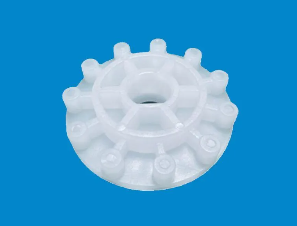 Many gear replacement problems happen before the part reaches the machine. A buyer may order the right material but the wrong bore size, tooth number, thickness, or gear type. In PCB wet process equipment, small dimensional errors can cause poor meshing, faster wear, or installation delays.
Key Dimensions to Check
Before ordering replacement gears for PCB etching machines, maintenance teams should confirm the following details:
- gear material
- gear type
- module
- number of teeth
- outer diameter
- bore diameter
- gear thickness
- shaft fit
- keyway or fixing method
- working position in the machine
- chemical exposure level
- operating temperature
- running speed
- sample photo or drawing
A clear drawing is best. If no drawing is available, a used sample can still help the supplier check tooth shape, hole size, thickness, and structure. Photos should show both sides of the gear, tooth profile, and installation area.
Match Gear Type to the Machine Position
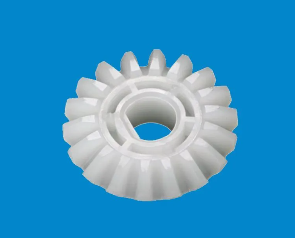
Spur gears are common in simple conveyor drive positions because they are direct, easy to replace, and suitable for many straight transmission layouts. Helical gears can support smoother meshing and lower noise in certain positions. Bevel gears are useful where the drive direction changes. Double gears and pin gears may appear in more compact or special structures.
The right choice depends on the original machine design. Changing gear type without checking the whole drive layout can create new problems. For most replacement work, the safest route is to match the original structure while improving material quality if the old part failed too early.
Qixingyuan supports custom PCB machine gears based on drawings, samples, or detailed specifications. For B2B buyers, this is useful when the original machine part is hard to source, when the same gear keeps failing, or when the wet process line needs a more chemical-resistant material for longer service life.
À propos de Shenzhen Qixingyuan Machinery Equipment Co., Ltd.
Shenzhen Qixingyuan Machinery Equipment Co., Ltd. is a PCB horizontal line wet processing equipment spares and parts supplier based in Shenzhen, China. Established in 2008, the company focuses on the design, production, and supply of high-precision accessories for PCB and LCD wet process equipment. Its main product range includes air knives, water retaining rollers, conveyor rollers, wheel discs, gears, screws, spray and cleaning parts, transmission system components, bushings, consumables, and measurement products.
For PCB etching, developing, cleaning, rinsing, drying, and transmission applications, Qixingyuan works with buyers who need stable replacement parts for demanding wet line conditions. The company supports custom spare parts according to drawings, samples, material needs, and machine positions. For factories facing gear wear, conveyor instability, or repeated part failure, Qixingyuan can help check material options and related transmission components for a more reliable replacement plan.
Conclusion
Solving gear wear in PCB etching machines starts with the right material, but it does not stop there. PP, PVDF, POM, SUS, and titanium gears each have their place. The best choice depends on chemical exposure, load, temperature, shaft condition, and conveyor layout. Maintenance teams should inspect gear teeth, clean chemical residue, check bushings and shafts, and replace worn gears before they affect board transport or etching quality.
For PCB factories, better gear selection can reduce downtime, protect etching stability, and cut the hidden cost of repeated emergency repairs. A small gear can decide whether a wet process line runs smoothly or stops at the worst time.