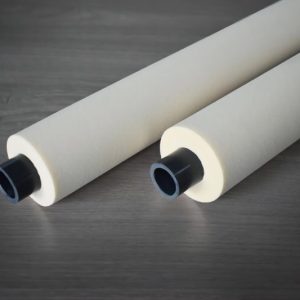
A sponge roller looks simple, but a poor choice can leave water marks, raise chemical carry-over, scratch thin panels, or fail early. For PCB wet process lines, sponge roller selection starts with two questions: what liquid touches it, and how soft should contact be? Temperature, concentration, compression, wet size, and line speed also matter.
Start With the Actual Chemical Exposure
Chemical resistance must be checked against the real process, not a broad label such as “acid resistant.” A material may work in a cool rinse but swell or weaken in a hot bath. Light spray and continuous wet contact also create different demands.
Before choosing a chemical resistant sponge roller, record:
- Chemical name, concentration, and pH
- Working temperature and shift length
- Spray, splash, wipe, or immersion
- Position before or after rinsing
- Cleaners, additives, and solvent residues
Why Process Position Changes the Choice
After final rinsing, the main task is usually water removal, so absorption and clean contact come first. Near etching, developing, stripping, or plating zones, chemical compatibility and dimensional stability carry more weight.
PVA may suit a rinse-to-dryer section because it picks up water quickly. In a harsher chemical zone, PP, PVC, PU, or EPDM may be a better starting point. The exact liquid and temperature still need review; no sponge material should be described as resistant to every acid, alkali, or solvent.
Qixingyuan supplies PVA, PU, PP, PVC, and EPDM sponge rollers for PCB wet-processing positions. Buyers can compare water-removal and chemical-duty options around the actual process.
Match Softness With Density and Recovery
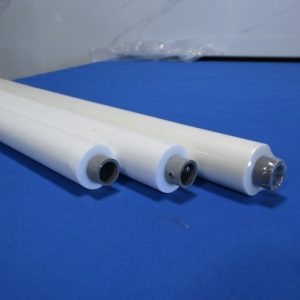
Sponge roller softness changes contact area, squeeze pressure, and water release. A hard roller may press on board edges. An overly soft roller may flatten, hold an uneven nip, or recover too slowly.
Density is useful, but it is not the same as hardness. Rollers with similar density can behave differently because of pore size, polymer structure, wall thickness, and wet condition.
Check Performance in the Wet State
PVA rollers show why wet measurements matter. They may absorb roughly eight to ten times their own weight in water and expand about 3–5 mm after soaking. A roller selected only by dry outside diameter may run with excessive pressure once wet.
A practical trial should check:
- Dry and soaked outside diameter
- Compression at the working gap
- Recovery after repeated passes
- Water left on the panel
- Edge marks, vibration, or shedding
Qixingyuan can make स्पंज रोलर्स to a drawing or sample, with specified diameter, working length, core, and density. Wet-state size and roller gap help its team discuss contact, compression, and recovery.
Compare Sponge Roller Materials by the Job
No material leads in every position. The choice depends on water pickup, chemical exposure, wear, temperature, and contact.
| सामग्री | Main buying reason | Point to verify |
| पीवीए | High water absorption and soft wiping | Wet expansion and storage |
| सकना | Resilience and repeated compression | Liquid and temperature |
| पीपी | Acid/alkali screening and wear resistance | Bath concentration |
| पीवीसी | General solvent-contact duties | Specific solvent and time |
| ईपीडीएम | Elastic wiping in matched applications | Formula and existing design |
PVA for Rinse-to-Dry Water Removal
A PVA sponge roller is often used after cleaning or rinsing and before hot-air drying. Its absorbent structure supports fast water pickup and broad surface contact. Buyers should plan for pre-soaking, wet expansion, and the correct roller spacing.
PU for Repeated Compression
A PU sponge roller suits positions where bounce-back, toughness, and wear resistance matter. It can fit lines with repeated squeezing or frequent starts and stops. Qixingyuan lists PU options for wet-process water removal and working temperatures up to about 110°C, subject to the actual liquid and setup.
PP, PVC, and EPDM for Chemical Duties
PP is often screened for acid and alkali exposure where wear also matters. PVC may fit general solvent-contact zones when maximum absorption is not the first goal. EPDM is best treated as a matched elastomeric option: liquid, heat, density, shaft design, and original equipment requirements should agree.
Qixingyuan also supplies brush rollers, nozzles, filters, air knives, conveyor parts, and transmission components, helping maintenance buyers source related wet-line parts with consistent application data.
Check Installation Conditions Before Production
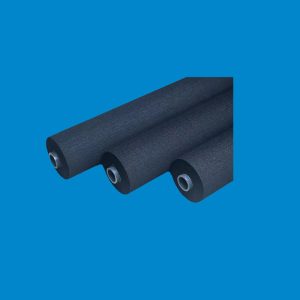
Even a correctly selected sponge roller can perform poorly when the installation gap, alignment, or soaking procedure is wrong. Before starting the line, confirm that both roller ends sit at the same height and rotate without visible runout.
Set the Roller Gap in Wet Condition
For absorbent materials, the working gap should be checked after the roller reaches its normal wet size. Too much compression can increase motor load, damage panel edges, and shorten roller life. Too little compression may leave a continuous water film or droplets around drilled holes.
Inspect Rotation and Surface Contact
Run the line at low speed first. Watch for vibration, slipping, uneven contact, or water streaks. The roller should touch the panel across its full working width without bending thin boards. Recheck bearings, shafts, and parallel alignment when marks appear only on one side.
Qixingyuan supplies custom sponge rollers and related shafts, bearings, conveyor parts, and transmission components for PCB wet process equipment. Buyers can provide installation drawings, roller spacing, line speed, and wet dimensions for replacement-part review.
Build a Useful RFQ Before Asking for a Quote
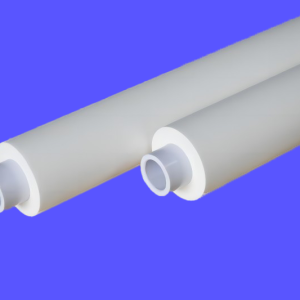
“Need a soft sponge roller” gives a supplier too little information. A clear RFQ reduces back-and-forth and makes material advice more relevant.
Include:
- Outside diameter, inside diameter, and working length
- Shaft, bore, tube, or core structure
- Chemical name, concentration, and temperature
- Line position, speed, and roller gap
- Preferred density, softness, or pore size
- Dry and wet dimensions
- Current failure: swelling, cracking, glazing, shedding, or weak pickup
- Drawing, sample, photos, quantity, and annual demand
Describe the symptom as well. A continuous film, edge droplets, water in holes, and random streaks may point to different issues involving absorption, nip pressure, pore condition, or roller roundness.
Qixingyuan accepts dimensions, drawings, and samples for custom wet-process parts. A complete RFQ supports discussion of material, softness, core design, fit, and trial quantity.
शेन्ज़ेन किक्सिंगयुआन मशीनरी इक्विपमेंट कंपनी लिमिटेड के बारे में।
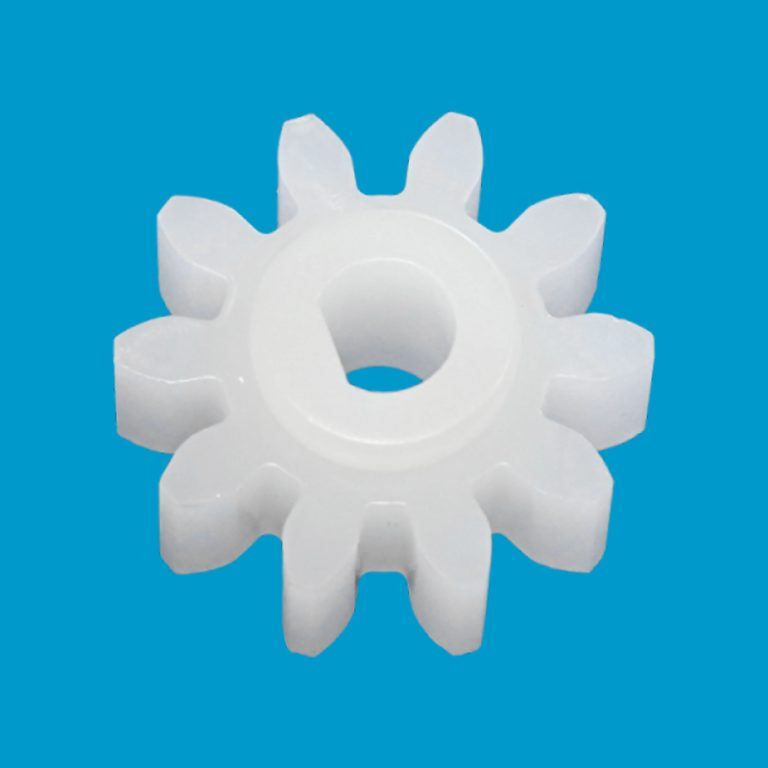
शेन्ज़ेन किक्सिंगयुआन मशीनरी इक्विपमेंट कंपनी लिमिटेड is a supplier of spares and parts for PCB horizontal line wet processing equipment. Established in 2011, the company integrates design, production, and sales. Its product scope includes sponge rollers, brush rollers, air knives, conveyor rollers, wheel discs, gears, nozzles, filters, transmission parts, consumables, and measurement components.
The company serves PCB wet process lines, conveyor systems, drying sections, LCD and glass cleaning lines, electroplating equipment, and drawing-based projects. This helps when a roller order also needs matched shafts or spray parts. Buyers may submit process conditions, dimensions, drawings, or samples for review. Qixingyuan’s service is built around custom fit, practical material selection, and repeat supply for production and maintenance teams.
निष्कर्ष
Sponge roller selection should begin with the liquid and finish with the contact condition. Check the chemical, concentration, temperature, exposure time, wet diameter, compression, and recovery. Then compare PVA, PU, PP, PVC, and EPDM against the real line position.
Qixingyuan offers several sponge roller materials and drawing-based production for PCB wet-processing applications. Complete operating details give both buyer and supplier a clearer path to a workable quotation and sample trial.
पूछे जाने वाले प्रश्न
Which sponge roller is best for acid and alkali exposure?
PP is often screened first where acid or alkali resistance is the main need, while EPDM may suit some elastic wiping duties. The answer still depends on the chemical formula, concentration, temperature, additives, and exposure time. Ask the supplier to review process data instead of relying on a general resistance claim. A sample run is sensible when the bath is concentrated, heated, or chemically mixed.
Is PVA or PU better for water removal before drying?
PVA is usually reviewed first when high water pickup and soft contact are the main goals. PU may be preferred when repeated compression, wear resistance, fast recovery, or higher temperature matters more. Compare both at the actual working gap. The useful result is not dry absorption data alone; it is the amount of water left on a moving panel after stable production.
What dimensions are needed for a custom sponge roller quote?
Provide outside diameter, inside diameter, working length, total length, and the core or shaft structure. Add any keyway, flat, thread, or end detail. For PVA, include the required wet-state diameter and available gap. Also state line speed, upper/lower roller layout, chemical exposure, temperature, and current failure symptoms. A drawing is best, while a sample and measured photos can also support replacement work.
When should a sponge roller be replaced?
Replace it when liquid removal becomes uneven, recovery slows, or the surface becomes glazed, cracked, or damaged. Shedding, excess swelling, and an uneven outside diameter are also warning signs. Streaks after cleaning may point to blocked pores or poor roundness. Record service hours and failure signs by line position; this gives purchasing teams better data for the next material choice and spare-stock plan.