What Blocks Nozzles in PCB Wet Processing Lines
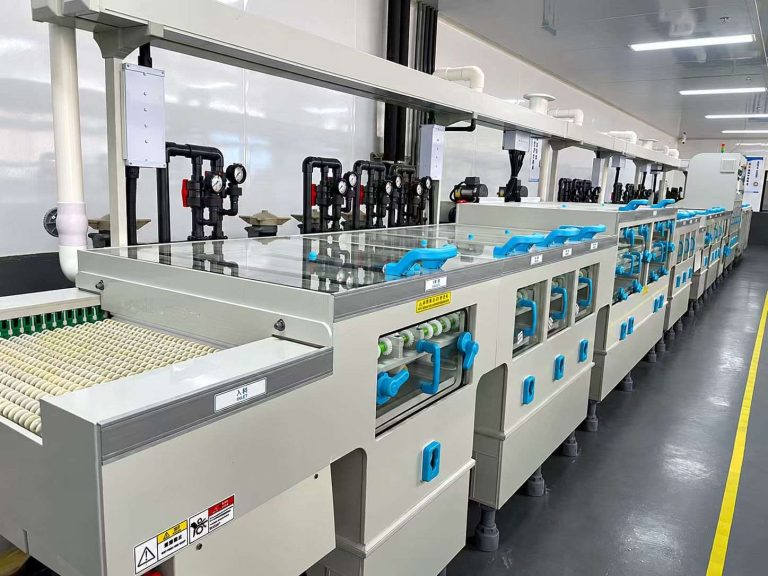
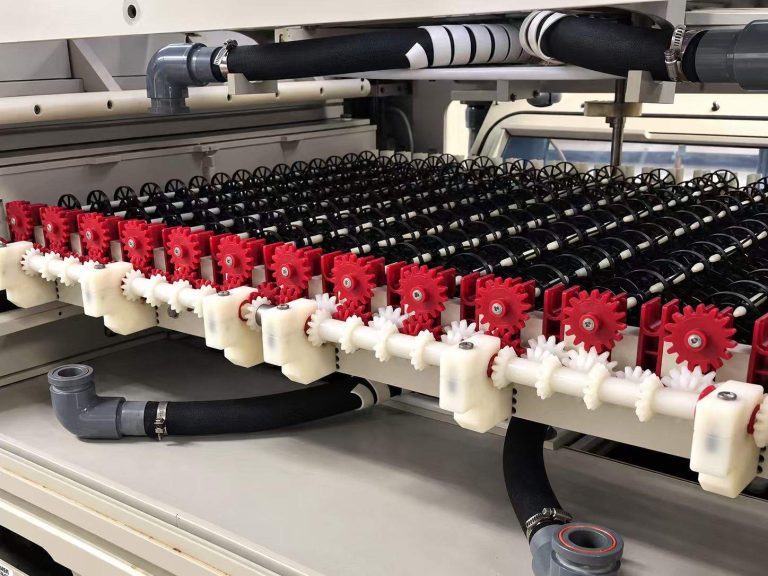
Cleaning, developing, etching, and rinsing liquids may carry board debris, resin, chemical crystals, tank scale, and pipe residue. At a small nozzle opening, these solids can bridge together and form a plug.
Partial blockage is easy to miss. The nozzle still sprays, but its fan narrows or flow falls. Raising pump pressure may hide the symptom while stressing the filter and piping.
Qixingyuan supplies filter cartridges, nozzles, pipes, joints, and other spray and cleaning parts for PCB horizontal wet lines, helping maintenance buyers examine the full liquid path instead of replacing one part in isolation.
How Filter Cartridge Selection Protects Spray Performance
A filter cartridge for spray nozzles is the particle barrier between the tank and spray section. It must capture risky solids while passing enough liquid without excessive filter pressure drop.
Correct selection supports:
- stable flow across spray branches;
- less buildup at nozzle openings;
- longer intervals between cleaning stops.
A coarse cartridge may pass particles; an overly fine one may load quickly. Poor sealing can also allow liquid to bypass the media.
Qixingyuan’s filter series can be reviewed with its spray-system components. Buyers can provide the liquid, cartridge size, filtration grade, and equipment photos for a practical replacement discussion.
Six Factors Behind the Right Filter Cartridge Selection
Filter cartridge selection should start with process data. Contamination, chemistry, flow, fit, and maintenance history must be checked together.
Micron Rating and Nozzle Opening
Micron rating must suit particle size, nozzle passage, flow, and acceptable pressure loss. A lower number is not always better. Staged filtration can protect the final cartridge where coarse and fine debris coexist.
Filter Media and Chemical Compatibility
PCB wet process filtration may involve acidic, alkaline, or oxidizing liquids. Media, cores, end caps, and seals must suit the concentration and temperature. Polypropylene filter cartridge designs are common, but compatibility still needs checking.
Dirt-Holding Capacity
Depth media retain solids through the cartridge thickness, while pleated structures provide more filter surface area. Choose according to the actual particle load.
Flow Rate and Pressure Drop
An undersized filter area may restrict circulation while still clean. Compare flow rate, clean pressure, cartridge quantity, and the differential-pressure replacement limit.
Dimensions and Sealing
Length, diameter, end configuration, and sealing method must match the housing. Small errors cause bypass or poor compression. Send photos and a measured drawing.
Temperature and Replacement Frequency
Temperature affects media, seals, and service life. Set replacement frequency from pressure trends, spray condition, contamination load, and process results.
| Factor | Risk from a poor choice | Data to send |
| Micron rating | Particle passage or fast loading | Particle and nozzle size |
| Media | Swelling or weakening | Liquid, concentration, temperature |
| Flow capacity | Low spray pressure | Pump flow and cartridge quantity |
| Fit | Bypass or leakage | Dimensions and seal details |
| Service life | Frequent shutdowns | Pressure and change records |
Qixingyuan offers different cartridge constructions for PCB wet lines. Its wider range also includes pressure, flow, and spray parts, helping buyers assess filtration as part of the full circulation system.
Which Filter Cartridge Type Fits the Process?
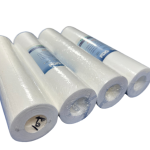
Cartridge structure affects particle capture and pressure rise. Three common formats serve different duties.
Pleated Filter Cartridges
Pleated cartridges create a large working area and suit stable-flow duties requiring finer particle control.
Melt-Blown Filter Cartridges
A melt-blown filter cartridge uses layered fibers for depth filtration and can capture mixed particle sizes in circulating liquids.
String-Wound Filter Cartridges
A string-wound filter cartridge creates many paths around a support core and often suits pre-filtration or heavier solid loads.
Qixingyuan’s filter range covers pleated, melt-blown, and string-wound formats. B2B buyers can request a comparison based on chemistry, micron rating, flow, housing dimensions, and expected filter maintenance cycle rather than price alone.
When Should a Filter Cartridge Be Replaced?
Filter condition changes gradually. Read rising differential pressure together with nozzle flow, spray shape, liquid clarity, process results, and deposits on the removed cartridge.
Record installation date, clean pressure, pressure trend, spray observations, and replacement reason. Sudden short life may indicate tank scale, pipe debris, damaged seals, or missing pre-filtration.
Qixingyuan can review measurements, process details, photos, and samples when nozzle blockage continues after cleaning or the filter cartridge replacement interval becomes unpredictable.
शेन्ज़ेन किक्सिंगयुआन मशीनरी इक्विपमेंट कंपनी लिमिटेड के बारे में।
शेन्ज़ेन किक्सिंगयुआन मशीनरी इक्विपमेंट कंपनी लिमिटेड supplies spares and parts for PCB horizontal line wet processing equipment. Its range includes filtration, spray and cleaning parts, air knives, rollers and wheels, gears, transmission components, bushings, consumables, and measurement and control products. This scope matters because nozzle blockage can involve cartridges, housings, pipes, joints, instruments, and spray assemblies.
For replacement work, Qixingyuan can review equipment information, drawings, samples, dimensions, and application details. This is useful for overseas maintenance teams that must identify nonstandard parts without sending an engineer to inspect the production line in person. Buyers sourcing parts for cleaning, developing, etching, rinsing, conveying, or drying sections can use the company’s product and application categories to narrow an enquiry. Accurate process data supports checks on fit, material, operating conditions, quantity, and delivery. It also reduces avoidable sampling and late specification changes.
निष्कर्ष
Filter cartridge selection affects nozzle cleanliness, spray stability, process consistency, and maintenance workload. Balance micron rating, media, chemical compatibility, dirt capacity, flow, pressure drop, dimensions, and replacement frequency.
For a technical enquiry, send Qixingyuan the liquid, temperature, cartridge dimensions, current grade, pressure or flow data, change history, and equipment photos. These details support a better-matched filter cartridge recommendation.
पूछे जाने वाले प्रश्न
How should buyers compare pleated and depth filter cartridges?
Start with particle load and required flow. Pleated media provides a larger surface area and may support stable flow when properly sized. Melt-blown and string-wound designs capture solids through their depth and may suit mixed or heavier contamination. Compare initial pressure drop, dirt-holding capacity, chemical compatibility, service life, cartridge fit, and total change-out cost instead of unit price only. Also ask whether the micron rating is nominal or absolute, because retention performance may differ.
Why can nozzle blockage continue after a new cartridge is installed?
The cartridge may have the wrong micron rating, damaged seals, poor housing fit, or too little flow area. Debris may also remain inside the tank, pipework, spray bar, or nozzle body. Check whether liquid can bypass the media and inspect the whole circulation route. A new filter cannot remove a solid plug already lodged downstream of the housing. Flush downstream piping and inspect seals before returning the line to full production.
What information belongs in a filter cartridge enquiry?
Provide the process stage, liquid concentration, operating temperature, target micron rating, required flow, normal pressure, housing quantity, cartridge dimensions, end configuration, seal material, and current replacement interval. Add photos, drawings, or a sample when possible. These details help the supplier check chemical compatibility, physical fit, filtration duty, service conditions, and quotation accuracy. For repeat orders, include the previous purchase record and any recent process changes.
Can replacement timing be based only on operating hours?
Operating hours are useful, but they do not show changes in contamination load. A better filter maintenance cycle combines hours with differential pressure, nozzle flow, spray pattern, liquid condition, and process quality. Record the same indicators across several cartridges and set an action limit from actual line behavior. Qixingyuan can review this data when buyers need a better-matched replacement option. This makes change timing easier to defend during maintenance and purchasing reviews.