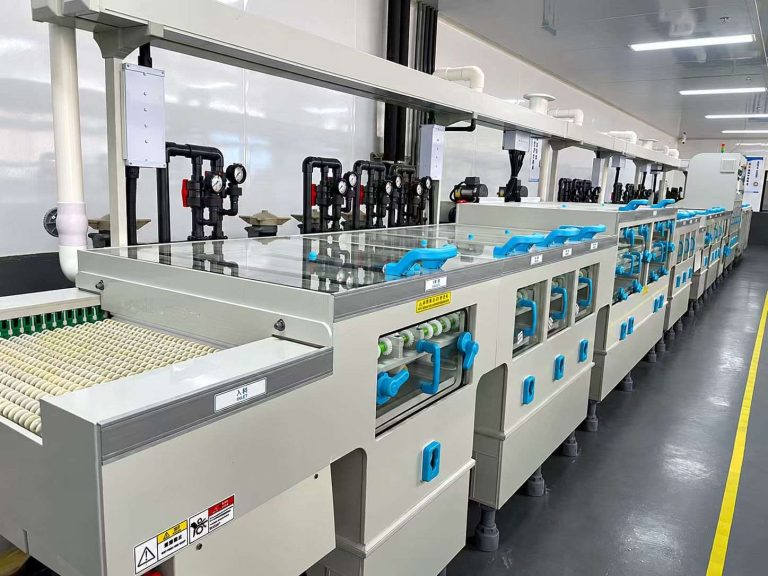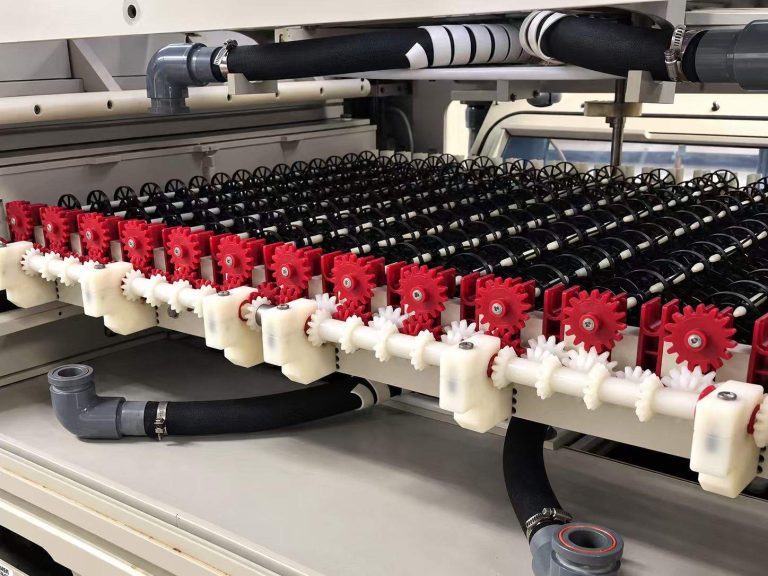
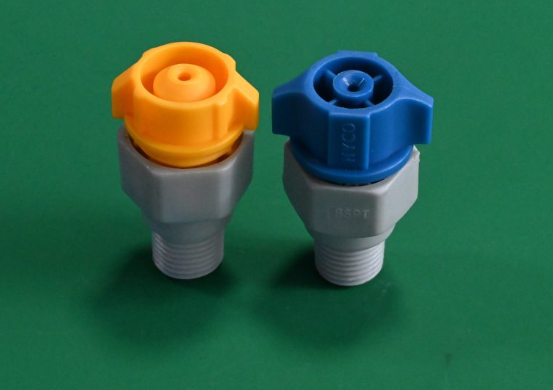
In a PCB wet process line, one nozzle can affect a full production shift. Poor spray coverage may leave flux residue, weaken etching near the panel edge, or add extra rinsing after stripping. Maintenance teams see streaks, blocked holes, chemical marks, unstable flow, and rising water or chemical use. The right question is which spray pattern fits the process step, panel size, chemical liquid, pressure, and maintenance.
This guide compares fan shape, conical, and mixed flow nozzles for cleaning, etching, developing, rinsing, coating, cooling, and surface treatment lines.
Why Spray Pattern Matters in PCB Wet Process Lines
Spray pattern decides how liquid reaches the board surface. A flat fan spray moves liquid in a narrow sheet. A cone spray spreads liquid in a rounder area. A mixed flow nozzle balances coverage and flow.
Because panels keep moving, the nozzle must match conveyor speed, spray distance, pipe layout, and board width. A narrow spray angle may miss edges; weak impact may leave dust, oil, or flux residue.
For buyers comparing spray nozzle for PCB wet process line options, Qixingyuan provides nozzle, pipe, and joint solutions where stable coverage and replacement fit matter.
Fan Shape Nozzle: Flat Coverage for Moving Panels
A fan shape nozzle creates a flat spray pattern. This makes it useful for long spray bars installed above and below moving PCB panels. When fan spray nozzles are placed with proper overlap, the line can create a steady curtain of liquid across the board.
This pattern is widely used in PCB cleaning nozzle, PCB etching nozzle, PCB developing nozzle, and PCB rinsing nozzle positions. It suits sections where engineers want visible, directional coverage. In developing or etching, better overlap can reduce light and dark bands.
When a Fan Spray Nozzle Makes Sense
Use a fan spray nozzle when the process needs flat coverage across a moving panel, repeatable overlap, clear spray direction, and easier checking during maintenance.
For PCB plants replacing fan shape nozzles, Qixingyuan can support matching by spray pattern, material, pipe connection, and wet line application.
Conical Nozzle: Wider Wetting for Rinse and Cooling
A conical nozzle produces a cone spray pattern. Compared with a fan shape nozzle, it can cover a rounder area and give broader liquid contact in compact spaces. This makes it useful in rinsing, cleaning, cooling, humidification, and sections where full-area wetting matters more than a straight spray line.
In PCB rinsing, a cone spray nozzle can help wash away chemical residue from holes, edges, and areas between transport rollers. In cooling spray systems, wider liquid contact can help remove heat from the target area.
When a Cone Spray Nozzle Makes Sense
A conical nozzle is a strong choice when the line needs wider wetting in a short distance, better edge contact, rinsing after developing or stripping, and cooling spray or humidification support.
For conical nozzle replacement in PCB wet process equipment, Qixingyuan supplies chemical resistant spray nozzle options for cleaning, rinsing, cooling, and other wet line sections.
Mixed Flow Nozzle: Balanced Flow for Flexible Sections
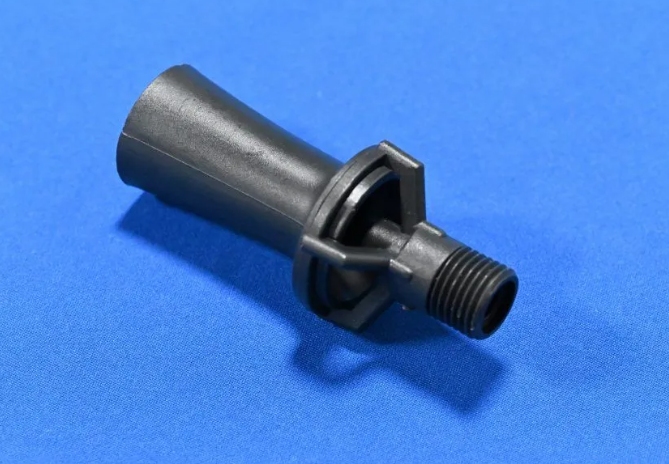
A mixed flow nozzle fits lines where one process section needs balanced flow, enough coverage, and practical spray force. It is often considered when the wet line does more than one task or leaves limited space for different nozzle types.
In PCB online cleaning, a mixed flow nozzle can support residue removal while keeping liquid distribution stable. In coating equipment, it may be selected for controlled surface coverage. In etching and developing equipment, it can provide a middle ground between coverage and flow volume.
Qixingyuan offers mixed flow nozzle solutions for PCB wet processing equipment where users need uniform spraying, chemical resistance, and replacement convenience.
Fan vs Conical vs Mixed Flow Nozzles
The best nozzle pattern depends on the job. A fan spray nozzle is not automatically better than a conical nozzle, and a mixed flow nozzle is not a universal shortcut. Start with the process problem: poor cleaning, uneven etching, weak rinsing, clogging, or unstable chemical use.
| Nozzle Type | Spray Pattern | Main Strength | Typical PCB Wet Line Use | Buyer’s Checkpoint |
| Fan shape nozzle | Flat fan spray | Straight coverage | Cleaning, etching, developing, rinsing | Check overlap, angle, spray distance |
| Conical nozzle | Cone spray | Broader wetting | Rinsing, cleaning, cooling, humidification | Check coverage diameter and flow rate |
| Mixed flow nozzle | Balanced flow | Flexible distribution | Cleaning, coating, etching, cooling | Check process target and pipe fit |
Run the spray bar with water, place a clean test panel under the conveyor path, and check wet marks across the full width. Uneven bands often point to poor spacing, blocked orifices, worn parts, or a wrong spray angle.
Qixingyuan’s nozzle, pipe, and joint product range helps PCB plants discuss spray coverage, material, and installation details with one supplier.
How to Choose Nozzles by Process Section
Different PCB wet line sections ask different things from a nozzle. Cleaning wants removal power. Developing and etching need stable chemical contact. Rinsing wants complete washing.
Cleaning and Residue Removal
For flux residue, dust, and oil removal, fan spray nozzles are often a practical first choice because they can form a clean spray curtain. Conical nozzles help where the line needs wetting near edges, rollers, or narrow areas.
Etching and Developing
Etching and developing are sensitive to spray distribution. A small weak zone can show up as a visible defect. Fan nozzles can be arranged in rows for controlled overlap, while mixed flow nozzles help where flow balance is a key concern.
Rinsing, Stripping, Coating, and Cooling
Rinsing and stripping often benefit from wide wetting and reliable washing. Conical nozzles can suit these sections, while fan nozzles work well when directional coverage is needed. Coating and cooling sections may use mixed flow or conical patterns.
For PCB nozzle selection across developing, etching, stripping, cleaning, and rinsing lines, Qixingyuan can help buyers compare fan shape nozzle, conical nozzle, and mixed flow nozzle options based on real equipment conditions.
Material, Chemical Resistance, and Maintenance
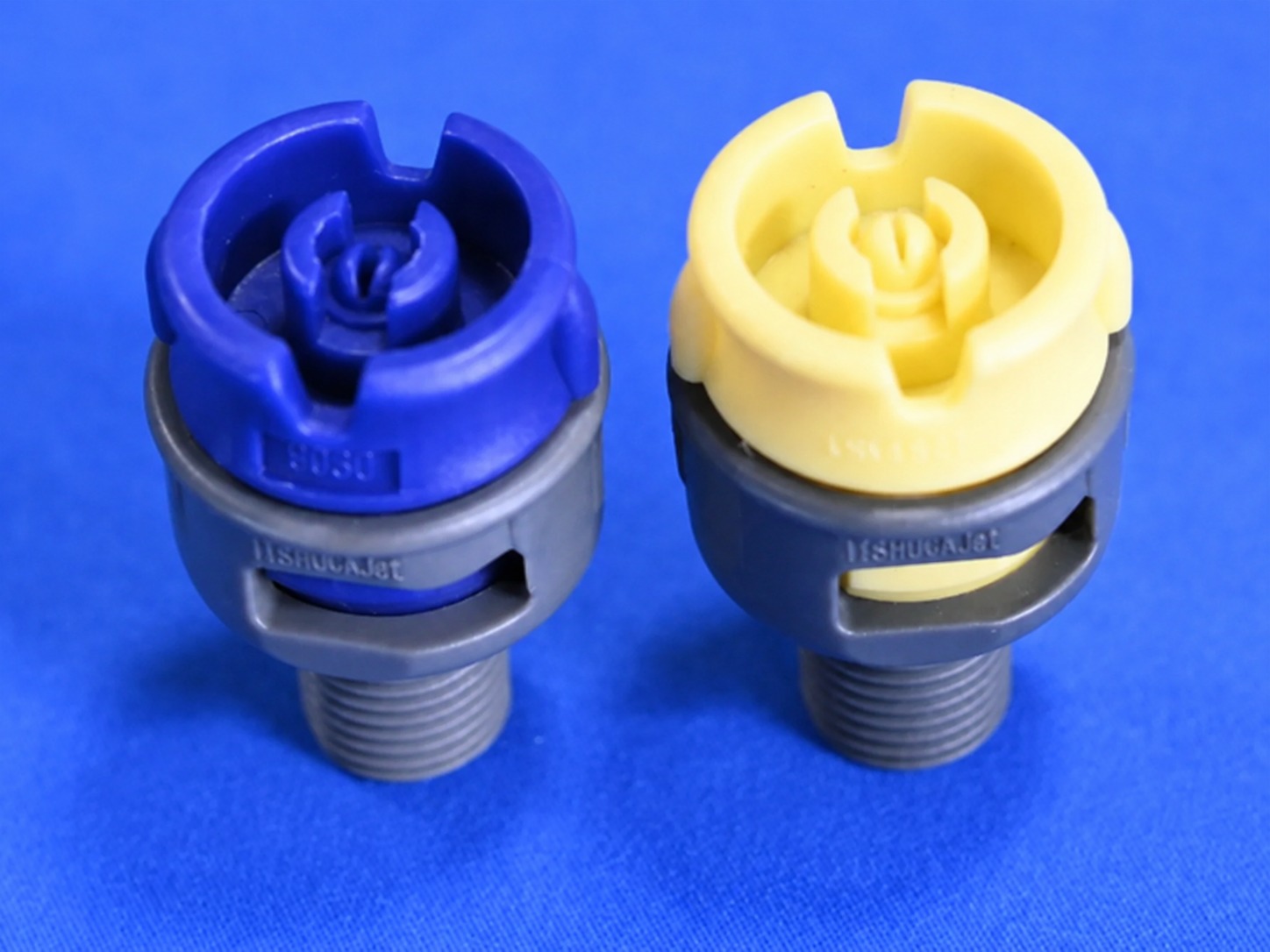
PCB wet process nozzles work inside acid, alkali, cleaning liquid, rinse water, and heated process areas. The wrong material may swell, crack, wear too fast, or lose spray accuracy. Common choices include PP, PVDF, stainless steel, and ceramic parts, depending on chemical type, temperature, pressure, and cost target.
Nozzle clogging is another common problem. A blocked nozzle can leave a dry stripe, create uneven developing, or push operators to raise pressure. Maintenance teams should check filters, crystallization near the nozzle opening, worn spray holes, pipe sediment, loose joints, and spray angle drift.
Qixingyuan supplies corrosion resistant nozzle and related PCB wet process spare parts for users who need material matching, practical replacement support, and stable production.
심천 치싱위안 기계설비 유한회사 소개
심천 치싱위안 기계설비 유한회사 is a supplier focused on PCB horizontal line wet processing equipment spares and parts. The company works with products used around cleaning, spraying, conveying, transmission, filtering, blowing, drying, and surface treatment sections. Small parts such as nozzles, nozzle pipes, joints, rollers, wheel discs, gears, filters, and air knives can affect yield, line speed, and repair time.
Qixingyuan supports B2B buyers who need replacement parts, drawing-based parts, or application-based matching for PCB wet process lines.
결론
Fan, conical, and mixed flow nozzles all have a place in PCB wet process lines. Choose a fan shape nozzle when the line needs flat, controlled spray coverage. Choose a conical nozzle when broader wetting, rinsing, cooling, or humidification is more important. Choose a mixed flow nozzle when the process needs balanced coverage and flow.
For purchasing teams, check process section, chemical liquid, spray angle, flow rate, material, pipe fit, and maintenance access. Qixingyuan can support PCB equipment nozzle selection and replacement guidance.
자주 묻는 질문
What is the best nozzle pattern for PCB wet process nozzles?
There is no single best pattern for all PCB wet process nozzles. Fan spray works well for flat coverage in cleaning, developing, etching, and rinsing. Conical spray is better for broad wetting, cooling, and humidification. Mixed flow is useful when the line needs balanced flow and coverage. The right choice depends on panel width, spray distance, liquid, and maintenance conditions.
When should a PCB factory choose a fan shape nozzle?
Choose a fan shape nozzle when the process needs a flat spray curtain over a moving board. This is common in PCB cleaning nozzle, PCB etching nozzle, PCB developing nozzle, and PCB rinsing nozzle positions. The key is overlap. If fan nozzles are spaced poorly, the line can still show wet and dry bands.
Why use a conical nozzle instead of a fan spray nozzle?
A conical nozzle is useful when the line needs wider liquid contact instead of a straight spray sheet. It can help in rinsing after chemical treatment, cooling spray, humidification, and areas where edges or compact spaces need wetting. Buyers should compare cone diameter, flow rate, pressure, and installation height before changing nozzle type.
What material should be selected for a chemical resistant spray nozzle?
Material depends on liquid, temperature, pressure, and expected service life. PP can suit many general wet process uses. PVDF may be selected for stronger chemical resistance. Stainless steel or ceramic parts may fit special wear, heat, or mechanical strength needs. For acid and alkali solution, buyers should confirm compatibility before purchase.