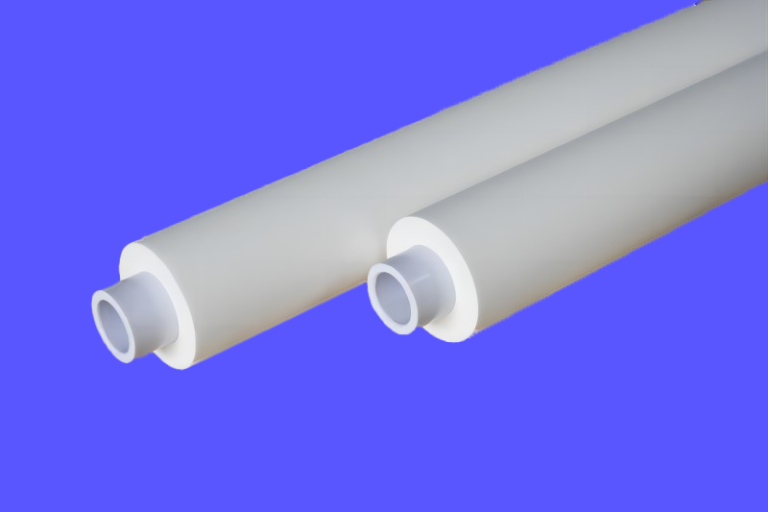
The EPDM sponge roller is used mainly in electroplating lines for controlled wiping and liquid pickup. Installed at a suitable cleaning, rinsing, or water-removal position, it contacts the passing workpiece to collect residual liquid and prepare the surface for the next stage.
The working material is EPDM elastomer sponge. Roller diameter, working length, shaft arrangement, and density must match the installed equipment. Selection also considers the process liquid, operating temperature, line speed, and roller spacing so contact and liquid removal suit the intended duty.
| 목 | 사양 |
| 제품명 | EPDM 스폰지 롤러 |
| Working Material | EPDM 엘라스토머 스폰지 |
| Primary Industry | Electroplating lines |
| 주요 기능 | 제어된 닦임 접촉 및 액체 흡수 |
| Application Positions | Matched cleaning, rinsing and water-removal sections |
| Dimensional Matching | Diameter, working length and shaft arrangement |
| Density Selection | Matched to line speed and roller spacing |
| Process Selection Factors | Liquid, temperature and mechanical contact requirements |
– EPDM elastomer sponge provides a compliant working surface for the specified wiping position. The contact setting should suit the workpiece and the installed assembly.
– Liquid pickup helps remove residual water or a compatible process liquid at the roller contact area, supporting the following production stage.
– Controlled wiping is useful in electroplating lines where the equipment requires contact removal of surface liquid after cleaning or rinsing.
– Diameter and density selection considers line speed and roller spacing, helping define the roller specification for its actual operating position.
– Matching the working length and shaft arrangement to the existing drawing supports replacement planning and installation fit.
A workpiece can leave a cleaning or rinsing section with liquid remaining on its surface. In an electroplating line designed with a wiping roller, the sponge surface collects some of this residual liquid as the workpiece passes. This provides a defined liquid-removal position before transfer to another section or a drying stage.
Performance depends on the incoming liquid load, workpiece geometry, line speed, and contact across the working width. Confirm where the collected liquid drains within the machine. The roller operates as part of that arrangement; tank separation and downstream drying also depend on the surrounding equipment.
– Electroplating line wiping positions designed for EPDM sponge contact
– Residual-water removal after a matched cleaning or rinsing stage
– Liquid pickup before a subsequent drying stage where the line layout permits
– Replacement of an existing EPDM sponge roller assembly
– Surface treatment equipment with an approved EPDM roller specification
Identify the liquid that will reach the roller, including any carryover from an upstream treatment stage. Supply the chemical formulation, concentration, operating temperature, and expected exposure duration for material review. EPDM construction alone does not establish compatibility with every electroplating solution or cleaning agent.
For a contact position on a plated surface, define the permitted contact, surface-finish requirements, and cleanliness expectations. Check the roller alignment and keep the sponge free from trapped debris that could affect the workpiece. Agree the contact conditions using the equipment specification before normal production.
Use the existing machine drawing or a confirmed sample to define the required roller configuration. Provide the outside diameter, working-face length, overall length, shaft dimensions, bearing positions, and mounting details. Include photographs of the complete roller and both ends where a drawing is unavailable.
Density and diameter selection should account for line speed, roller spacing, liquid load, and the required wipe contact. Submit those conditions with the installation dimensions so the available configuration can be reviewed. Confirm the final material, density, shaft arrangement, and drawing before ordering.
Start with the electroplating line position and the workpiece surface. Establish whether the roller will contact rinse water, another process liquid, or a mixture carried from upstream. Review chemical exposure and temperature before choosing the mechanical configuration.
Check diameter, working width, shaft fit, line speed, and roller spacing next. Density and contact pressure influence how the working surface meets the workpiece. Follow the machine’s contact settings and provide the relevant dimensions when replacing a roller; a similar appearance does not confirm interchangeability.
Confirm the startup, cleaning, and storage instructions for the supplied roller. Where a line specification requires particular inspection or performance criteria, agree them with the supplier before production rather than assuming a general EPDM material description is sufficient.
롤러를 탈거하거나 장착하기 전에 유지보수 절차에 따라 장비를 격리하십시오.
– Verify dimensions, shaft ends, mounting points, and working-surface condition against the approved drawing or sample.
– Prepare the assembly according to the instructions supplied for that roller and process position.
– Check free rotation, alignment, and clearance from tanks, guards, and adjacent components.
– Set contact according to the equipment procedure and verify workpiece passage before normal production.
– Inspect the sponge for tears, deposits, trapped debris, uneven wear, or changes in liquid-pickup performance.
– Use a cleaning method confirmed for the EPDM roller and the process residues involved.
– Review incoming liquid load, roller contact, drainage, and neighboring components if wiping becomes uneven. Replace the roller when damage affects its function.
Agree the critical dimensions, density, shaft configuration, and working-surface requirements using a drawing or sample. Record the intended electroplating line position and the liquid exposure conditions alongside the mechanical specification. Include any required inspection criteria in the order confirmation.
Qixingyuan Machinery supplies accessories for wet-process equipment. Send the existing EPDM roller information and operating conditions to discuss a suitable configuration. Clear application details help identify a replacement that fits the line and meets the agreed contact requirements.
Confirm packaging that protects the sponge surface from contamination, sharp contact, and concentrated pressure. Projecting shaft ends need suitable protection during handling. Discuss storage instructions, packing dimensions, quantity, delivery destination, and shipment requirements when requesting a quotation.
– Electroplating line type and the exact roller position
– Workpiece material, form, and surface contact requirements
– 공정액, 농도, 온도 및 노출 시간
– 외경, 작업면 길이 및 전체 길이
– Shaft dimensions, bearing positions, and mounting details
– Line speed, roller spacing, liquid load, and specified density
– Drawing, existing sample, or photographs of the roller assembly
수량, 배송지 및 요청 배송일
What is the main application of this EPDM sponge roller?
Its main application is in electroplating lines, at matched wiping and liquid-pickup positions. Typical positions include cleaning, rinsing, and residual-water removal where the equipment specifies EPDM construction.
Can it be used with any electroplating solution?
Suitability must be reviewed for the actual liquid, concentration, temperature, and exposure duration. Provide these details along with the roller position before selecting the configuration.
직경과 밀도는 어떻게 선택되나요?
Selection considers line speed, roller spacing, liquid load, and the required workpiece contact. The final configuration should match the equipment drawing and operating conditions.
What is needed to replace an existing roller?
Provide a drawing or sample showing the diameter, working length, overall length, shaft ends, and mounting details. Include density information where specified and describe the process liquid.
What should be checked when the roller contacts a plated surface?
Review permitted contact, alignment, surface cleanliness, and the machine’s pressure settings. Keep the working surface free from debris and verify the setup before production.
Does the roller provide complete drying?
It removes liquid at the contact position. The final drying result also depends on workpiece geometry, remaining liquid, line speed, and any downstream drying equipment.
고정밀, 고성능 PCB 장비 액세서리를 제공하여 전 세계 전자 제조 산업이 효율적인 생산을 달성할 수 있도록 지원합니다.