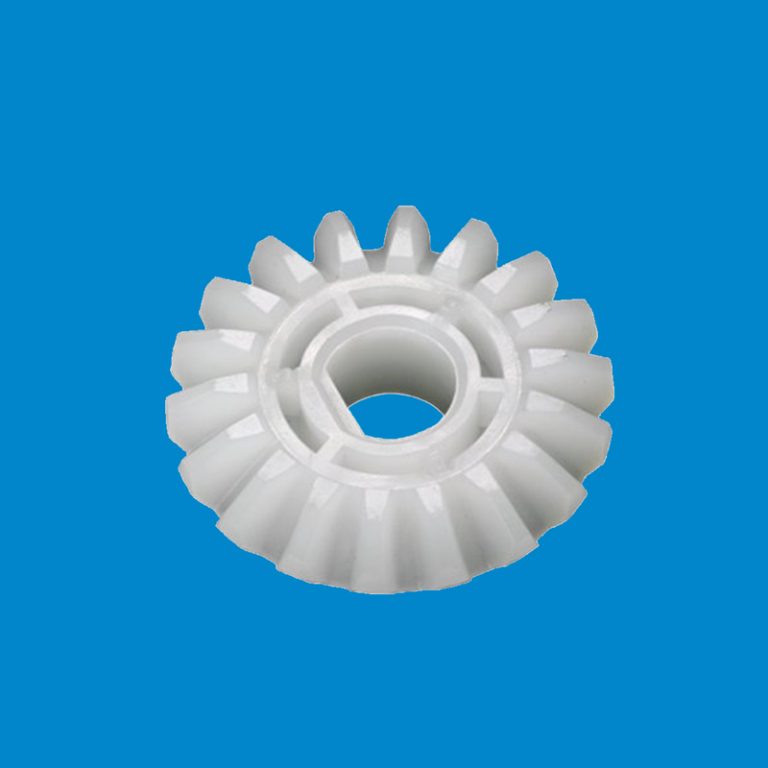
In a PCB wet process line, transmission parts often sit in places that are hard to see and easy to ignore. A small gear near a conveyor shaft may not look important, but it can affect board movement, spray timing, roller contact, and line stability. This is especially true in compact PCB machinery, where the drive path cannot always stay straight.
Bevel gears solve a common layout problem: how to move rotary power from one shaft to another shaft set at an angle. In many PCB machines, this angle is close to 90 degrees. A bevel gear pair can turn motion into another direction without adding a long chain of shafts, brackets, or bulky drive space. For equipment buyers, maintenance teams, and OEM engineers, choosing the right bevel gears is not only a mechanical decision. It is also a way to reduce downtime, improve spare part matching, and keep the wet process line running with fewer small failures.
Why Do Compact PCB Machines Need Angle Transmission?
PCB wet processing equipment is not built like open-frame general machinery. Conveying sections, spray pipes, tanks, covers, drying units, rollers, holders, and sensors are packed into a narrow line. Space near the side frame is limited. Sometimes the motor or main drive shaft cannot sit in line with the driven roller shaft. In that case, the machine needs angle transmission.
Space limits inside wet process lines
A compact PCB machine may need to transfer motion around a tank wall, under a cover, or near a roller group. Straight spur gears work well for parallel shafts, but they cannot turn power between intersecting shafts. Bevel gears are made for that job. Their tapered tooth form allows one shaft to drive another shaft at an angle, commonly in a right-angle drive layout.
This matters in sections such as developing, etching, rinsing, cleaning, and drying. These areas need steady conveyor movement, but the structure around them leaves little room for large drive units. A bevel gear pair gives designers more freedom when placing shafts, rollers, and small transmission assemblies.
Why fewer parts can mean fewer problems
When a machine uses too many couplings, auxiliary shafts, and brackets to change direction, each extra part adds another possible source of noise, runout, or misalignment. A well-matched bevel gear system can shorten the drive path. It can also reduce the number of contact points that must be checked during maintenance.
Qixingyuan supplies gears and screws for PCB horizontal line wet processing equipment, including bevel gears, spur gears, helical gears, double gears, pin gears, screws, and SUS/titanium gears. For compact PCB machinery, this product coverage helps buyers match angle-drive gears with related conveyor shafts, bushings, holders, and other transmission parts instead of sourcing each item separately.
How Do Bevel Gears Transfer Power Between Angled Shafts?
Bevel gears are different from flat cylindrical gears. Their teeth are arranged on a cone-shaped pitch surface. When two bevel gears mesh, their axes meet at an angle. In PCB equipment, the most common reason to use them is to move torque through a right-angle path.
The basic gear action
When the input shaft turns, the first bevel gear drives the second bevel gear through tooth contact. The output shaft then rotates in another direction. In a simple 1:1 gear ratio, the output speed is close to the input speed. With different tooth counts, the gear pair can change speed and torque.
The key point is contact quality. A bevel gear does not perform well if the shaft centerline, tooth match, or mounting position is wrong. The result can be clicking noise, tooth edge wear, heat, vibration, and backlash. In a PCB conveyor section, even small backlash can show up as uneven board movement.
Contact pattern and backlash
Good bevel gear performance depends on tooth contact across the correct area of the gear face. If contact sits too close to the toe or heel of the tooth, wear becomes uneven. If the bore fit is loose, the gear may wobble. If the shaft holder is worn, the gear pair may run with changing center distance.
For maintenance staff, the first signs are often simple:
- A new rubbing sound near the side frame
- Plastic powder or metal dust near the gear area
- Uneven roller movement at low speed
- A gear that looks polished only on one tooth edge
- Repeated gear replacement in the same position
Qixingyuan’s transmission-related product range covers not only gears but also shaft holders, bushings, spacer sleeves, conveyor shafts, and related wet line parts. This is useful because bevel gear problems are often system problems. Replacing only the gear may not solve the root cause if the shaft or bushing is already worn.
Where Are Bevel Gears Used in PCB Wet Process Equipment?
Bevel gears are most useful where rotary motion must turn within a small space. In PCB machinery, those spaces often appear around conveyor modules, flipping sections, side drive structures, and compact roller assemblies.
Conveyor transfer sections
PCB conveyor transmission must move boards smoothly through wet process stages. In a straight conveyor path, spur gears and chains may be enough. But when the drive needs to move from a side shaft to a cross shaft, bevel gears become practical. They support angular motion transfer without forcing the entire drive layout to be longer.
A typical angle-drive position may be near a roller group where the main shaft is placed along the machine frame, while the driven shaft needs to turn across the line width. A bevel gear pair links these two directions in a compact way.
Etching, developing, rinsing, and cleaning areas
Wet process sections place extra stress on gears. The air may contain chemical mist. Splash, cleaning water, fine particles, and heat can reach nearby transmission parts. A gear that works well in a dry test bench may wear faster in an etching or rinsing area if the material is not suitable.
The gear’s job is not only to rotate. It must keep running under chemical exposure, frequent start-stop cycles, and long daily operating hours. In real plants, a small worn gear can cause board tracking issues that look like process defects at first.
| PCB machine area | Transmission challenge | Bevel gear value |
| Conveyor side drive | Limited room beside rollers | Changes drive direction in a small footprint |
| Etching section | Chemical mist and long running time | Supports compact drive with suitable material choice |
| Rinsing and cleaning | Water and residue near moving parts | Reduces layout complexity around wet zones |
| Flipping or transfer section | Motion changes between shaft directions | Helps connect angled shafts with steady torque |
| Drying exit area | High line speed and tight roller spacing | Keeps motion transfer short and direct |
Qixingyuan provides PCB wet process spare parts for developing, etching, cleaning, drying, conveying, and related equipment stages. Its gear and screw category can be matched with conveyor rollers, wheel discs, transmission shafts, bushings, spray parts, and cleaning components for a more complete spare part plan.
Which Materials Work Best for PCB Bevel Gears?
Material choice is one of the biggest factors in bevel gear life. The best material is not always the hardest one. It depends on load, speed, chemical exposure, shaft fit, noise limits, and the machine section.
Plastic gears for wet processing
POM is often used where low friction, good wear resistance, and smooth motion are needed. It runs quietly and suits many moderate-load transmission points. PP can be useful in wet or chemical environments where corrosion resistance matters more than heavy load capacity. PVDF is often considered for stronger chemical exposure and higher resistance needs.
Plastic bevel gears can also protect other parts in the drive train. In some cases, a plastic gear is chosen because it runs with lower noise and does not corrode like common metal parts. The tradeoff is that plastic gears must be checked for tooth deformation, creep, swelling, or heat-related changes in harsh positions.
Metal gears for strength and special service
SUS and titanium gears are used when higher mechanical strength, rigidity, or corrosion resistance is needed. Metal gears can handle heavier load conditions, but they also require proper matching with shafts, bearings, and lubrication or dry-running conditions. In a chemical wet line, the wrong metal choice may lead to corrosion or contamination risk.
| วัสดุ | Typical reason to choose it | Main point to check |
| POM | Low friction and quiet running | Load, temperature, and tooth wear |
| พีพี | Chemical resistance and cost control | Strength and dimensional stability |
| PVDF | Stronger chemical resistance | Budget and machine exposure level |
| SUS | Higher strength and rigidity | Corrosion condition and mating parts |
| ไทเทเนียม | Special corrosion and strength needs | Cost, fit, and real operating demand |
Qixingyuan offers PCB equipment gears in materials such as PP, PVDF, POM, SUS, and titanium. For buyers replacing bevel gears in wet process lines, this gives more room to match material to machine location instead of choosing only by size.
What Specifications Should Buyers Confirm Before Ordering?
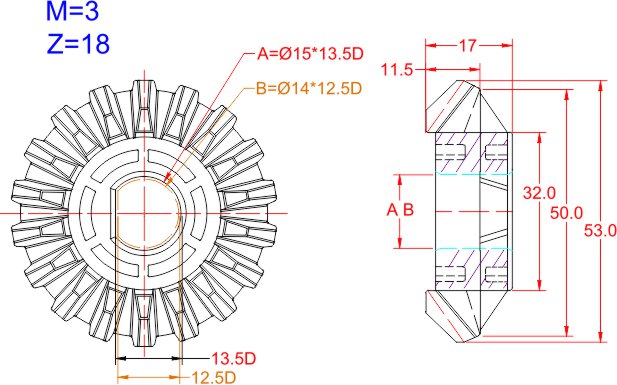
A bevel gear may look simple in a photo, but small differences in size can make it unusable. For PCB machinery, many spare parts are non-standard. A drawing, sample, or clear measurement list can save several rounds of rework.
Key gear data
Before ordering custom bevel gears or replacement PCB equipment gears, buyers should confirm the main geometry and installation details. Missing one value can lead to poor meshing or wrong shaft fit.
Important details include:
- Gear module
- Tooth number
- Outer diameter
- Bore diameter
- Gear thickness
- Shaft angle
- Keyway or set screw position
- Hub shape
- Mating gear size
- Material grade
- Working position in the machine
- Chemical exposure and temperature
- Drawing, photo, or physical sample
For example, two bevel gears may both have the same tooth number, but one may have a different bore size or face width. That difference can change how the gear sits on the shaft and how it contacts the mating gear.
Machine-side information
The supplier also needs to know where the gear runs. A bevel gear in a dry exit conveyor does not face the same conditions as one near an etching tank. Line speed, board thickness range, spray direction, nearby chemical fluid, and service hours all matter.
Qixingyuan supports custom matching for PCB horizontal line wet processing equipment spares and parts. For gear buyers, sharing a used gear sample, installation photo, and machine-side dimensions can help the team recommend a closer replacement for angle-drive positions, conveyor transmission, and related wet process parts.
How Can Maintenance Teams Extend Bevel Gear Life?
Maintenance is not only about replacing worn gears. It is about finding why the gear failed. In compact PCB machinery, the gear is often the visible part of a larger alignment issue.
Check the gear and the surrounding parts
A worn bevel gear should be inspected together with the shaft, bushing, holder, and mating gear. If the gear teeth are worn on one side only, the shaft may not be square. If the same gear position fails again after replacement, the problem may be in the frame, bushing, or bearing support.
Good inspection habits include checking for:
- Uneven tooth marks
- Loose shaft fit
- Cracked plastic around the bore
- Chemical residue around the teeth
- Worn bushings or holders
- Gear wobble during slow rotation
- Abnormal noise after cleaning or shutdown
Clean residue before it becomes abrasive
Wet process lines can carry chemical crystals, sludge, fine particles, and dried residue into small transmission areas. These materials can act like grinding paste between gear teeth. Cleaning the gear area during planned stops can reduce abrasive wear and help technicians notice early damage.
Qixingyuan’s product range includes gears, transmission system parts, bushings, conveyor parts, spray and cleaning products, and consumables for PCB wet processing equipment. For factories building a maintenance stock list, combining bevel gears with related holders, bushings, and shafts can reduce repeat downtime caused by incomplete part replacement.
Why Should PCB Factories Work With a Specialized Spare Parts Supplier?
PCB plants often need parts fast, but speed alone is not enough. A wrong gear can stop a line again within days. A specialized supplier should be able to discuss material, size, fit, use position, and wet process conditions.
Better matching for non-standard machines
Many PCB lines include older machines, modified sections, or mixed parts from different production batches. Standard catalog gears may not fit these layouts. Custom bevel gears can be made from a drawing or sample when the original part is no longer easy to find.
Specialized support is also helpful when buyers need to compare plastic and metal gears. The lowest-cost option may work in a light-duty position but fail near heavy load or chemical exposure. A stronger material may be needed in one section, while a quieter plastic gear may be better in another.
Lower risk for long-term spare planning
Spare parts planning is not only about unit price. It also includes fit rate, service life, lead time, and the cost of line stoppage. A matched set of gears, shafts, bushings, and holders can lower trial-and-error during maintenance.
Qixingyuan focuses on PCB horizontal line wet processing equipment spares and parts. Its product categories cover gears and screws, conveyor rollers and wheel discs, water retaining rollers, spray and cleaning parts, transmission system and bushings, consumables, and measurement and control products. This makes it suitable for PCB factories that want one supplier for several connected spare part needs.
เกี่ยวกับบริษัท เซินเจิ้น ฉีซิงหยวน แมชชีนเนล อีควิปเมนต์ จำกัด
บริษัท เซินเจิ้น ฉีซิงหยวน แมชชีนเนล อีควิปเมนต์ จำกัด is a supplier of PCB horizontal line wet processing equipment spares and parts. The company focuses on components used in wet process stages such as conveying, developing, etching, cleaning, rinsing, drying, and related production line sections. Its product range includes air knives, conveyor rollers, wheel discs, gears and screws, transmission parts, bushings, spray and cleaning products, consumables, and measurement and control parts.
For gear-related applications, Qixingyuan supplies bevel gears, spur gears, helical gears, double gears, pin gears, screws, SUS/titanium gears, and related transmission components. The company supports PCB equipment users with material selection, dimensional matching, and custom part supply based on drawings, samples, or working conditions. For buyers handling repair, upgrade, or spare stock planning, Qixingyuan offers a practical source for durable PCB wet process line parts.
บทสรุป
Bevel gears play a small but important role in compact PCB machinery. They help transfer rotary motion between angled shafts, reduce bulky drive layouts, and support stable conveyor movement in wet process equipment. Their performance depends on more than tooth shape. Material, bore fit, shaft alignment, backlash, chemical resistance, and surrounding transmission parts all affect service life.
For PCB factories and equipment buyers, the best result comes from matching the bevel gear to the real machine position. A gear used near an etching tank may need different material than one used in a dry conveyor section. A repeated failure may point to a worn bushing or shaft holder instead of the gear itself. With the right specifications and supplier support, bevel gears can help compact PCB machines run with better stability and fewer unplanned stops.