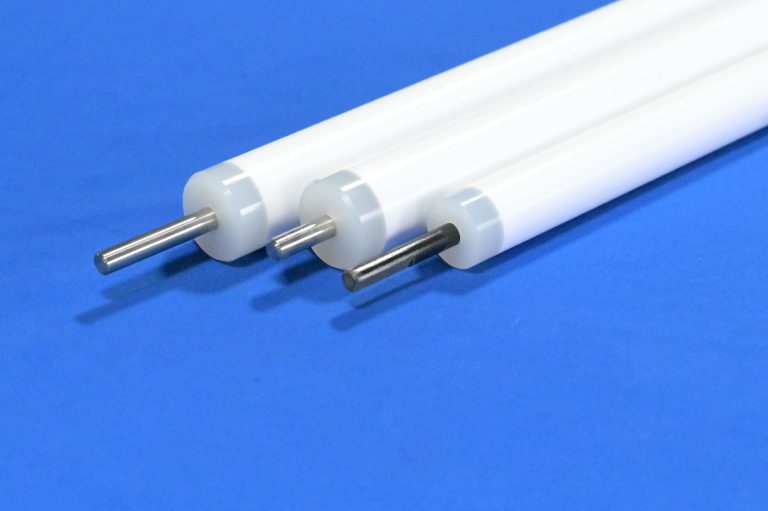
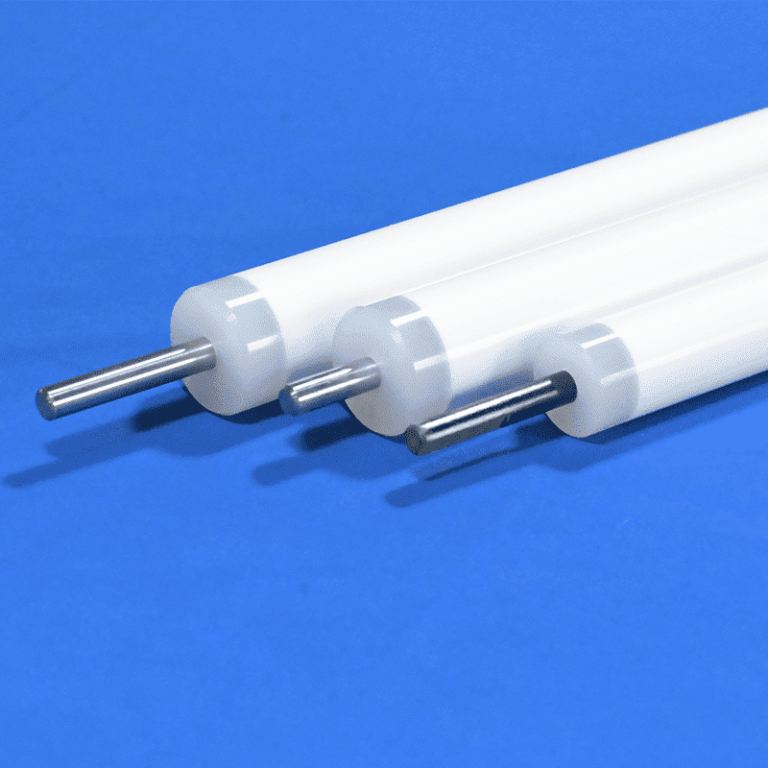
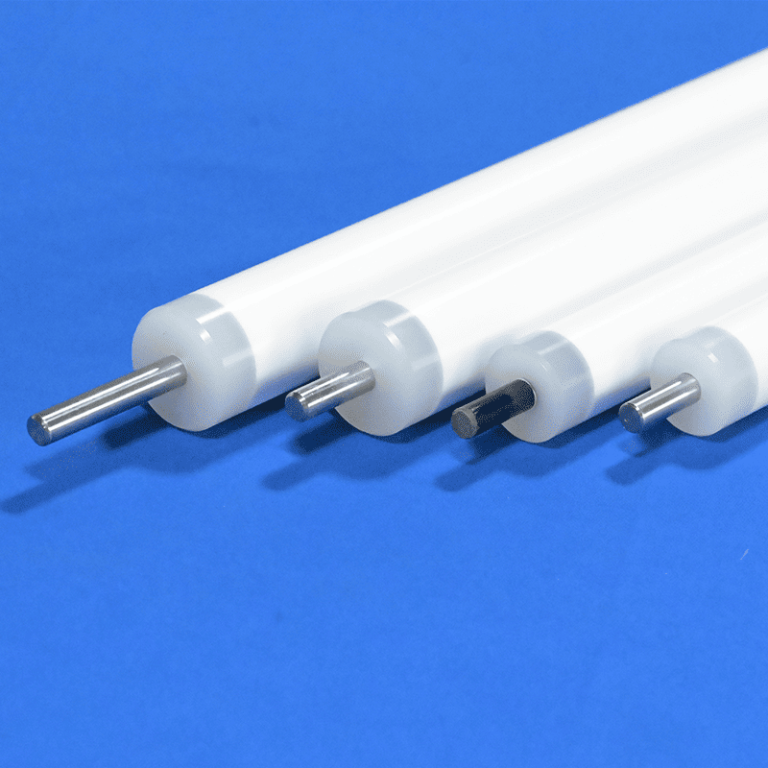
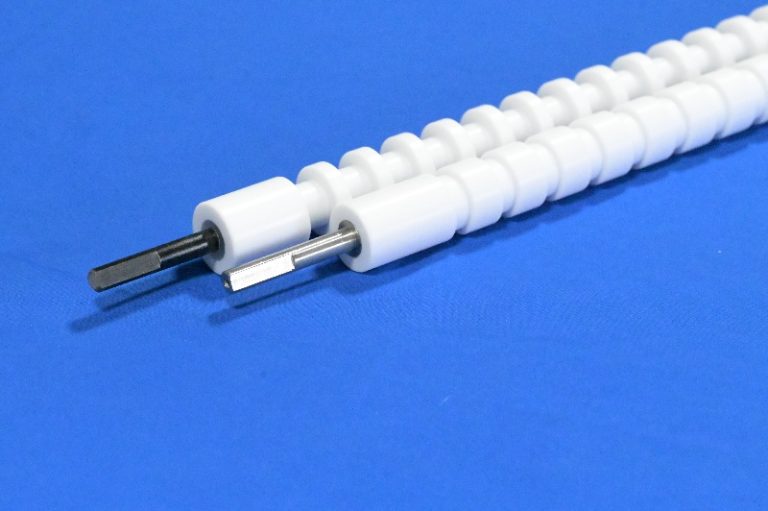
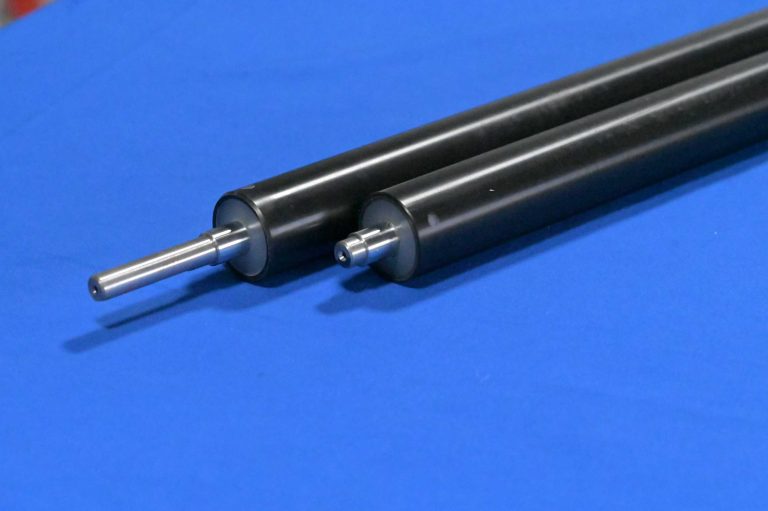
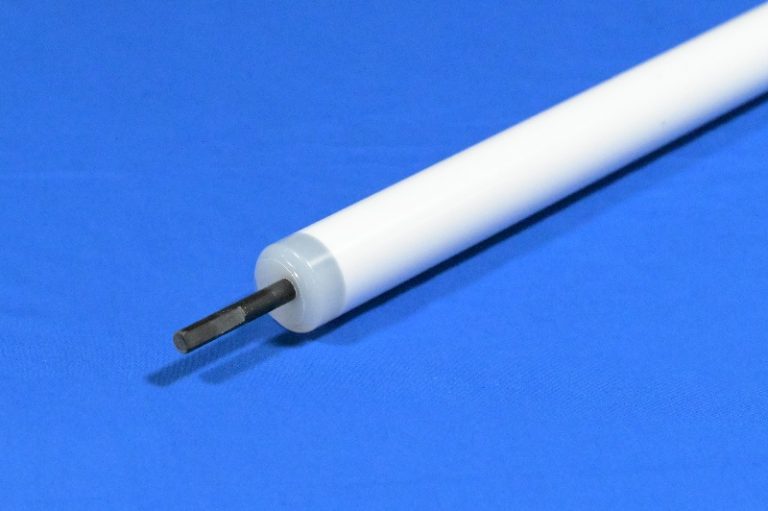
The PP water-blocking roller is designed as a rigid physical barrier for PCB spray modules, wet-process equipment, and protective edge positions. It helps stop water, ink, and process liquid from splashing or flowing into adjacent tanks, conveyor tracks, bearings, and crossover areas.
Made from high-density polypropylene, the roller provides acid and alkali resistance, a listed hardness of 90 to 105, and heat resistance up to 100 degrees C. Its radial runout is controlled to 0.15 mm. White and grey colors are available, and the size can be customized for different machine layouts and shaft arrangements.
| Item | Specification |
| Product Number | 6-1 |
| Product Name | Rouleau anti-eau en PP |
| Matériel | High-density polypropylene |
| Primary Function | Physical water and ink blocking |
| résistance chimique | Acid and alkali resistance |
| Dureté | 90 to 105 |
| Color | White or grey |
| Maximum Heat Resistance | 100 degrees C |
| Radial Runout | 0.15 mm |
| Size | Customizable |
– High-density PP provides a rigid barrier that helps contain water, ink, and process liquid at spray equipment sides and protective edges.
– Acid and alkali resistance supports use in PCB wet-process environments where the roller may contact cleaning or processing solutions.
– Heat resistance up to 100 degrees C provides a clear operating reference for equipment selection.
– The listed hardness of 90 to 105 supports structural stability and resistance to deformation under normal mechanical contact.
– A radial runout value of 0.15 mm supports stable rotation and consistent clearance across the working width.
– The lightweight PP structure can reduce rotating mass compared with heavier solid materials, depending on the final roller design.
– Polished and matte surface options allow the working surface to be matched to water-shedding or friction requirements.
– Custom dimensions, end caps, locking sleeves, nuts, and shaft materials support replacement and new equipment projects.
In a horizontal PCB line, liquid can leave the intended process zone through spray impact, board movement, or roller rotation. A PP water-blocking roller creates a physical boundary near the side or exit of the module. This helps reduce splash-back, ink migration, and water drag-out before the liquid reaches neighboring tanks, bearings, conveyor tracks, or drying equipment.
The roller is intended for positions that need structural stability more than soft sealing compression. Controlled radial runout helps maintain a consistent gap or contact line during rotation. Actual blocking performance also depends on the installation height, distance from the spray zone, shaft alignment, bearing condition, rotation speed, surface finish, and the geometry of adjacent guards or rollers.
– PCB spray etching equipment
– Solder mask processing lines
– Water and ink blocking at module sides
– Protective edge positions in horizontal production lines
– Wet-process crossover and tank separation areas
– Industrial glass washing equipment
– Exit positions before air-knife drying sections
– Replacement and maintenance projects for PCB machinery
Polypropylene is used where the roller needs a rigid, lightweight, and chemically resistant structure. High-density PP supports dimensional stability over the working length and is suitable for physical splash and liquid barriers. Its lower density can also reduce the load on shafts, bearings, and drive components when compared with heavier solid materials of similar dimensions.
The product page identifies resistance to acids, alkalis, impact, swelling, and warping as relevant advantages. Material compatibility and service life should still be confirmed using the actual process liquid, concentration, temperature, spray pressure, exposure time, and cleaning method. These conditions can differ significantly between PCB lines and industrial washing equipment.
Roller dimensions can be produced according to the customer’s equipment requirements. Customers should provide the outer diameter, working-face length, total length, shaft diameter, shaft-end shape, mounting method, operating speed, and required quantity. A drawing, dimension sheet, or existing sample is recommended for replacement orders.
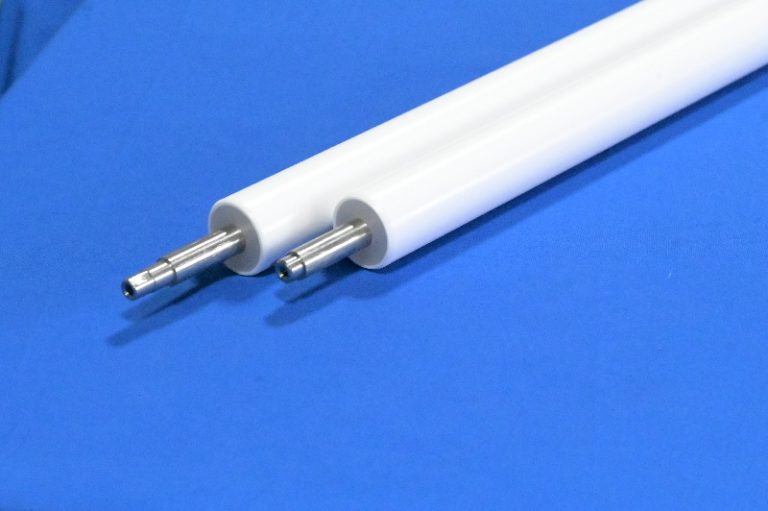
The product page lists polished and matte surface finishes, specialized locking sleeves or nuts, and several shaft options. SS304 or other stainless steel, carbon fiber, and fiberglass shafts may be considered according to corrosion exposure, weight, stiffness, and equipment requirements. The final surface finish, end-cap structure, shaft material, and dimensions should be confirmed on the approved manufacturing drawing.
Select the roller according to the blocking position and the liquid that must be contained. Confirm the equipment dimensions first, then review chemical exposure, continuous and maximum temperature, spray pressure, rotational speed, impact load, required clearance, and the condition of nearby bearings or guards.
For a replacement roller, measure the removed component and photograph the complete roller and both shaft ends. Similar equipment models may use different working lengths, mounting details, or end caps. The listed hardness range does not include a testing scale on the product page, so the required test method and acceptance value should be confirmed before production.
– Verify the roller dimensions, color, shaft material, and shaft-end structure before installation.
– Clean the mounting position and remove ink, chemical residue, or deposits that could affect alignment.
– Install the roller without striking, bending, or forcing the shaft ends.
– Check that the roller rotates freely and maintains the intended gap or contact position.
– Confirm that the roller does not contact tanks, spray headers, guards, or adjacent components.
– Inspect the roller regularly for bending, cracks, swelling, surface damage, loose end caps, or abnormal vibration.
– Use cleaning agents and methods that are compatible with PP and the selected shaft material.
– Replace the roller if deformation or surface damage reduces water or ink blocking performance.
Each customized order should be produced against an approved drawing or confirmed sample. Critical dimensions, shaft configuration, end-cap structure, surface finish, color, appearance, and radial runout should be checked before shipment. Accurate confirmation is important because small dimensional differences can change the clearance and blocking position inside the equipment.
Shenzhen Qixingyuan Machinery Equipment Co., Ltd. was established in 2008 and supplies accessories for PCB equipment. The company states that it integrates product design with equipment accessory solutions and holds national patent technology certifications. Customers can submit drawings, samples, and operating details for product selection and customization.
The roller should be protected against impact, bending, pressure, moisture, heat, and surface contamination during packing and transportation. Shaft ends, end caps, and the working surface require separate protection because deformation or scratches may affect installation and rotation. Packaging and delivery terms can be confirmed according to the roller dimensions, quantity, destination, and customer requirements.
– Product number or equipment model
– Roller outer diameter
– Working-face length and total length
– Shaft diameter, shaft-end dimensions, and preferred shaft material
– Required color, surface finish, and end-cap structure
– Drawing, photographs, or an existing sample
– Process liquid, chemical concentration, and exposure time
– Continuous and maximum operating temperatures
– Operating speed, spray pressure, and impact conditions
– Required quantity, delivery destination, and requested delivery time
What is the PP water-blocking roller used for?
It is used as a physical barrier at spray equipment sides, protective edges, tank transitions, and other positions where water, ink, or process liquid must be contained.
What material is used?
The product page lists high-density polypropylene as the roller material.
What is the maximum heat resistance?
The listed heat resistance is 100 degrees C. The continuous operating temperature and complete process conditions should be provided before ordering.
What is the radial runout?
The listed radial runout is 0.15 mm.
Can the size and shaft be customized?
Yes. The size can be customized. The product page also lists stainless steel, carbon fiber, and fiberglass shaft options, together with specialized locking sleeves or nuts.
Is the roller suitable for acids and alkalis?
The product is described as acid and alkali resistant. Compatibility should still be reviewed using the actual chemical type, concentration, temperature, and exposure time.
What information is needed for a replacement roller?
Provide the roller dimensions, shaft-end details, equipment model, blocking position, process conditions, quantity, and a drawing or sample whenever possible.
Fournir des accessoires pour équipements de circuits imprimés de haute précision et de haute performance, permettant à l'industrie mondiale de la fabrication électronique d'atteindre une production efficace.