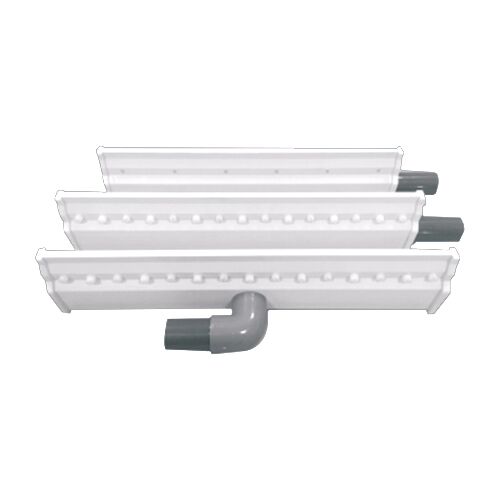
In PCB wet processing, most factories watch chemistry, spray pressure, and line speed. But when boards start skewing, stalling, or showing edge scuffs, the root cause is often mechanical. A PCB wheel disc looks simple, yet it controls friction, tracking, and the “feel” of every transfer point—especially in horizontal lines where water, acid/alkali mist, and continuous duty never stop.
Below is a practical breakdown of what different PCB wheel discs do, where each type fits best, and how to select them for fewer stoppages and more stable yields.
Why PCB wheel discs matter more than most teams expect
A PCB wheel disc is not only a “conveyor spare.” In wet lines it acts like a process-control part because it influences:
- Board tracking (preventing diagonal travel and edge rubbing)
- Contact pressure (supporting boards without denting or slipping)
- Friction stability (reducing micro-stops that create marks or carryover)
- Vibration and noise (which can turn into repeat defects over long shifts)
In real production, a small drift in wheel disc tolerance can show up as recurring issues in one station: boards entering slightly off-center, a flip step hesitating, or an exit transfer producing tiny edge scratches. This is why many maintenance teams treat PCB conveyor parts as a “system,” not as isolated replacements.
Qixingyuan note: If you’re troubleshooting repeated tracking errors or unexplained board scuffs, Qixingyuan’s PCB wheel disc range is designed for wet-line conditions where friction and alignment must stay consistent across long runtimes.
Flipping machine wheel discs: precision rotation and stable inverting
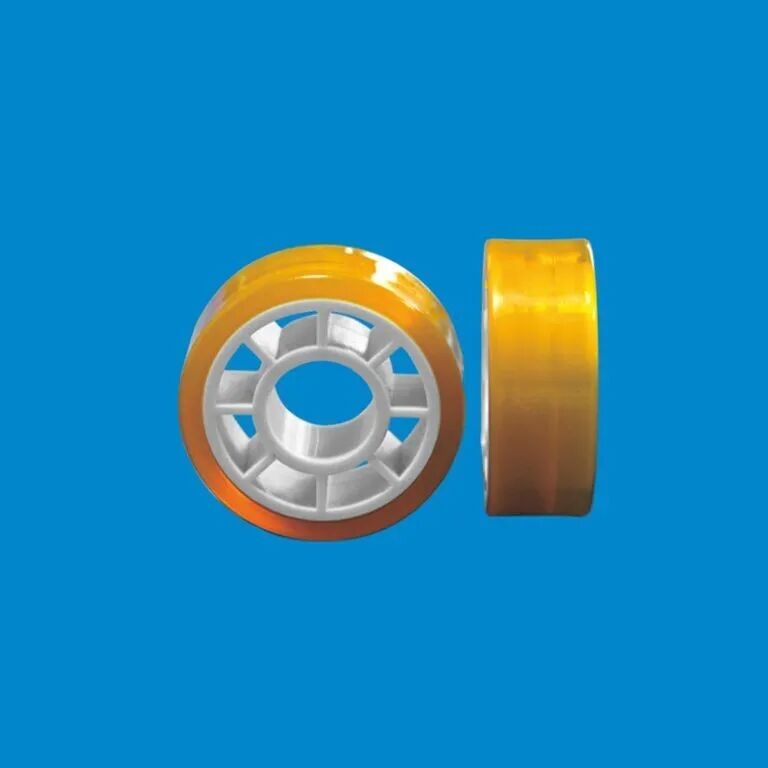
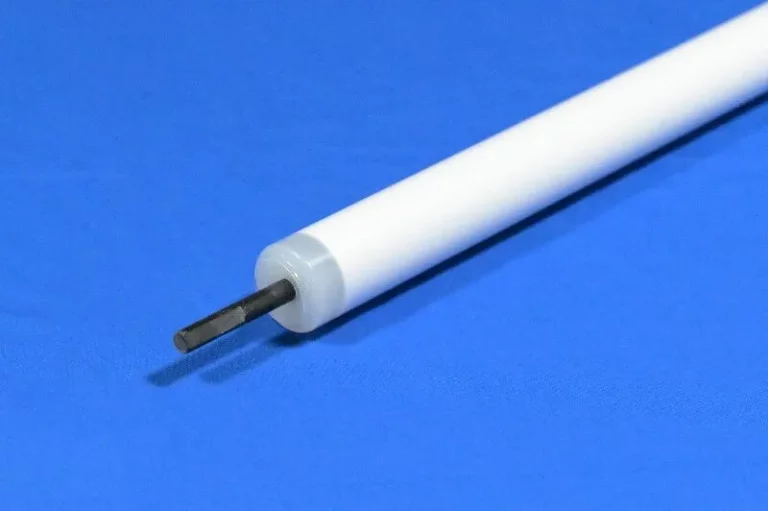
Flipping modules demand the most from a PCB wheel disc. The disc must grip enough to control the board, yet stay low-friction so the mechanism doesn’t stall. A flipping machine wheel disc typically sits on the flipper shaft or support positions, working through fast, repetitive motion.
What the flipping disc is really doing
Instead of “conveying,” it is managing a controlled hand-off:
- Holding the board during orientation change
- Preventing slip at the moment of rotation
- Avoiding sudden clamp marks on solder mask or copper
When flipping is inconsistent, operators often adjust sensors or timing first. But if the contact surface is worn or the disc hardness is mismatched, the machine may hesitate under load—then recover—creating intermittent defects that are hard to reproduce.
Selection cues buyers should confirm
- Load and board size range (not only average product)
- Surface sensitivity (thin solder mask or fine-edge designs)
- Disc material and machining accuracy for low friction, repeatable motion
Qixingyuan offers flipping machine wheel discs made for high-cycle motion, with material options commonly used in wet-line equipment and customization for size and hardness to match different flipper loads.
Hard plastic wheel discs: wear-resistant support and accurate tracking
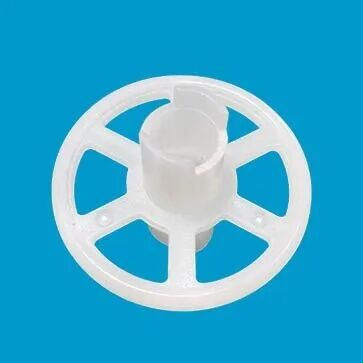
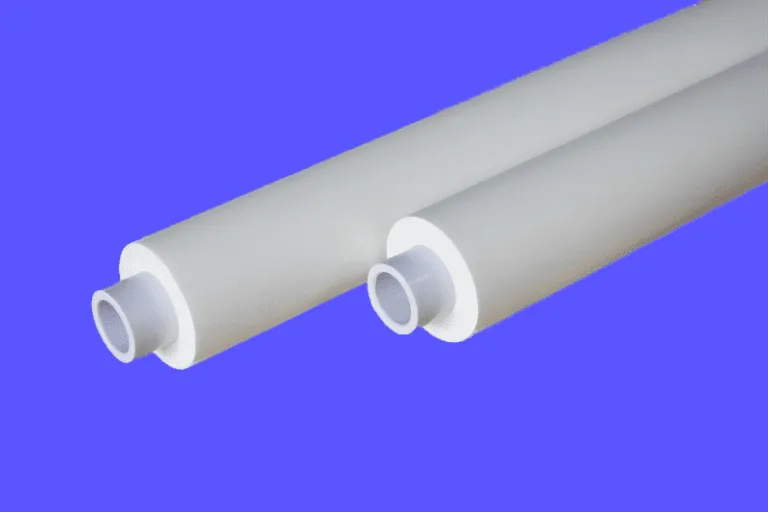
Hard plastic wheel discs are the “workhorse” PCB wheel disc in many conveyor and guide positions. In wet lines, they are commonly used for transmission, applying pressure where needed, and stable support—while keeping a smooth contact surface to reduce board scuff risk.
Where hard plastic discs add the most value
- Long conveyor runs where tracking stability matters
- Transfer points that must stay low-resistance
- Areas exposed to chemical mist where corrosion resistance matters
Engineering plastics are frequently chosen because they balance hardness, dimensional stability, and chemical tolerance. Qixingyuan lists common engineering plastic options such as PP, PE, PVDF, and PBT, which are widely used in wet-process environments due to durability and machinability.
Practical signs you chose the wrong hard wheel
- Polished “flat spots” from overload
- Persistent board drift even after alignment checks
- Increased friction sound at a single station
Qixingyuan’s hard plastic wheel disc options focus on stable conveying and positioning, with multiple engineering plastic choices to match chemical exposure and load conditions in PCB wet lines.
Sandblasting machine wheel discs: high wear, high impact, harsh duty
Sandblasting (or abrasive) sections are mechanically unforgiving. The wheel disc must tolerate friction, grit, and impact while keeping consistent movement. In this scenario, a sandblasting machine wheel disc is often specified for wear resistance and impact resistance, and it may be paired with shaft seats for stable support.
Material behavior that matters in abrasive environments
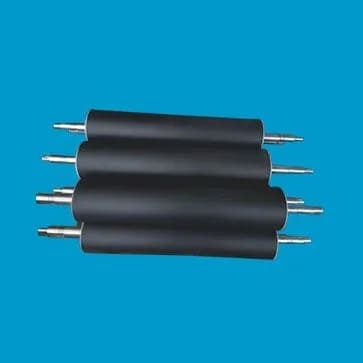
Many abrasive-duty designs use nitrile rubber (NBR) because it handles wear and resists many oils and process contaminants while keeping workable elasticity. Qixingyuan’s sandblasting wheel disc information calls out NBR (nitrile butadiene rubber) as the material used, reflecting the need for toughness under harsh conditions.
What procurement should ask before ordering
- Abrasive type and particle size (fine vs. coarse wear pattern)
- Whether the disc must also damp vibration
- Shaft fit and alignment tolerance (to avoid uneven wear)
For abrasive-duty applications, Qixingyuan supplies sandblasting machine wheel discs and related support parts built around wear resistance and impact handling, with custom sizing available for different machine setups.
Soft and rubberized wheel discs: grip, damping, and quieter transport
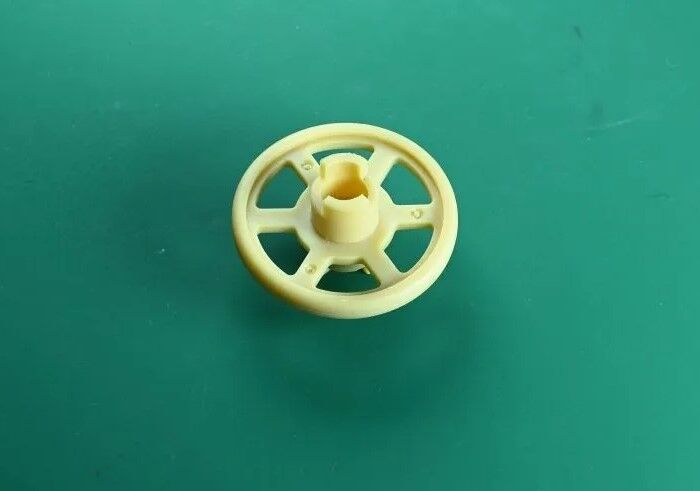
When the goal is to reduce slipping, vibration, and noise, soft and rubberized wheel discs become the preferred PCB wheel disc option. These designs typically use a resilient surface layer (often rubber or polyurethane) to improve traction and protect the board edge during transport and flipping transitions.
What rubberized discs solve in day-to-day production
- Boards sliding during acceleration/deceleration
- Micro-vibration that shows up as repeated edge rub marks
- Excess noise that signals unstable contact
Qixingyuan highlights rubber/polyurethane-type wheel designs with features such as high wear resistance, chemical resistance against common solutions, and elasticity that reduces vibration and protects workpieces—exactly the profile buyers look for in wet lines where boards must move smoothly without scuffs.
When not to use a soft rubberized wheel disc
If a station requires very precise positioning under higher compressive load, a soft surface may deform slightly and reduce positional repeatability. In those cases, hard plastic wheel discs or mixed setups (hard support + soft contact at select points) may work better.
Qixingyuan’s soft and rubberized wheel disc offerings target anti-slip conveying and vibration damping, supporting higher stability in sensitive handling positions like transfer zones and flippers.
Quick comparison: matching wheel disc type to the station
The best-performing lines rarely use one disc type everywhere. They build a “material map” by station.
| PCB wheel disc type | Best fit in the line | Main buying priority | Common failure mode if mis-selected |
| Flipping machine wheel disc | Flippers, inverters, high-cycle motion points | Controlled friction + precision rotation | Stalling, intermittent slip, clamp/edge marks |
| Hard plastic wheel disc | Conveyor runs, guide/support positions | Wear resistance + dimensional stability | Flat spots, drift, friction rise |
| Sandblasting machine wheel disc | Abrasive/harsh stations, paired supports | Wear + impact resistance | Rapid wear, uneven abrasion, vibration |
| Soft rubberized wheel disc | Transfer zones, traction points, low-noise needs | Grip + damping + board protection | Deformation under load, tracking softness |
If you want to standardize spares by station type, Qixingyuan can supply a matched set of PCB wheel discs—hard, soft/rubberized, flipping, and abrasive-duty—so maintenance teams can reduce trial-and-error replacements.
Selection and maintenance checklist buyers can use immediately
Between “works on paper” and “runs 24/7,” the difference is usually friction stability and alignment. Conveyor guide components are meant to direct and support movement; when they wear, they change the whole travel path.
A practical spec sheet template for RFQs
Include these in your RFQ to avoid back-and-forth:
- Application station: conveyor / flipping / abrasive-duty / transfer
- Chemical exposure: acid, alkali, solvent mist, rinse-only
- Temperature and duty cycle: continuous hours/day, peak temperature near dryers
- Board parameters: max width, thickness range, edge sensitivity
- Required performance: low friction / high grip / low noise / high wear life
- Fit data: shaft OD, disc ID, allowable runout
Early warning signals (before downtime hits)
One useful approach is to treat these symptoms as “replace-now” triggers:
- New noise at one station
- A localized friction increase
- Repeated board skewing (same direction, same spot)
These are common early indicators that PCB conveyor parts—often wheels, bearings, or rollers—are wearing or drifting out of tolerance, and inspection at that moment can prevent larger line disruptions.
Qixingyuan supports wet-line maintenance with PCB wheel disc options that prioritize stable friction and consistent tolerances, helping teams reduce recurring skewing and “mystery” transfer marks.
About Shenzhen Qixingyuan Machinery Equipment Co., Ltd.
Shenzhen Qixingyuan Machinery Equipment Co., Ltd. focuses on spare parts and consumables for PCB horizontal line wet processing equipment—covering conveyor rollers and wheel discs, transmission parts, spray/cleaning components, filtration items, and other production-critical accessories. The company’s development reflects a typical path from parts trading to manufacturing: it began operations in Shenzhen serving PCB equipment accessory needs, then expanded into in-house development and production as customer requirements for fit, durability, and consistency grew. In recent years, it strengthened its global supply capability to support overseas PCB factories with stable lead times and one-stop sourcing for wet-line spares.
If your team is looking for component suppliers for PCB manufacturing, Qixingyuan’s catalog supports multi-part sourcing (not only PCB wheel discs), which can simplify preventive maintenance planning and reduce emergency purchasing.
Conclusion
Different PCB wheel discs play different roles because each station asks for a different mix of friction, hardness, chemical resistance, and vibration control. Flipping machine wheel discs prioritize controlled rotation and repeatability. Hard plastic wheel discs keep tracking stable over long runs. Sandblasting machine wheel discs survive abrasion and impact. Soft rubberized wheel discs add grip and damping where boards are most likely to slip or get marked. The fastest way to improve uptime is to match disc material to station behavior, then lock in a clear RFQ spec so replacements stay consistent.