In PCB wet processing equipment, a small gear can decide whether a conveyor runs smoothly or causes repeated board deviation, uneven handling, abnormal noise, and unplanned stops. Gears in PCB equipment work around water, mist, acids, alkaline solutions, cleaning chemicals, heat, and long production shifts. A gear that looks correct on the drawing may still fail early if its material does not match the line position.
For buyers, engineers, and maintenance teams, PCB gear material selection should not start with price alone. PP, PVDF, POM, SUS, and titanium all have useful roles, but each one fits a different working condition. The best gear material for PCB equipment depends on chemical exposure, load, speed, shaft fit, temperature, and how costly downtime is for the production line.
What makes gears in PCB equipment fail early?
Gear failure in PCB wet lines is rarely caused by one factor. In many factories, the first sign is not a broken tooth. It may be a small change in conveyor rhythm, a board moving slightly off track, fine plastic powder near the shaft, or a clicking sound during transfer.
Chemical attack and swelling
Etching, developing, cleaning, and rinsing areas expose gears to wet chemicals and spray mist. Some plastic gears may swell or lose stiffness in the wrong solution. Some metal gears may corrode if the chemical mix, temperature, and contact time are not checked.
Tooth wear from continuous running
PCB conveyor gears often run for long shifts. A gear that handles light load for one hour may show wear after weeks of constant tooth contact. Low friction, stable tooth shape, and good shaft alignment matter more than they look on paper.
Poor fit between gear, shaft, and nearby parts
A gear works with rollers, bushings, holders, shafts, and screws. If the bore is loose, the shaft is worn, or the gear thickness does not match the original position, even a high-grade material may not run well.
For this reason, Qixingyuan supplies PCB wet processing equipment parts as a system, including gears and screws, conveyor rollers, wheel discs, transmission parts, bushings, and related accessories. This helps buyers match gears with nearby parts instead of treating the gear as an isolated spare.
How do PP, PVDF, POM, SUS, and titanium compare?
Material choice becomes easier when the buyer connects each material to a real line position. The table below gives a practical starting point for PCB equipment gears.
| Gear material | Main advantage | Common PCB equipment use | Main caution |
| PP | Light weight and lower cost | Low-load wet line positions | Not for heavy torque or high precision wear areas |
| PVDF | Strong chemical resistance | Etching, developing, chemical spray zones | Higher cost than PP or POM |
| POM | Low friction and good wear resistance | PCB conveyor gears and stable transmission | Not ideal for strong acid or strong oxidizer zones |
| SUS | Strength and rigidity | Higher-load drive areas | Chemical compatibility must be checked |
| Titan | High corrosion resistance and strength | Harsh chemical and critical long-life positions | Higher purchase cost |
This table should not replace engineering review. It gives a fast filter for buyers who need to narrow choices before sending drawings, samples, or photos for confirmation.
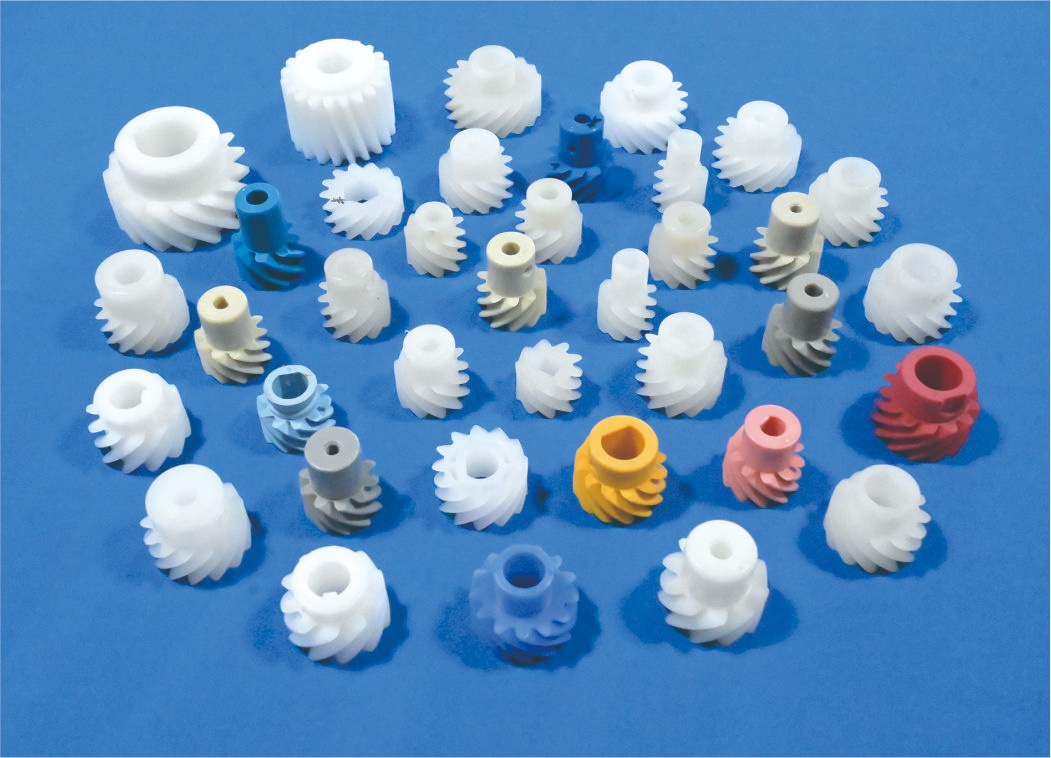
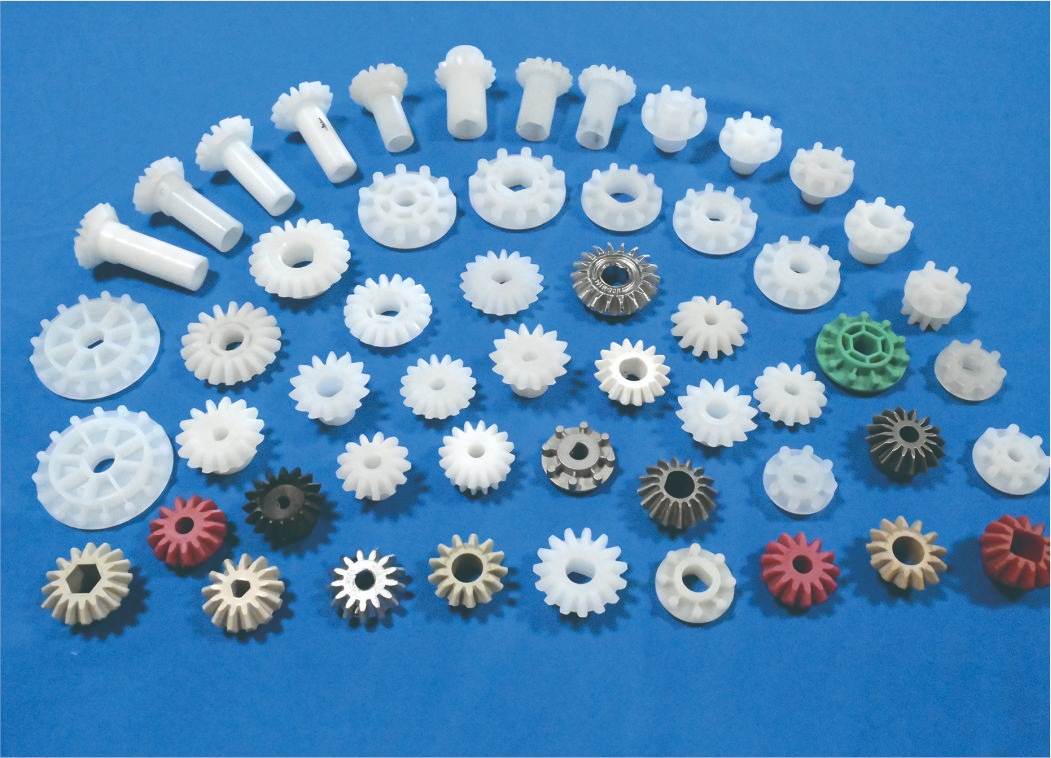
Qixingyuan’s gears and screws category covers practical PCB wet line transmission parts, including spur gears, bevel gears, helical gears, double gears, pin gears, screws, and SUS or titanium gears. This product range supports buyers who need both standard replacement and custom gear matching for PCB equipment.
When should a PP gear be chosen?
PP gear is often a sensible choice when the line position is light-load, wet, and cost-sensitive. It is useful where the gear does not carry high torque and where the main need is basic transmission in a wet environment.
Suitable positions for PP gear
PP may fit low-load conveyor support areas, simple transfer sections, and positions where the gear mainly keeps movement in rhythm. It can also work well when the buyer needs a lightweight plastic gear for PCB machinery and wants to control spare part cost across a large number of machines.
Where PP may not be enough
PP is not the best answer for every wet line gear. If the position has high tooth pressure, tight movement tolerance, hot liquid, strong chemical attack, or frequent wear, PP may need to be replaced by PVDF, POM, SUS, or titanium. A low purchase price can become expensive if the part needs frequent replacement.
For Qixingyuan customers, PP gear selection is usually reviewed together with gear size, tooth number, bore diameter, shaft condition, and the working section of the PCB wet line. This practical check helps reduce wrong-material orders and repeated replacement.
When is a PVDF gear better for PCB wet processing?
PVDF gear is often selected when chemical resistance matters more than low cost. In PCB etching machine gears, developing line parts, and chemical spray zones, the gear may face acid mist, alkaline liquid, oxidizing chemistry, or long contact with wet process residues.
Why PVDF fits chemical zones
PVDF is valued because it keeps good stability in many chemical environments. For PCB wet line gears, this makes it useful in areas where PP may age too fast and POM may not be the safest choice. In real maintenance work, PVDF is often considered when buyers want corrosion resistant gears for PCB equipment without moving directly to metal.
Typical use cases in PCB lines
PVDF gear can be considered for:
- Etching and developing sections with stronger chemical exposure
- Cleaning and rinsing lines where chemical mist remains on nearby parts
- Positions where early gear wear has been linked to corrosion, swelling, or chemical aging
What to check before ordering
PVDF is not chosen only by name. Buyers should confirm the chemical type, liquid concentration, operating temperature, gear module, tooth count, shaft fit, and running speed. If the gear is also bearing higher mechanical load, the full transmission structure needs review.
Qixingyuan supplies PVDF gear options for PCB equipment applications where chemical exposure is a major concern. The company can help buyers compare PVDF with PP, POM, SUS, and titanium based on working position rather than material name alone.
When does POM gear make more sense?
POM gear is a strong option when smooth movement, low friction, and stable tooth engagement matter most. In many PCB conveyor gears, the working challenge is not heavy corrosion but long running time, repeated contact, and the need to keep board transfer steady.
Best use in conveyor transmission
POM gear is often used in conveyor transmission systems because it can offer good wear behavior and low friction. In PCB equipment, that can mean smoother movement, lower noise, and less stress on shafts and bushings. It is suitable for positions where the gear must run cleanly for many shifts with limited adjustment.
Where POM performs well
POM is a good choice for moderate-duty conveyor areas, transfer positions, and transmission sections that need stable dimensions. For maintenance teams, low friction POM gears for PCB conveyors can reduce abnormal sound and tooth wear when the gear, shaft, and bushing are all in good condition.
Where POM should be avoided
POM should be reviewed carefully before use in strong acid, strong oxidizer, or harsh chemical spray zones. If the line position is close to etching chemicals, PVDF or titanium may be safer. If the position carries high torque, SUS or titanium may be more suitable.
Qixingyuan provides POM gear solutions for PCB conveyor gears and wet line transmission parts. For buyers replacing worn gears, Qixingyuan can also check whether the original failure came from material, shaft wear, alignment, or nearby roller problems.
When should SUS gear be used?
SUS gear is a better fit when strength, rigidity, and load-bearing ability are more important than light weight. Plastic gears can work well in many PCB wet line positions, but some drive areas need a stronger metal gear.
Good positions for SUS gear
SUS gear may suit higher-load transmission sections, drive points, and positions where plastic teeth wear too quickly. It can also be used where gear deformation would affect machine stability. In these areas, rigidity helps keep the tooth profile and motion more stable under load.
Chemical review is still needed
SUS does not mean automatic corrosion resistance in every PCB wet processing line. Buyers still need to check liquid type, temperature, spray direction, and exposure time. In some chemical zones, titanium or PVDF may be better. In other positions, SUS gives a useful balance of strength and cost.
Qixingyuan’s SUS gear options support PCB equipment buyers who need stronger transmission parts for demanding sections. These gears can be matched with shafts, bushings, and holders to reduce fit problems during replacement or line rebuilding.
When is titanium gear worth the higher cost?
Titanium gear is usually selected for harsh, high-value, or difficult-to-maintain positions. It is not the cheapest gear material, but it can lower total cost when downtime, chemical attack, and repeated replacement are expensive.
Khu vực hóa chất mạnh
Titanium gears are useful where corrosion risk is high and long service life matters. In some PCB wet process lines, a small gear failure can stop a whole section, affect board movement, and delay production. In such cases, the buyer may care less about the single-part price and more about stable running over months.
Critical equipment positions
Titanium gear can be considered for critical wet line sections, premium PCB equipment, and custom transmission parts where strength and corrosion resistance must work together. It is also suitable when the replacement position is hard to access and frequent maintenance is not acceptable.
Qixingyuan supplies titanium gears for PCB equipment applications that need stronger corrosion resistance and long-term reliability. For B2B buyers, this helps build a more practical spare parts plan for harsh chemical environments.
How should buyers choose gear material by equipment area?
A practical selection method starts with the location of the gear. The same PCB factory may need PP, PVDF, POM, SUS, and titanium in different parts of the same production line.
| PCB equipment area | Suggested material | Reason |
| Light-load wet conveyor | PP or POM | Cost control and smooth movement |
| Precision conveyor transfer | POM | Low friction and stable gear mesh |
| Etching line | PVDF or titanium | Better resistance to chemical attack |
| Developing section | PVDF | Stronger wet chemical resistance |
| Cleaning and rinsing line | PP, PVDF, or POM | Depends on liquid strength and load |
| Higher-load drive area | SUS or titanium | Better rigidity and load capacity |
| Critical long-life position | Titan | Lower replacement risk |
This table also helps purchasing teams ask better questions. Instead of asking only for a plastic gear or metal gear, buyers can describe the real position: etching line, conveyor transfer, rinsing area, drive shaft, or high-load section.
Qixingyuan supports this selection process by supplying a broad range of PCB equipment gears, screws, rollers, transmission parts, and bushings. This makes it easier for buyers to match material choice with actual equipment areas and nearby spare parts.
What details should be confirmed before ordering custom gears?
Custom gears for PCB equipment should be checked from both drawing and working environment. A part may match the outer shape but still fail if the material or tolerance is wrong.
Basic gear information
Buyers should prepare the following details before ordering:
- Gear type, such as spur gear, bevel gear, helical gear, double gear, or pin gear
- Material, including PP, PVDF, POM, SUS, or titanium
- Module, tooth number, outer diameter, bore diameter, width, and shaft fit
- Working position in the PCB wet line
- Chemical exposure, temperature, speed, and load
- Drawing, used sample, or clear photos
Why samples are useful
A used gear can tell more than a drawing. Tooth thinning, cracks, discoloration, shaft hole wear, or uneven surface marks can show whether the problem came from chemical aging, overload, poor alignment, or long-term friction.
Qixingyuan works with PCB equipment manufacturers, maintenance teams, and spare parts buyers to review drawings, samples, and application conditions. Its gear and screw product range supports both replacement needs and custom PCB wet line parts.
About Shenzhen Qixingyuan Equipment Parts Co., Ltd.
Shenzhen Qixingyuan Equipment Parts Co., Ltd. is a PCB horizontal line wet processing equipment spares and parts supplier. The company focuses on practical components used in PCB wet segment equipment, including gears and screws, air knives, rollers, wheel discs, transmission systems, bushings, spray and cleaning products, consumables, and measurement-related accessories.
For buyers, the value of a specialized supplier is not only the part itself. PCB wet lines often need parts that match chemical exposure, conveyor rhythm, shaft size, installation space, and maintenance habits. Qixingyuan supports customers with product selection, custom processing, and practical spare parts matching for PCB and related wet process equipment. This makes it suitable for equipment builders, repair teams, and factories that need stable replacement parts for long-term production use.
Phần kết luận
There is no single best gear material for all PCB equipment. PP works well in light-load and cost-sensitive wet line positions. PVDF is a stronger choice for chemical resistant gears in etching, developing, and spray areas. POM fits PCB conveyor gears where low friction, wear resistance, and stable movement matter. SUS gear is useful for higher-load positions that need strength and rigidity. Titanium gear is worth considering when corrosion, downtime, and long service life are the main concerns.
Good PCB gear material selection starts with the real working condition. When buyers provide the gear type, size, material, shaft fit, chemical environment, and working position, the chance of getting the right part becomes much higher.