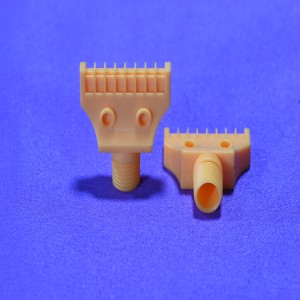
An HDI chile water remains inside blind vias, microvias, recessed pads, and dense hole groups. That moisture can carry diluted chemistry forward, create water marks, or cause panel-to-panel variation.
Reliable HDI PCB drying needs two airflow functions. A PCB air knife removes the broad water film. Spot blowing nozzles then target features that a flat air curtain cannot reach well. Together, they provide non-contact blind via moisture removal without prolonged heating.
Why Moisture Remains in Blind Vias and Microvias
HDI boards use fine conductors, thin dielectric layers, and small blind structures to raise interconnection density. Their recessed geometry makes drainage harder than on a flat copper surface. During developing, etching, cleaning, and rinsing, liquid enters these openings and may remain after the panel leaves the spray chamber. Retention Limits Gravity Drainage
Surface tension can hold water against the via wall, especially on a horizontally conveyed panel. Dense pads and nearby features form sheltered zones. A fast surface blow may clear visible beads while leaving a thin film below the entrance.
The problem becomes more noticeable on boards with tightly grouped microvias. Water pushed away from one feature may move into the next recess if the airflow has no clear drainage direction. As conveyor speed rises, the time available for liquid removal becomes shorter.
Drying Should Begin with Liquid Displacement
Hot air supports evaporation, but trapped water dries slowly and may leave dissolved residue. The first task is mechanical: break the film, move liquid out, and carry it away. A low-load heated section can finish the remainder.
Qixingyuan supplies air knives, blowing nozzles, nozzle pipes, joints, and other PCB wet-process spare parts. Components can be selected around the existing line, chemical environment, installation space, and maintenance method rather than requiring a complete machine change. Air Knife Removes the Main Water Load
A PCB air knife turns supplied air into a continuous, high-speed sheet. When the air curtain meets a wet panel at an angle, it applies shear across the surface. Water is driven toward an edge, large beads are broken into movable droplets, and liquid is cleared from traces, pads, and open holes.
Position Matters as Much as Pressure
Drying quality depends on outlet distance, angle, conveyor speed, panel support, slot condition, and drainage direction. Too much distance loses velocity; too little may cause splash-back, board movement, or uneven drying around rollers. Excess flow can create downstream mist. al lines place air knives above and below the conveyor. The upper unit pushes water toward an edge; the lower unit clears the underside and open holes. Offset positions reduce airflow collision.
| Process factor | Practical starting point | Warning sign |
| Outlet angle | Aim toward the nearest drainage path | Water returns to hole groups |
| Working distance | Retain velocity without panel contact | Splashing or weak edge drying |
| Tốc độ băng tải | Set through residual-moisture checks | Wet trailing edge |
| Air supply | Keep flow clean and stable | Pressure falls during peak demand |
The correct setting should be confirmed with actual production panels. A pressure value that works on a flat test coupon may not dry a panel with dense copper, narrow spacing, and several blind via zones.
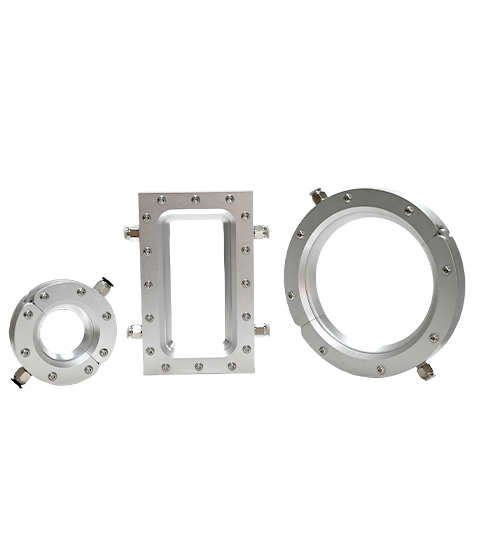
Qixingyuan provides air knife solutions in several materials and airflow arrangements for PCB cleaning and drying. Buyers can compare working width, corrosion exposure, available air supply, mounting limits, and maintenance access before requesting a quotation. lowing Nozzles Reach Recessed Moisture
An air knife handles coverage; a spot blowing nozzle handles access. Its narrow jet targets blind via fields, recesses, tooling holes, panel edges, or other locations where moisture survives the main air curtain.
Focused Jets Need a Clear Exit Path
The nozzle places momentum at one defined area. A useful setup directs the jet across or slightly into the via opening while leaving room for displaced water to escape. A vertical jet may push liquid deeper. A shallow, offset angle often lifts moisture and moves it sideways.
Nozzle spacing should follow wet patterns on real panels. Equal spacing may waste air. Run test boards at production speed, inspect both faces, map recurring wet areas, and place spot jets only where they improve microvia drying.
For example, a panel may leave the main air knife with its center dry but retain water in two narrow via fields near the side rails. Adding nozzles across the full board width would raise air consumption unnecessarily. Two correctly aimed spot blowing nozzles may solve the local problem with less disturbance to the panel.
A Practical Combined Sequence
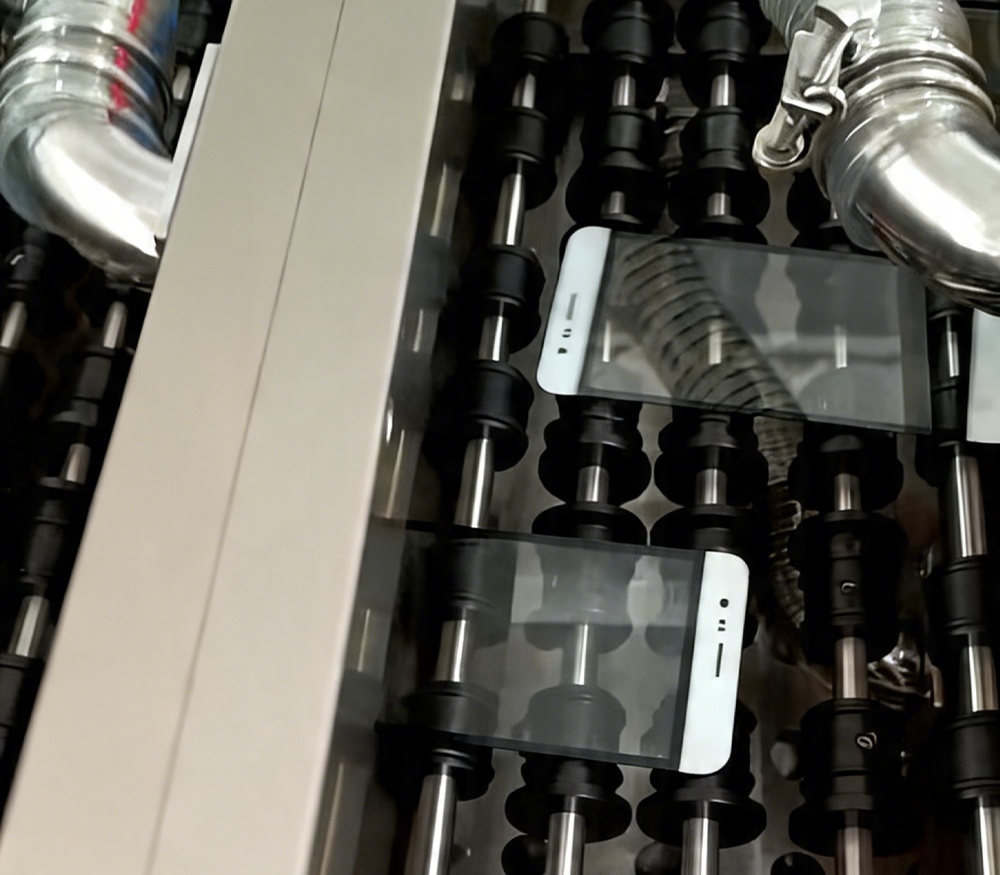
A staged HDI PCB drying section often includes:
- drainage or water-retaining rollers for the bulk load;
- a wide PCB air knife for surface moisture removal;
- spot blowing nozzles for blind via and microvia drying;
- a final low-load air or heated section when the next process requires it.
Qixingyuan supplies blowing nozzles, chemical-resistant nozzle pipes, caps, plugs, covers, joints, and quick-maintenance parts for PCB rinsing and drying sections. These parts support targeted upgrades when a factory needs better hole drying without rebuilding the full horizontal wet line. Stable HDI PCB Drying Section
Good drying must remain repeatable as board designs, room conditions, and production speed change. A low-speed setting may fail on dense microvia fields at the fastest conveyor rate.
Validate with a Difficult Production Panel
Choose a worst-case board with dense via groups, large copper areas, and the fastest planned speed. Record airflow, knife distance, angle, nozzle position, and room conditions. Change one variable at a time and check the same locations.
Key checks include:
- droplets at leading and trailing edges;
- water in repeated blind via locations;
- mist on covers, rollers, or the next module;
- panel lift, chatter, or tracking changes;
- residue marks after a controlled hold period;
- pressure loss during normal factory demand.
Inspection should take place immediately after drying and again after a defined holding period. Some moisture is difficult to see while the panel is moving but becomes visible as a ring, stain, or residue mark after several minutes.
Deposits, damaged outlet edges, loose joints, blocked nozzle cores, and worn seals can alter airflow. Routine inspection is cheaper than tracing intermittent moisture defects.
Qixingyuan supports PCB blowing and drying sections with air knives, spray parts, conveyor components, measurement products, and custom spare parts made from drawings or samples. This broader range lets engineering and purchasing teams discuss airflow, transport, and maintenance issues together. ir Knives and Nozzles for a Purchase Project
A useful sourcing request describes the process problem, not just the old part name. Similar parts may behave differently because of outlet geometry, material, connection size, air demand, or mounting position.
| Purchase question | Why it matters |
| What width and speed must be covered? | Sets air-knife length and flow demand |
| Where does water remain? | Shows whether broad or spot blowing is needed |
| Which chemicals and temperatures are present? | Guides material and seal choice |
| Is plant air capacity stable? | Prevents weak output during busy periods |
| Are drawings or samples available? | Reduces fit and installation risk |
For a blind hole drying project, provide via size, depth, board orientation, wet-process stage, working distance, and dryer photos. A short video can reveal movement, splash direction, and drainage limits. Ask how the layout balances velocity, coverage, noise, air use, and cleaning access.
The quotation should also state whether the requirement concerns a direct replacement or a process improvement. A replacement focuses on dimensions and compatibility. An improvement project requires more information about residual moisture, line speed, airflow supply, and available adjustment space.
Qixingyuan works with PCB manufacturers and equipment users on standard replacements and custom components. Its range includes air knives, nozzles, nozzle pipes, joints, rollers, gears, screws, bushings, filters, and control-related parts for horizontal wet-processing equipment. zhen Qixingyuan Equipment Parts Co.
About Shenzhen Qixingyuan Equipment Parts Co.: Your PCB Wet Process Equipment Parts Partner
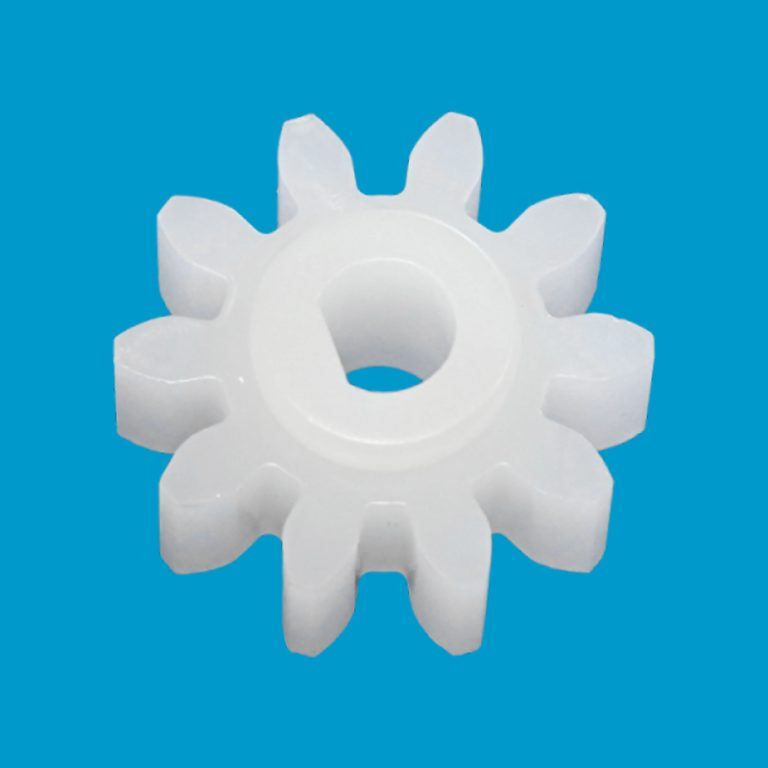
Shenzhen Qixingyuan Equipment Parts Co. supplies spare parts and custom replacement components for PCB horizontal-line wet-processing equipment. Its range serves cleaning, developing, etching, rinsing, conveying, and blowing-and-drying sections. Products include air knives, blowing nozzles, nozzle pipes and joints, water-retaining rollers, conveyor rollers, gears, screws, bushings, filters, consumables, and measurement or control parts.
Customers may submit drawings, dimensions, equipment photos, or sample images when a catalogue description is not enough. This is useful for older machines, unavailable original parts, or drying sections that need a local airflow change instead of complete replacement. The team can review fit, material, connection, and operating conditions before quotation. Qixingyuan also presents PCB wet-process, conveyor, drying, LCD cleaning, electroplating, and custom-part application cases, giving procurement, maintenance, and engineering teams a practical basis for technical discussion.
Phần kết luận
Moisture trapped in blind vias and microvias is not solved by adding more air everywhere. The system should remove the broad surface load first, then direct focused airflow toward repeat problem areas. A well-positioned PCB air knife clears panel faces and open features; spot blowing nozzles provide local penetration for blind via moisture removal.
The best results come from trials with real boards, stable airflow data, clear drainage paths, and routine inspection. For a practical quotation, buyers can send Qixingyuan the board geometry, conveyor speed, wet locations, chemical conditions, air-source details, and installation limits.
Câu hỏi thường gặp
1. Can an Air Knife Alone Dry Every Blind Via on an HDI PCB?
Not always. A PCB air knife removes the main water film across the board, but recessed or shielded via groups may sit outside the strongest airflow. When trials show moisture in the same locations, spot blowing nozzles can add a focused jet. The decision should follow residual-moisture mapping at production conveyor speed, not pressure settings alone.
2. Should Spot Blowing Nozzles Point Straight into Blind Vias?
A slight angle is often a better starting point than a vertical jet. Air directed straight down may push water deeper without giving it an easy exit. An offset jet can lift moisture at the opening and move it toward a free surface. The final angle depends on via geometry, travel direction, nozzle distance, and nearby board features.
3. How Can a Factory Reduce Air Use During HDI PCB Drying?
Remove bulk water before the air stage, keep outlets clean, place air knives close enough to retain velocity, and install spot nozzles only where wet-area mapping shows a need. Check leaks and pressure drops during peak demand. Wide continuous coverage may suit a blower-fed air knife, while compressed air can be reserved for targeted jets.
4. When Should a PCB Manufacturer Request Custom Drying Parts?
Custom parts make sense when the original component is unavailable, mounting space is unusual, board width has changed, or standard nozzles cannot reach recurring wet zones. Send drawings, dimensions, connection details, material needs, and sample photos. Qixingyuan can review custom air knives, nozzle pipes, joints, holders, and related PCB wet-process replacements before installation.