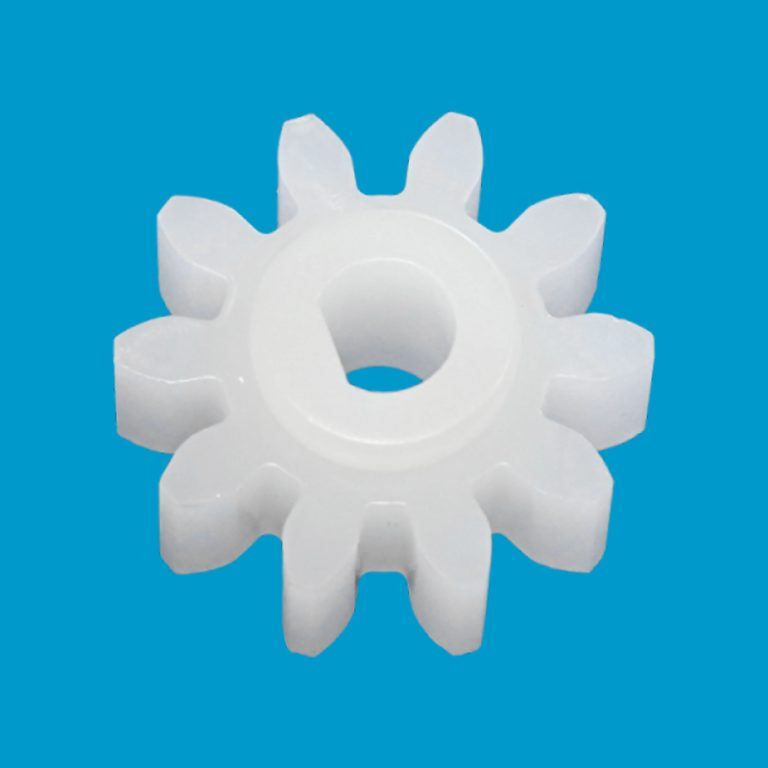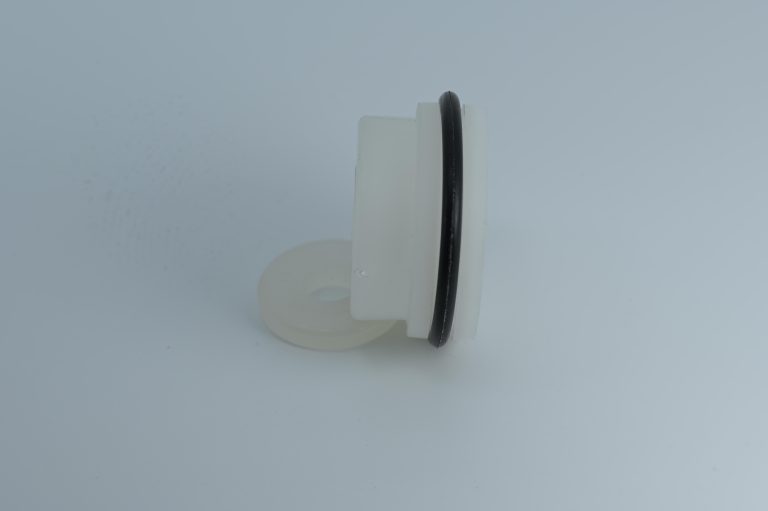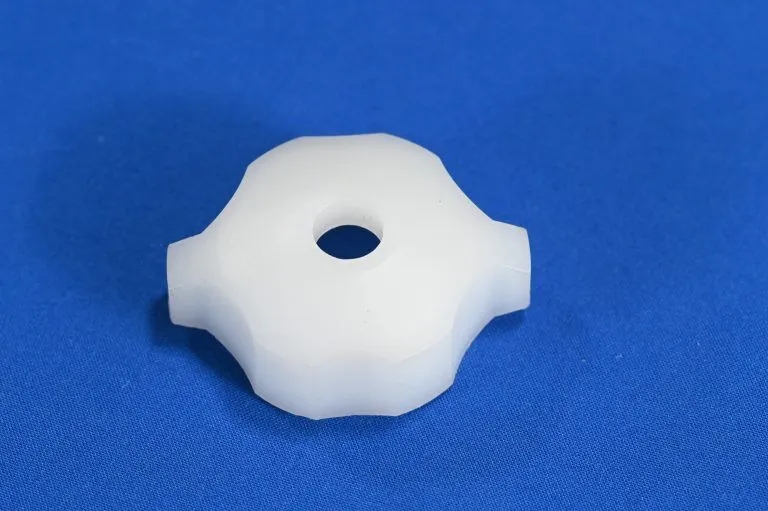
A small PCB gear can stop a wet process line, yet replacement requests often arrive with one photo and an outside diameter. That leaves too much open to interpretation. A workable RFQ ties together tooth geometry, shaft fit, material, chemical exposure, load, and mounting conditions. These checks help buyers compare quotations and screen unsuitable parts.
Why PCB Gear Replacement Requests Go Wrong
Most sourcing problems begin before quotation. A removed gear may be worn, swollen, cracked, or chemically attacked, so its dimensions may not represent the original part. Buyers may also miss the mating gear, shaft, sleeve, bearing block, or spacer that controls alignment. Common causes of replacement failure include:
- incorrect tooth profile or pressure angle
- bore clearance that is too tight or too loose
- wrong keyway, pin hole, hub, or locking method
- material that changes size after chemical or heat exposure
- poor alignment with the mating gear
- insufficient strength during loaded starts
A structured PCB gear replacement request gives suppliers a consistent basis for quotation and reduces repeated fitting.
For this type of replacement, Qixingyuan reviews drawings, samples, installation photos, and operating notes for gears used in PCB horizontal wet processing equipment. The review can take place before production starts.
Build a Complete PCB Gear Specification
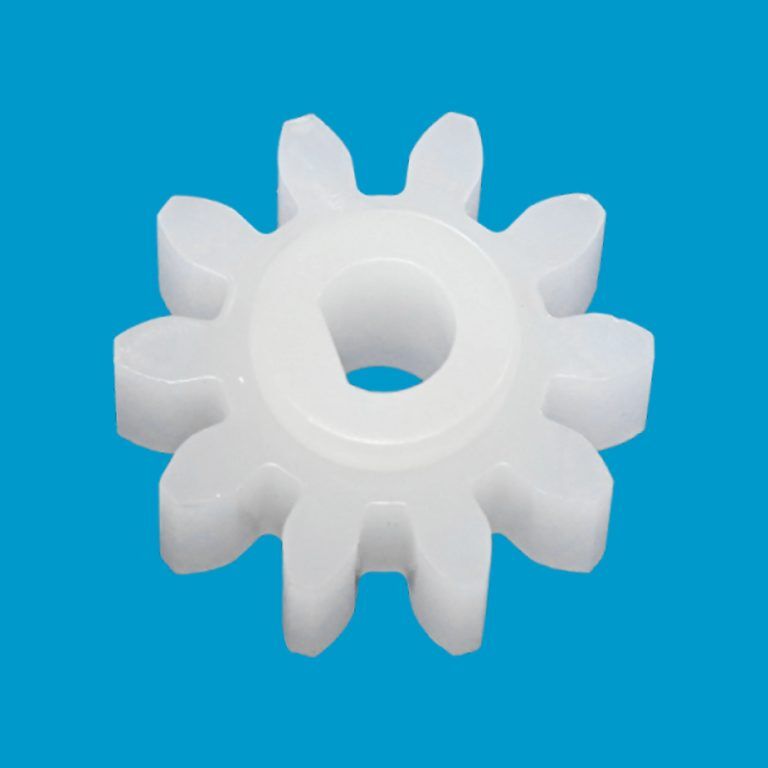
A useful RFQ marks what was measured and what is still uncertain. It also shows where the gear sits and what it drives.
Record Geometry and Mounting Details
Record the gear type, tooth count, outside diameter, face width, bore, hub, and overall length. If module, pitch, pressure angle, or helix angle is unknown, say so. Note whether the PCB transmission gear uses a keyway, cross pin, set screw, spline, flat shaft, insert, or molded hub. Measure the shaft separately because a worn bore may be oversized.
Describe Load and Operating Conditions
Explain what the gear drives. Include line speed, estimated torque, start-stop frequency, temperature, shock loading, and reversing where known. Identify the process section, liquid, concentration, and cleaning method. These facts are more useful than the label chemical resistant plastic gear.
| RFQ field | Information to provide | Why it matters |
| Gear geometry | Type, tooth count, diameters, width, pitch data | Controls meshing and speed ratio |
| Shaft connection | Bore, keyway, pin, insert, hub, locking method | Controls fit and torque transfer |
| Process section | Developing, etching, stripping, rinse, or other | Defines chemical and contamination exposure |
| Operating duty | Speed, load, starts, reversals, service hours | Affects strength and wear requirements |
| Material evidence | Existing material, failure signs, previous life | Helps avoid repeating the same failure |
| Verification | Drawing approval, sample check, inspection report | Reduces errors before batch production |
When Qixingyuan reviews a PCB gear request, the mating part and shaft connection can be checked alongside the gear. Sleeves, couplings, shafts, and spacers can be included when wear is not limited to one component.
Select Material by Failure Mode
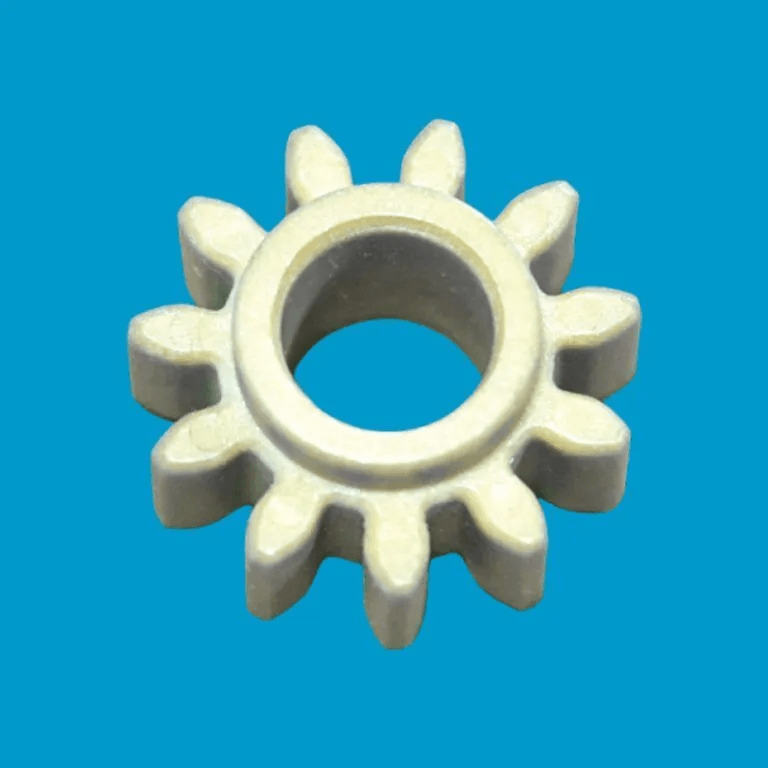
Material selection should begin with the failure evidence. Copy the old material only when its service life was acceptable.
Read the Evidence on the Removed Gear
Rounded teeth may indicate wear, poor meshing, or overload. Cracks near a pin hole or keyway can point to stress concentration. An oval bore suggests shaft movement. Swelling, softening, or surface change may indicate chemical or heat exposure. Photograph the part before cleaning and mark its rotation direction.
Compare Practical Material Options
PCB machine gears may use PP, UPE, PVDF, or PEEK. Each balances chemical resistance, stiffness, stability, wear, and cost differently. Higher price cannot correct poor alignment. Put the proposed material on the quotation and drawing. Where contamination matters, discuss surface finish, fillers, and particle generation.
Material discussions with Qixingyuan can use the actual liquid, temperature, load, and damage seen on the old part. Custom PCB machine gears can then be assessed from a drawing or physical sample instead of a material name alone.
Compare Supplier Quotations on the Same Basis
Compare prices only when quotations cover the same specification, drawing confirmation, material, inspection, and sample requirements.
Check the Technical Scope
Check gear type, material, dimensions, quantity, and included mating components. Confirm whether tooling, inserts, shafts, or assembly work are separate and which dimensions remain subject to drawing approval.
For custom PCB equipment spare parts, procurement teams should review:
- whether a production drawing will be submitted for approval
- which tolerances apply to the bore, tooth form, hub, and overall width
- whether material is identified clearly
- whether the quoted item includes metal inserts or fasteners
- how first-article dimensions will be reported
- how nonconforming parts will be handled
Separate Unit Price from Replacement Risk
A low price becomes expensive when an incorrect batch reaches maintenance. Compare sample cost, lead time, minimum quantity, inspection records, and technical response. For urgent repairs, request a trial quantity first.
A Qixingyuan quotation can be based on a buyer drawing, an existing sample, and the application record. Open dimensions and material points should be settled before the order moves to batch production.
Verify the Gear Before Full-Line Use
Incoming inspection and controlled installation can catch a mismatch before it interrupts production.
Perform Incoming and Bench Checks
Compare the part with the approved drawing. Check tooth count, diameter, width, bore, hub, keyway or pin location, and orientation. Inspect for cracks, burrs, blocked holes, and loose inserts. Test it on a spare shaft if available, mesh it with the correct mating gear, and rotate the pair by hand. Investigate binding, excessive backlash, or uneven contact.
Use a Controlled Trial Run
After installation, confirm alignment, fasteners, clearance, and free rotation. Begin with a short low-load run. Check noise, vibration, heat, tooth marks, shaft movement, and debris. Record the date and position so later orders can compare service life.
Qixingyuan can provide drawing-based confirmation and a small trial quantity for a custom PCB transmission gear. If the wear extends beyond the gear, the same request can cover shafts, sleeves, couplings, or nearby transmission parts.
About Shenzhen Qixingyuan Equipment Parts Co.
Shenzhen Qixingyuan Equipment Parts Co. is a supplier of spares and parts for PCB horizontal line wet processing equipment. Its product scope includes gears, wheel discs, rollers, shafts, sleeves, couplings, spacers, locking components, nozzles, filters, air knives, gauges, flow meters, and other functional parts used around wet process lines. Gear options include spur, bevel, helical, pin, combination, and related transmission designs. Engineering plastic material choices include PP, UPE, PVDF, and PEEK, subject to the part design and operating conditions. The company supports custom production from customer drawings and can review physical samples when original documentation is unavailable. These parts are intended for PCB equipment applications such as developing, etching, stripping, rinsing, cleaning, and surface treatment. Buyers should provide dimensions, process conditions, quantities, and compatibility information so the technical and commercial scope can be confirmed before production.
For a PCB gear replacement, Qixingyuan can check the gear together with shafts, sleeves, couplings, and spacers. This is useful when maintenance has not yet isolated the wear to a single part.
Phần kết luận
A reliable PCB gear replacement starts with geometry, shaft connection, mating parts, process chemicals, load, and failure evidence. Compare suppliers against one technical scope, approve a drawing, inspect the first article, and run a controlled trial. This reduces repeated fitting, emergency reorders, and downtime.
Qixingyuan reviews custom gears for PCB horizontal wet processing equipment. A drawing, sample, installation photo, and short operating note make a practical RFQ package.
Câu hỏi thường gặp
These are the points procurement and maintenance teams usually need to settle before ordering.
What should be included in a PCB gear replacement RFQ?
Include gear type, tooth count, outside diameter, face width, bore, hub, keyway or pin details, shaft dimensions, quantity, and photos from both sides. Add the process section, liquid exposure, temperature, speed, load, and observed failure. State which measurements are confirmed and which are uncertain. If available, attach the assembly drawing and identify the mating gear, shaft, sleeve, and spacer.
Can a worn gear sample be used without an original drawing?
Yes, but the sample should not be treated as perfect. Teeth, bores, keyways, and hubs may have worn or changed after chemical exposure. Provide the mating part and shaft dimensions when possible, plus installation photos and machine position. The supplier should create a drawing for approval before production. For critical dimensions, a second unused part or measurements from the equipment can reduce uncertainty.
How should buyers choose material for a PCB wet process line gear?
Start with the process liquid, concentration, temperature, load, speed, and failure signs on the old gear. PP, UPE, PVDF, and PEEK offer different balances of chemical resistance, stiffness, wear performance, dimensional stability, and price. Do not select only by material reputation. Confirm the complete gear design, shaft fit, mating alignment, and contamination requirements with the supplier before approving the material.
How can a custom PCB transmission gear be validated before a full order?
Approve a production drawing and request a first article or small trial quantity. Inspect tooth count, key dimensions, bore fit, hub orientation, inserts, and surface condition. Bench-test meshing with the correct mating gear, then run a controlled machine trial at low load when possible. Record noise, backlash, temperature, vibration, and wear marks. Release the remaining quantity only after technical acceptance criteria are met.
Qixingyuan accepts drawings, samples, and application details for custom PCB gear work. Replacement requirements and related transmission parts can be reviewed before the buyer confirms the production quantity.