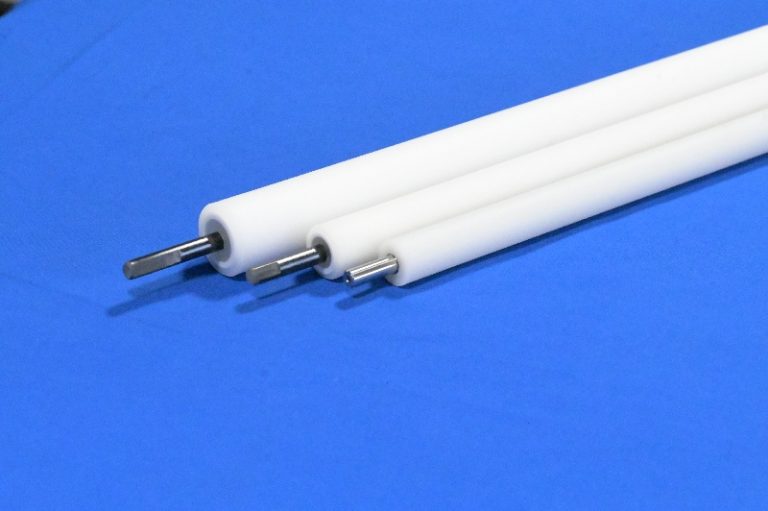
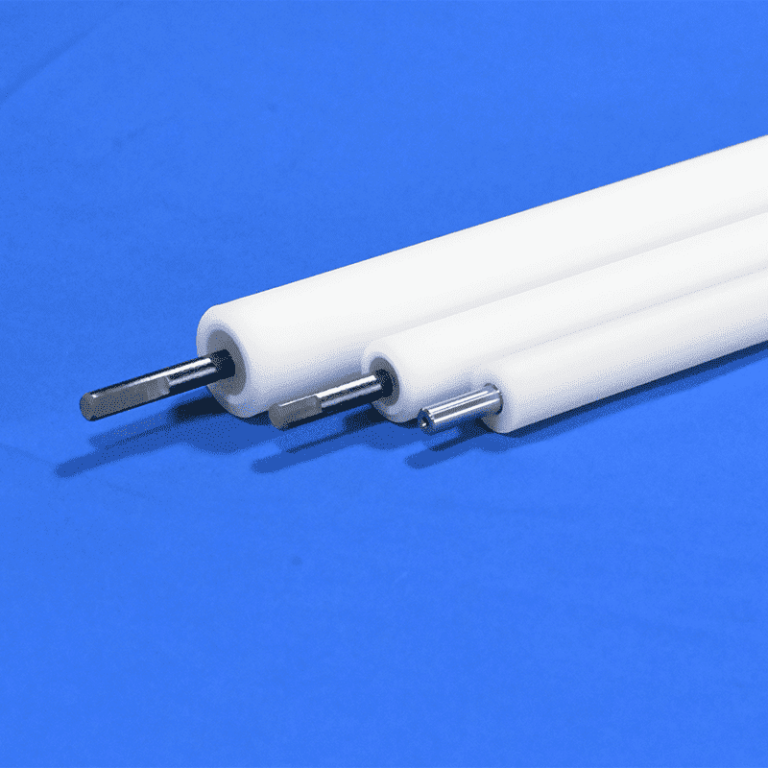
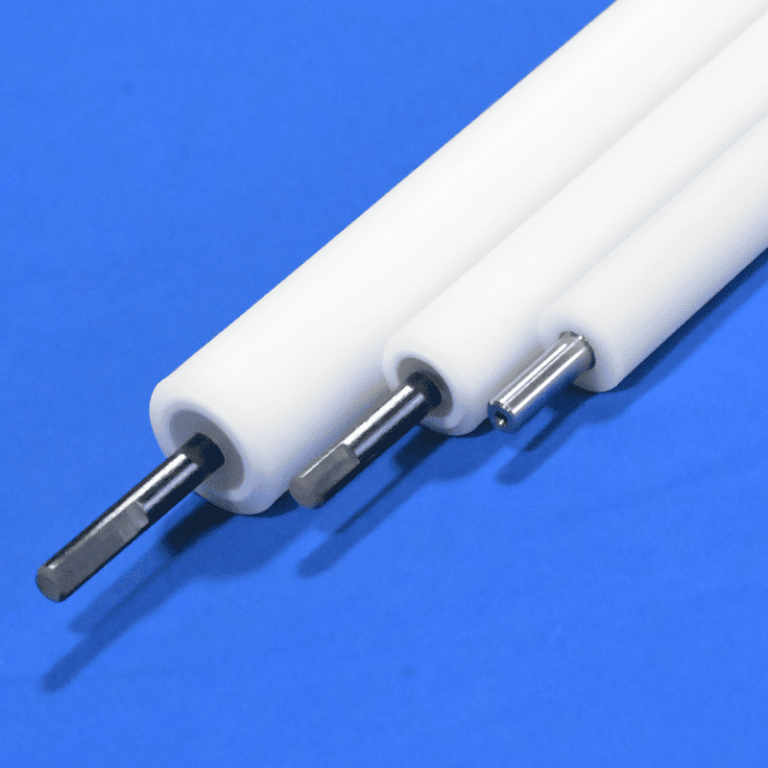
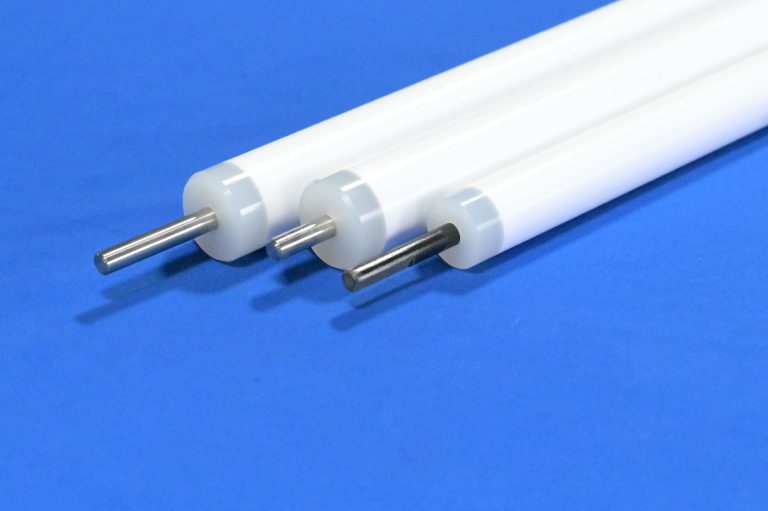
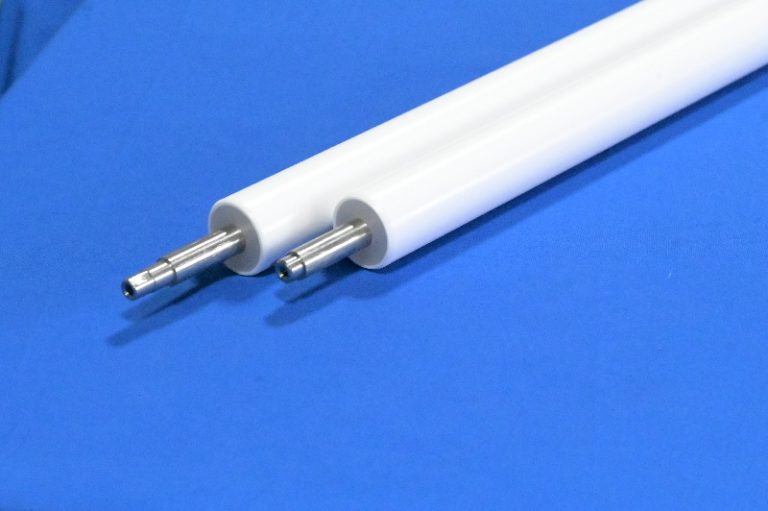
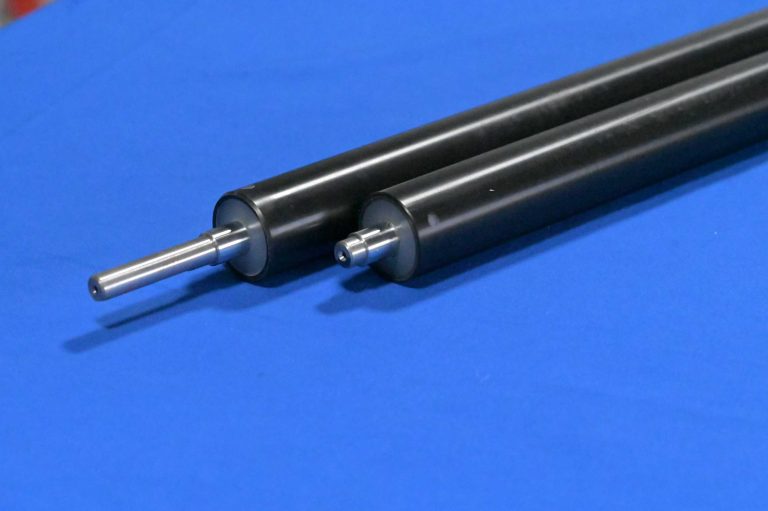
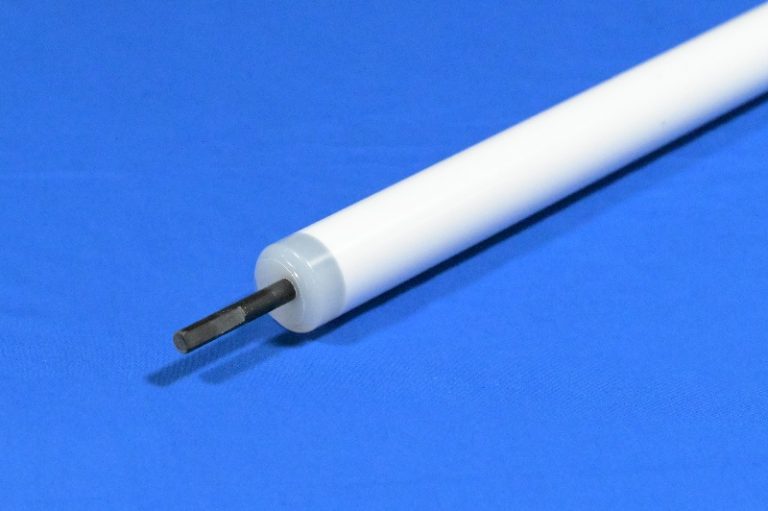
The TPV water retaining roller is designed for sealing, liquid control, and material transfer positions in PCB wet-process equipment. It is intended for production areas where the roller must remain elastic while exposed to process chemicals and elevated temperatures, including developing, rinsing, drying, and UV-related sections.
Manufactured from thermoplastic vulcanizate, this white roller combines rubber-like flexibility with the dimensional consistency of a thermoplastic material. The listed hardness is 55 to 65 Shore A, the maximum heat resistance is 110 degrees C, and radial runout is controlled to 0.15 mm. Roller dimensions can be customized to match the installation space and shaft arrangement of different machines.
| Item | Specification |
| Product Number | 6-5 |
| Product Name | TPV rubber roller |
| Material | TPV thermoplastic vulcanizate |
| Chemical Resistance | Strong acid and alkali resistance |
| Hardness | 55 to 65 Shore A |
| Color | White |
| Maximum Heat Resistance | 110 degrees C |
| Radial Runout | 0.15 mm |
| Size | Customizable |
| Available Shaft Materials | Titanium Grade 2, SS316, carbon fiber, or fiberglass |
– Heat resistance up to 110 degrees C supports use in PCB process sections where standard roller materials may lose elasticity or dimensional stability.
– Resistance to strong acids and alkalis supports contact with cleaning liquids and chemical solutions used in wet-process equipment.
– A hardness range of 55 to 65 Shore A provides a defined balance between sealing flexibility and mechanical support.
– TPV material helps the roller recover after compression and reduces the risk of permanent flat spots during repeated operation.
– A radial runout value of 0.15 mm supports stable rotation and more consistent contact across the working width.
– Custom dimensions allow the roller to match different equipment models, installation positions, and replacement requirements.
– Optional shaft materials provide alternatives for chemical exposure, corrosion resistance, equipment weight, and operating conditions.
– Ultra-smooth and micro-matte surface finishes can be selected according to the required contact and release characteristics.
In a horizontal PCB production line, water retaining rollers help separate adjacent process zones as panels move between tanks or modules. The roller forms controlled contact with the board or mating component to limit water, chemical solution, steam, and process residue from moving into the next section. Better liquid separation supports cleaner equipment, reduces unwanted carryover, and helps maintain more stable process conditions.
Temperature changes can affect roller hardness, diameter, and contact pressure. The TPV roller is intended for locations where sustained heat makes conventional low-temperature roller materials less reliable. Its stated heat resistance and controlled radial runout provide useful references for equipment matching, although final performance also depends on shaft alignment, bearing condition, roller pressure, rotational speed, chemical concentration, and installation accuracy.
– PCB developing modules operating at elevated temperatures
– PCB drying sections and heated transfer positions
– High-temperature rinsing and cleaning equipment
– UV curing lines and process areas exposed to ozone
– Water-retaining and liquid-separation positions
– Wet-process production lines handling acidic or alkaline solutions
– Replacement and maintenance projects for existing PCB machinery
– Customized PCB equipment produced by machinery manufacturers
Thermoplastic vulcanizate combines a cross-linked rubber phase with a thermoplastic phase. For a water retaining roller, this structure provides elastic sealing behavior while allowing controlled manufacturing and surface finishing. The material is selected where a roller must repeatedly compress and recover without losing the contact needed to control liquid movement.
The product page identifies resistance to heat, strong acids, alkalis, ultraviolet exposure, and ozone as relevant advantages. Actual suitability should be confirmed against the specific process liquid, concentration, temperature, exposure time, pressure, and cleaning method. These operating details are important because chemical compatibility and service life can vary between production lines.
Roller dimensions can be produced according to the customer’s equipment requirements. Customers should provide a drawing, complete dimension sheet, or existing sample showing the outer diameter, working-face length, total length, shaft diameter, shaft-end shape, mounting method, and required quantity. The operating temperature, chemical contact conditions, speed, and contact pressure should also be included.
The product page lists Titanium Grade 2, SS316, carbon fiber, and fiberglass as available shaft materials. Ultra-smooth and micro-matte surface grinding options are also available. The final shaft material, surface finish, hardness, and dimensional tolerances should be confirmed on the approved manufacturing drawing before production.
Select the roller according to the equipment position and actual process conditions. Confirm the installation dimensions first, then review the maximum and continuous operating temperatures, chemical type and concentration, rotational speed, contact pressure, board thickness, cleaning method, and expected maintenance interval.
For a replacement roller, do not rely on the equipment model alone. Similar machines may use different shaft ends or working lengths. Measuring the removed roller and providing photographs of both shaft ends helps prevent installation errors. When the roller will contact aggressive chemicals or operate near the maximum listed temperature, request written compatibility confirmation before ordering.
– Verify the roller dimensions, hardness, shaft material, and shaft-end structure before installation.
– Clean the mounting position and remove deposits that could affect alignment or bearing movement.
– Install the roller without striking, bending, or forcing the shaft ends.
– Check that the roller rotates freely and does not contact tanks, guards, or adjacent components.
– Set alignment and contact pressure according to the equipment manufacturer’s requirements.
– Inspect the roller regularly for cuts, swelling, cracking, hardening, flat spots, chemical deposits, or abnormal vibration.
– Use cleaning agents and methods that are compatible with TPV and the selected shaft material.
– Replace the roller when wear or deformation affects sealing, liquid control, board transfer, or rotational stability.
Each customized order should be produced against an approved drawing or confirmed sample. Critical dimensions, shaft configuration, surface finish, hardness, appearance, and radial runout should be checked before shipment. Clear technical confirmation is important for replacement parts because small dimensional differences can affect sealing pressure and installation accuracy.
Shenzhen Qixingyuan Machinery Equipment Co., Ltd. was established in 2008 and supplies accessories for PCB equipment. The company states that it integrates product design with equipment accessory solutions and holds national patent technology certifications. Customers can submit drawings, samples, and process conditions for product selection and customization.
The roller should be protected against impact, pressure, moisture, heat, and surface contamination during packing and transportation. The shaft ends and working surface require separate protection because dents, scratches, bending, or deformation may affect installation and operating accuracy. Packaging and delivery terms can be confirmed according to the roller dimensions, order quantity, destination, and customer requirements.
– Product number or equipment model
– Roller outer diameter
– Working-face length and total length
– Shaft diameter, shaft-end dimensions, and preferred shaft material
– Required hardness and surface finish
– Drawing, photographs, or an existing sample
– Process liquid, chemical concentration, and exposure time
– Continuous and maximum operating temperatures
– Operating speed, contact pressure, and board thickness
– Required quantity, delivery destination, and requested delivery time
What is the TPV roller used for?
It is used in sealing, water-retaining, liquid-control, conveying, or transfer positions in PCB wet-process equipment, especially where the roller is exposed to heat and process chemicals.
What is the maximum heat resistance?
The product page lists heat resistance up to 110 degrees C. The continuous operating temperature and full process conditions should be provided before ordering.
What hardness is available?
The listed hardness range is 55 to 65 Shore A. The required value should be confirmed according to the sealing pressure and substrate requirements.
What is the radial runout?
The listed radial runout is 0.15 mm.
Can the roller size and shaft be customized?
Yes. The size can be customized, and the product page lists Titanium Grade 2, SS316, carbon fiber, and fiberglass shaft options. Final compatibility must be confirmed using the equipment drawing or sample.
Is the roller suitable for acids and alkalis?
The product is described as resistant to strong acids and alkalis. Compatibility should still be reviewed using the actual chemical, concentration, temperature, and exposure time.
What information is needed for a replacement roller?
Provide the roller dimensions, shaft-end details, equipment model, application position, temperature, chemical conditions, quantity, and a drawing or sample whenever possible.
To provide high-precision, high-performance PCB equipment accessories, empowering the global electronics manufacturing industry to achieve efficient production.