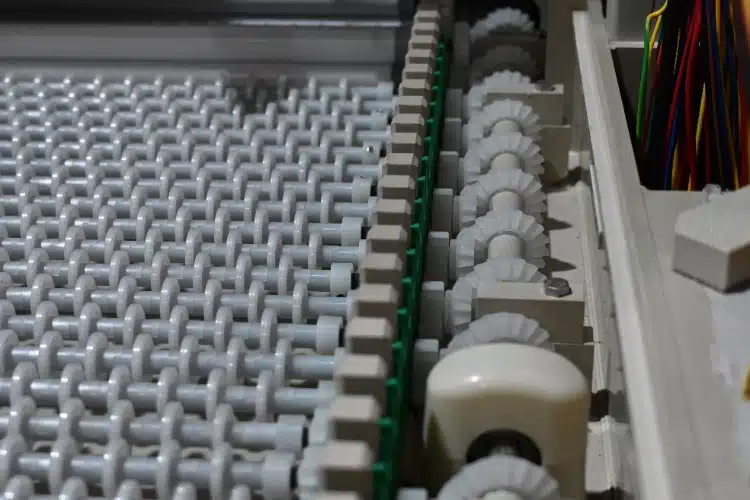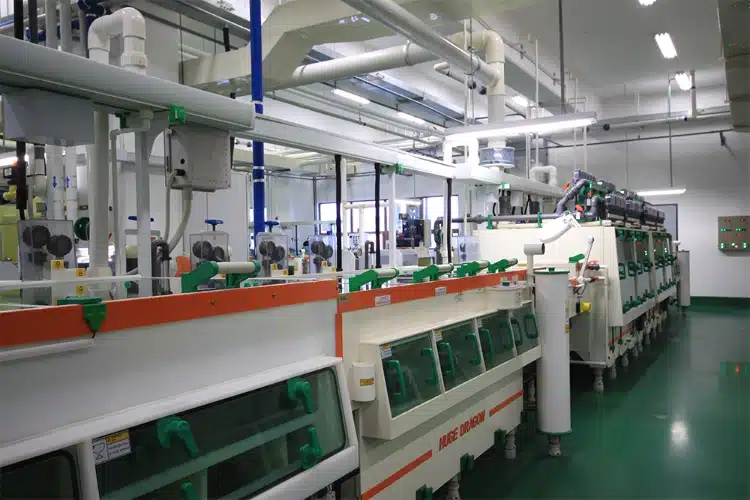
“Grease the bearings” is too vague for a wet-process conveyor that uses more than one bearing construction. The white polymer bearing near a rinse section may not share the service rule used for a nearby metal unit. Before grease is applied, identify the exact bearing and check the instruction for that version. Each plastic ball bearing position should have its own maintenance entry.
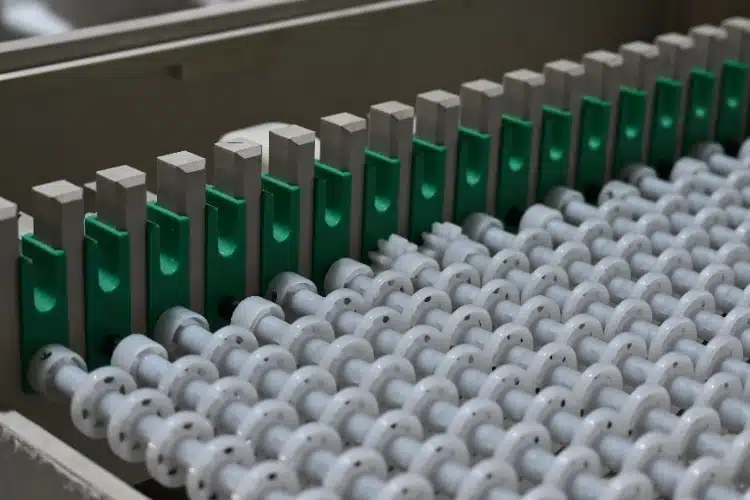
Electronics production is also placing closer attention on advanced substrates and high-layer-count boards. The October 2026 issue of Printed Circuit Engineering Association Magazine, for example, looks at the effect of AI hardware on those products. This trend does not prove that an existing conveyor is suitable for advanced substrates. It does justify another look at small maintenance inputs that may affect a cleanliness-controlled line. Grease applied at the wrong position is one of them.
Describe the complete bearing before discussing grease
Do not identify a bearing from the color of its rings. The balls, cage, shields, and factory lubricant, if any, may be made or configured differently. Request the complete construction. Also check whether the part is a rolling bearing or a plain bushing. Two white parts with the same bore can work by different kinds of contact.
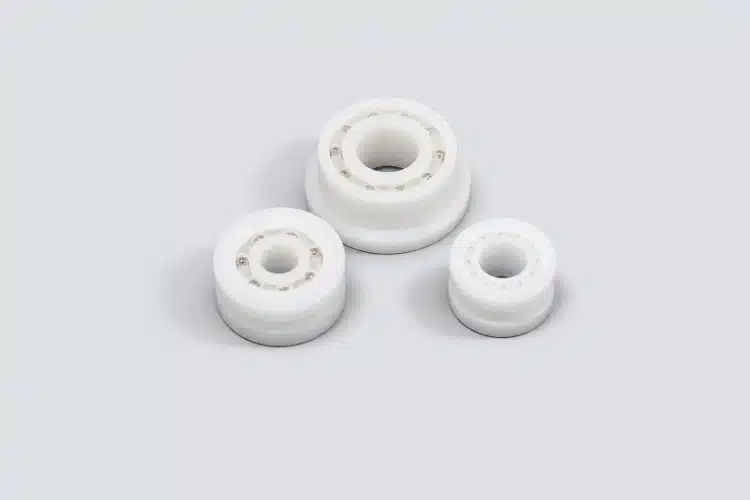
Qixingyuan describes its plastic bearing for PCB wet-process conveyors. The product page calls it self-lubricating. Copy the exact model reference into the inquiry, then ask whether added grease is forbidden and which cleaning methods are acceptable. The photo offers no answer to those service questions.
Grease-free polymer rolling bearings are used in established product ranges. The xiros range from igus is one example: it uses polymer races, offers different ball materials, and is described as requiring no external lubrication. That example shows why the question belongs in a service review. A Qixingyuan bearing must still be checked against the specification for the actual order.
Trace what could reach the process
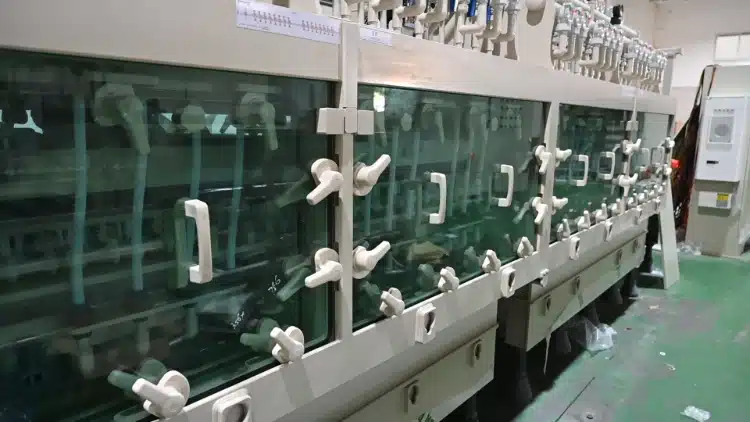
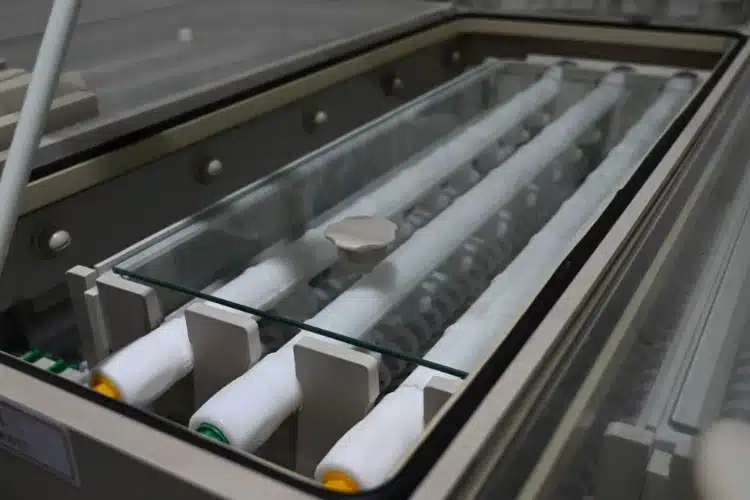
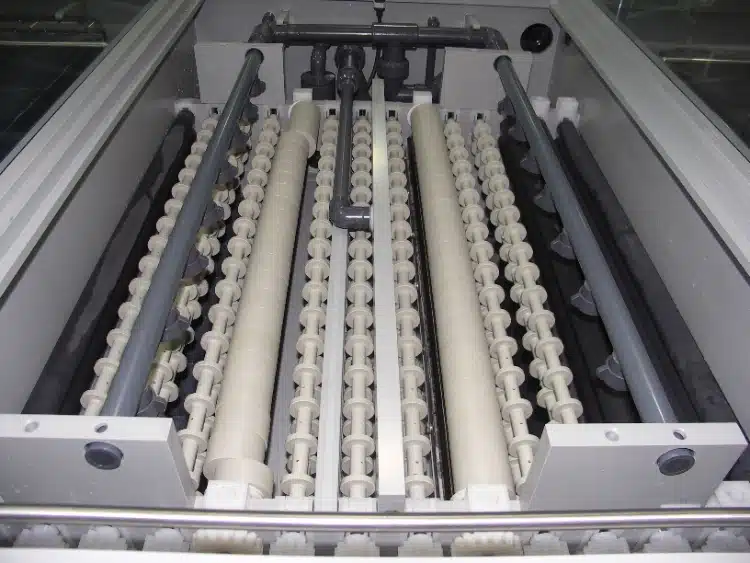
On the photo, mark the bearing and the wet path around it. Is the mark inside the splash area? Write beside it the liquid that reaches the part, plus the likely destination of anything that leaves it. Add handling residue if the area is touched during service. A location sketch is more useful than the note ‘keep clean.’
Open the last work orders before the area is wiped. Grease may have been added during an older repair. If residue is present, photograph it in place. Its location is evidence; its source is still unknown. Do not close a board-mark investigation simply because the bearing is nearby. Continue the mechanical inspection and contamination review as separate lines of work.
If the exact bearing is specified for dry operation, remove that grease task. Keep a separate inspection entry for deposits, debris, and material transferred from nearby components. The two entries should not be combined.
Record the grease decision before the next service
The final note should be short enough to use at the machine. It should either say ‘run dry’ or name the approved lubricant and application method. Any duty condition belongs on the same note. Remove dry-running positions from the general grease list.
Grease can hide a fault. If a bearing drags, inspect dirt, damage, fit, and duty before adding anything. A smoother spin after lubrication does not reveal which of those caused the drag.
Two bearings can share a bore and still require different care. Mark the package and stores record with a part reference that technicians can recognize. When a proposed replacement changes the construction, review its service instruction with the substitution. Dimensions alone are not enough to copy the old grease schedule.
Document the cleaning conditions at the bearing
At the bearing position, record the cleaner, temperature, contact method, and exposure time. Review the instruction after any change. Replacing a wipe with a spray, for example, changes how liquid enters the part. Put rinse, disassembly, and drying limits beside the same entry.
An open polymer-ring bearing is not necessarily washable in place. A shield is not the same thing as a seal. Ask for the full construction and the approved cleaning route; ring chemistry alone cannot settle the question.
For a non-standard installation, Qixingyuan lists a customized plastic bearing. Send the installed geometry with the operating duty. The listing covers custom profiles and dimensions. It says nothing about cleanroom classification, particle release, or every possible cleaner, so those points need their own evidence.
What to leave in the service record
Use the fields below only where the grease instruction might be misread. Each entry should state what has been confirmed for that position, not a generic acceptance limit.
| Service record | Entry | Reason |
| Part identity | Exact reference; rolling or sliding | Avoids the wrong service rule |
| Grease instruction | Run dry, or approved product and method | Tells the technician what to do |
| Cleaning | Liquid, temperature, method, and limits | Defines the cleaning duty |
| Condition | Residue, damage, rotation, and history | Keeps evidence from before service |
| Release | Required checks and responsible person | Separates repair from line release |
After fitting, turn the bearing by hand and note the feel. Then run the equipment’s normal post-installation checks; the hand check is not a load test. A bearing that is free on the bench but tight in the machine points back to fit, alignment, or retention. Forcing it until it feels loose can bury the cause.
Put the maintenance question into the inquiry
Mark the bearing on a machine photo and attach it to an inquiry about Qixingyuan’s plastic bearings. Add the shaft and housing details, expected load and speed, and the liquid exposure at that mark. Include the current grease instruction word for word. The open items are then visible before an order is placed.
Send the material through the technical inquiry page. Name any cleanliness test or customer limit that must be met. Those requirements cannot be inferred from a catalog description.
Conclusion
The purchase record should answer one maintenance question for one machine position. Does this exact bearing run dry, or is a named lubricant used? Add the cleaning exposure and the condition found before service. That record is more useful than a visual guess about a white bearing.
Questions from maintenance teams
Are white polymer rings enough to call the bearing metal-free?
No. Ask for the material of the balls, cage, shields, and the remaining components for the exact part reference.
If the bearing runs without grease, what maintenance remains?
Even without grease, the work is not finished. Use the equipment procedure for cleaning, installation, inspection, and line release.
Does matching size allow the old service schedule?
Treat it as a new maintenance reference until its construction and grease instruction have been checked.